

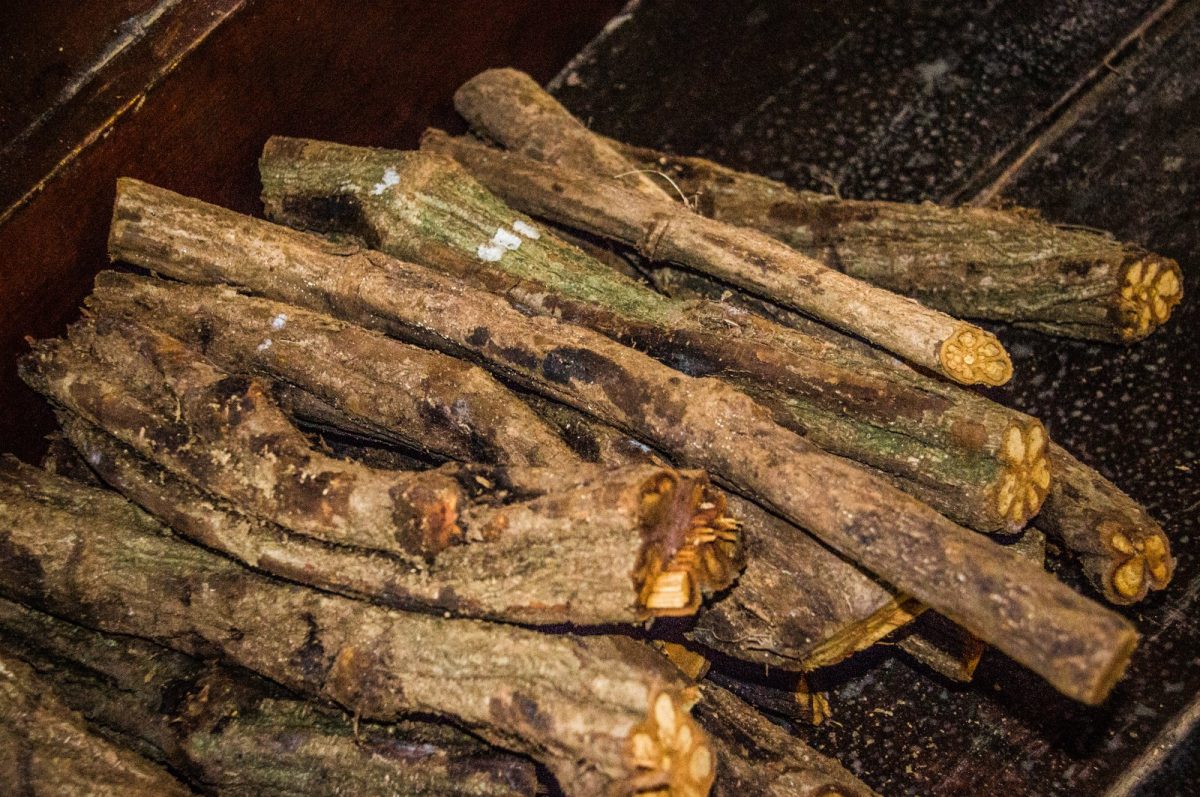
by Jean-Pierre Chaumeil
Plants as the Source of Knowledge: Seven Amazonian Shamans Speak of Their Plant Teachers
Since 1971, Jean-Pierre Chaumeil, a French ethnologist, has spent several periods in the Peruvian Amazon, especially among the Yagua of the northeastern region, with whom he lived for more than three years together with his wife. His interest centers on the comparative study of shamanism and, more generally, on everything surrounding the new forms of religiosity in the Amazon. He is the author of several books, among them Voir, savoir, pouvoir (Ed. de l’EHESS, Paris, 1983) and Ñihamwo (CAAAP, Lima, 1987). A research officer at the National Center for Scientific Research (CNRS), he belongs to its Amerindian Anthropology Research Team (France).
Across the world, many societies give plants a privileged place in their system of thought. This is particularly the case of the Amazonian societies, which, according to J. Barrau (1990: 1293), could be called “vegetalist.” Several of them even regard certain plants as the source of knowledge and of powers (cosmological, therapeutic, and others). In general, everything happens as if these societies conceived of a continuity, a mystical solidarity, between plants and men, between plant “growth” and human growth, between the models of plant and human reproduction. This thinking rests in part on the idea that knowledge of the things and beings of the world has its foundation not in man himself but in the (plant) nature that surrounds him.
This concept of the knowledge-plant (or power-plant, if you like) is widespread in the Upper Amazon and is often rendered in shamanic language as the “spirit” or “mother” of plants (Luna, 1986; Chaumeil, 1983).
So to approach the phenomena of shamanic therapy in the Amazonian world without evoking hallucinogenic plants would be to strip it of an essential dynamic element. Yet the use of hallucinogens should not be limited to the therapeutic field either. Numerous Amazonian societies use them within a broader sociocultural context (rituals of initiation, hunting, and cultivation, divinatory practices, etc.) and once included them as trade goods in the great commercial circuits that linked the Amazonian forest with the Andes and the Pacific coast. But in fact, the use of hallucinogens in the Indigenous setting appears to be essentially tied to shamanic initiation; it is very occasional in cures, where tobacco (smoked, chewed, or drunk) becomes the reference plant (Wibert, 1987). According to Indigenous concepts, the mothers of the hallucinogens are above all entities that “teach” rather than act by themselves and for themselves. Gradually, however, hallucinogens entered the classic therapeutic paraphernalia of the mestizo shamans who practice in the cities and, as a consequence, retroactively, this use spread among some Indigenous shamans. The extension of the field of hallucinogens to a strictly therapeutic sphere of application (diagnosis and cure) appears to be a relatively recent phenomenon if one takes into account the data of Indigenous ethnography, which associate them more with a specific mode of learning and knowledge.
Indeed, in many societies of the upper Amazon, shamanic initiation involves a novitiate (sometimes lasting several years) that begins with the periodic taking, in an established order, of hallucinogens (and optionally tobacco juice) under the direction of one or more experienced shamans. No initiation can be considered serious without those hallucinogens, which are said to contain extremely powerful spirits, whose mastery is achieved through visionary journeys induced by the staged ingestion of those same plants. The operation consists of gradually adding new decoctions, creating more and more heterogeneous mixtures so as to multiply and diversify the sources of knowledge. Those same spirits, or mothers of the hallucinogens, also figure among the shamans’ favorite helpers, as givers of knowledge and providers of magical weapons.
It bears repeating that the taking of hallucinogens is not reserved for shamans. Most individuals—men and women, whether in an Indigenous or a mestizo setting—can have this experience guided by trained shamans. In this case, the doses are clearly directed toward self-healing or the pursuit of telepathic effects. In any case, the doses are never anarchic or indifferent. The Yagua of Loreto, for example, have worked out a “typology-procedure” of hallucinogens: first there are those that “make you see” and those that “make you travel”; those that “teach” the art of healing or bewitching; then those that “heat” the body or “sharpen and beautify the voice” in order to seduce; those that “give strength”; those that “burn” souls or “heal” wounds; and, finally, those that are “exchanged” with the invisible entities (Chaumeil, 1983). Let us also recall that, for those same Yagua, the universe of hallucinogens is a component of reality just as much as the immediately visible reality each person lives in daily life.
Rather than developing, as we already did in the work cited above, how one specific society thinks about and uses hallucinogens in the shamanic context, we have preferred to give the floor on this subject to several shamans from different traditions who practice in the same region (between Iquitos and the Colombian border). Their accounts, gathered between 1984 and 1985, seem to us to illustrate better than any other discourse the importance of the plant element and of hallucinogens in the mode of learning, the systems of thought, and the Amazonian cultures of today.
Alberto Proaño (Yagua shaman, Marichín creek, 1976)
“My father was a great Yagua healer, a nëmara. He was also called sandatia, ‘the one who knows.’ He taught me the plant. First piripiri, which is the plant for preparing the body. The first time I took piripiri, I saw a big fire that turned into a snake, and I heard only, far away, murmurs of voices. The second time I took piripiri with tobacco, which is the ‘path of the souls.’ I saw the fire again, but then two twins appeared (mother of tobacco) who taught me the songs of tobacco and of the magic cigars. The mother of piripiri appeared later in the form of a phantom animal: she gave me a pill for healing and blew a virote (magic dart) into my mouth so I could resist illness.
Before I took ayahuasca mixed with piripiri and tobacco, my late father had me swallow 5 phlegms (which he drew out of his own body) to prepare my stomach. When I took the purge, the mother of ayahuasca handed me a lit cigar giving off a fragrant smell that let me see many things. Then she took me up to the sky; we passed through several layers of clouds. There she gave me a garment so that illnesses would not enter my body. The mother of ayahuasca frightens you the first time, but afterward she is like your child; you can talk to her by blowing tobacco on her. Whenever you need her, she is with you, she looks after you. Afterward I took the purge with toé, its mixture.
The toé let me know the world of the people without anus (under the earth) and the middle world, where people also live, beyond the world of the vultures. The purge let me know all kinds of people (spirits). One day my late father tested me and told me to heal my sick grandfather. I sucked at his throat and drew out two phlegms. But they had not yet transformed. I devoted myself more and more often to healing until I saw those phlegms turn first into virotes and then into people. From then on I could tell who had sent the illness; I could know the source of the illness. I later tried many other plants, such as naranjillo and venado-caspi, which taught me more. That is how I graduated as a nëmara.” (Abridged version of the text presented in Chaumeil, 1983: 33–43.)
Juan Pacaya (healer of Cocama origin, Caballococha lake, 1984)
“My grandfather Bartolomé Pacaya was Omaguino (from the Omaguas), just like my grandmother Margarita Iruyara. They came to Caballococha years ago, back when rubber was worth something. My father was named Gavino Pacaya Marín; he grew up here but was born in Omaguas. My mother, Narcisa Wayunga, was from Balsapuerto; she was Cocama. I was born here, in Caballococha, and I am 70 years old. My wife was also Cocama, Artuwari Macuyama, and was born at the mouth of the Nanay River. First I was a fisherman, when I was young. Then I worked rubber for a year, then timber for two years. Now I devote myself to farming. I have 3 brothers here: Bartolo, Miguel, and Rafael (he also knows how to heal). I learned on the Nanay River, at the time of the conflict with Colombia in 1932. So I was a soldier too, but we didn’t fight. The taking of Leticia was strictly a civilian affair. On the Nanay, with my countrymen the Cocama. I learned when I was young, before I had my wife. I learned little by little; I have a very soft memory, whatever one sings, one of my countrymen, I secure it all, I have a good head. That’s how I learned with ayahuasca on the Nanay itself during the years I was there. I had two compadres who practiced Cocama healing. I have my cachimbo too, I also draw out chonta. I wanted to learn to be a healer; that’s what I was born for. When we came to Iquitos one of my sons fell sick, he wanted to die. I asked my late wife: ‘Where are we going to find a doctor here? Let’s see, I’m going to try.’ I tried on him and he got well. I have healed, brother, not one, I have healed hundreds of boys! Grown ones too, from everywhere. I use Cocama medicine, this rope, the ayahuasca with its mixture. I also use a little ‘saint’ this size, called Encanto; it’s like a tiny person, looks like a little mushroom (callampa). It’s medicine too and it sticks where it hurts. When I take the purge (ayahuasca and its mixture), I see all kinds of things: people, animals, hammocks… Up to now I have taken the purge many times, even to heal myself. A year ago I wanted to die; it hurt inside me. I went to the hospital in Caballococha to see the doctor: ‘I’m sick, doctor,’ I tell him, ‘I have a pain inside, not on the surface, but inside.’ ‘Let’s see, take off your shirt,’ he says to me. He touched me, he thumped me here and there: ‘Mr. Pacaya,’ he told me, ‘you’re not sick.’ Furious, I went and took ayahuasca; I took it twice. It purged me, made me vomit. The second day the pain disappeared and I got completely well. In my trance I saw two tremendous shadows, two meters (6.5 feet) tall, with little white trousers. They watched me while I vomited. Goodbye, swollen belly! Never again to this day. Since then I never go to the hospital. Everything is healed with the purge, everything is purge.”
Rafael Pacaya (healer, brother of Juan Pacaya, 1984)
“My medicine is mukura, a plant that is taken every green moon, at 12 at night. This plant has many secrets. The mother comes and teaches you the icaros for healing, but also for sorcery. With ayahuasca I haven’t seen anything. The mother of mukura is like a dwarf or a little old woman with her hair tied up on top of her head. The mother of toé (its mixture) also appears; she is like a person but seems to have no bones. I began to learn at 67; now I am 74. I took mukura the first time because I was sick, I had malaria. I took it for a year and got well. Mukura is good for malaria. Afterward I kept taking mukura as medicine. Mukura is my boss; it has taught me all kinds of sorcery and healing. Mukura makes a man know.”
Alonso Ruiz Ríos (mestizo healer, Iquitos, 1984)
“I was born on the outskirts of Pucallpa. I am 31 and have lived in Iquitos since I was 5. My teacher was a mestizo ayahuasquero doctor named Fidel Mozombite. He had me fast in the forest for two years. He came to visit me every 15 days. He taught me the icaros in the Quechua language, both for healing and for the ‘evil of people.’ The fourth time I took the purge, I saw a ‘hospital’ full of medicines. It was like a pharmacy where there were remedies to heal and to harm. The mother of ayahuasca makes you choose. I have been taking the purge for 11 years: ayahuasca mixed with chacruna, with chiricsanango, and with renaco leaves. After two years of fasting, an ‘old woman’ (mother of the purge) appeared and taught me. Then I went out to work timber on the upper Ucayali, the Tamayo River, where I met an Indian healer of the Campa people, Francisco Shumigabi. He gave me a plant similar to cilantro and had me fast two more years in an isolated place. He also gave me ayahuasca. After 6 months, the mother of the plant gave me the ‘test.’ I then saw the Mermaid. I could see under the water and I learned the sad song of the Mermaid (mother of the water). This song is used above all to attract women with perfume. Here I also learned gasoline: that is for your defense. The mother of gasoline is like a wind that protects you, looks after you; it is like a vapor that wraps around you. So first you take gasoline before taking the purge, to prepare the body. The first teacher taught me the songs in Quechua; the second, in the Campa language. Now I sing in Quechua-Campa and nobody can ‘cross’ me. After two years of fasting, the Campa healer blew over my body as if to ‘dispatch’ me, and from then on I have devoted myself to healing. The mother of the purge is called ‘master’ and the helper spirits warmicita. When I heal at home, I put ‘soldiers’ in the four corners. With gasoline they watch over me when I take the purge. My teacher Francisco gave me virotes, gasoline, petroleum, and the rattlesnake, all of which I carry in my body. He also gave me an encanto: a little ‘charapita’ stone that ‘sucks.’ It sticks to the parts that hurt and only I can remove it. I have many plant medicines, but it is the mother of ayahuasca who taught me everything.”
Celso Rojas (mestizo healer, Iquitos, 1985)
“I am Celso Rojas Ucachiua. I was born in Moyobamba in 1905. I grew up in those highlands (upper Tapiche) in the time of rubber and caucho, and came to Iquitos with my parents in 1918. Afterward I spent a year in the FAP (air force). From there they transferred me to Moyobamba again for a year and a half, before I returned to Iquitos, where my parents died. Soon after I fell ill; my left leg rotted to the bone. I couldn’t heal.
I went to be hospitalized for 4 months in Santa Rosa hospital, but without improvement. Before they cut off my leg, I left again for the upper Tapiche, where I took ayahuasca for the first time, in 1933. I dieted for three years without eating salt or sweets, or seeing anyone. That is how I got well and learned the little that I know. I had no teacher apart from the purge itself (ayahuasca). I prepared it, cooked it, and drank it. I did meet a Capanahua Indian, a certain Pedro Nahuatupe, who showed me how to prepare the purge, but it didn’t suit me. At home I changed the preparation. All that time, maggots filled my ruined leg. Suddenly in my trance a little woodpecker came—brown, with a little red head—and stuck itself to my knee. It ate that whole mass of maggots. I felt it, I saw (in my trance) the woodpecker eat all those maggots. Then the woodpecker fell into the pot of the purge and there it disappeared forever.
Then I began to heal. In 6 months I was completely well. A little before I finished three years of diet, I took the purge again. A huge boa came; its eyes looked like car headlights. It came straight at the pot to stir the purge with its tongue. Then it began to lick me: it put its tongue in my ear, in my eyes, in my nose, everywhere, and with its tongue it gathered my feet nicely together and began to swallow me. And that, the boa said, was to graduate me as a sumé: to walk beneath the water and come out the day I felt like it and wherever I wanted. But I didn’t manage to graduate: when I was halfway into its mouth, I got scared, and the boa vomited me up. Sumé is the highest degree; the first degree is the banco, the second is the muraya. The sumé can live in the water and come out wherever he wants; he lives in glass towns inside the water. The banco hangs his mosquito net and lies down; on top of him the spirits of the forest sit, which is why he is called banco (bench). It is the first degree. The muraya heals with plants; that is as far as I have graduated.
The mothers of ayahuasca are many, in different forms. They appear in the form of a lizard, a viper, an alligator, or dwarf people. All of them teach. They taught me in Inca (Quechua). Of Capanahua I know only a few little bits, which Pedro Nahuatupe taught me. I began to drink at 25. Before ayahuasca, I took chiricsanango, uchusanango, and ojé with my father. But I only really ‘saw’ with ayahuasca, and I got used to it; now I like it, I drink it with pleasure, it’s like gelatin. I take ayahuasca mixed with different kinds of plants. I have even tried it with shoots of huicungo and chambira, with chullachaqui-caspi, with the bark of ayahuman, huaira-caspi, garabato-casha, zarza, villorenaquillo (male and female), sanango; I’m trying toé too. Chiricsanango takes the strength out of ayahuasca; it is taken only to draw out the cold and strengthen the body. Chullachaqui-caspi is worthless, pure evil; chambira and huicungo, the same. Chuchuhuasi is half good and half bad. Garabato-casha and zarza are all medicine. I have taken it with urcu-huasca, with wayusa, with ojé resin, with creolin, camphor, florida water; I have tried everything. The ones that served me I have kept, and the ones I didn’t like I have abandoned. Since 1933 I have gone on as a purguero and healed many sick people.”
Mejandro Vásquez Zárate (mestizo healer, Iquitos, 1985)
“I am 65 years old; I was born here in Iquitos, but I learned in Puca Barranco (a hamlet on the Napo River) from an Indian captured by rubber tappers on a raid, around 1940. One day this Indian called me, saying that in his dream he had heard the mother of ayahuasca, who wanted to meet me and teach me the purge. At 17 I took ayahuasca and its spirit taught me in Quechua. Everything I know is in Quechua: my icaros, my healings. For two years I had to dictate, since to know well takes two years. After ayahuasca, I took tobacco through the nose, in the beak of the pinsha (toucan).
Ayahuasca has a father: a little man with a little hat, his body covered in ropes, like a tamshi trunk. He called me ‘son’ and taught me. First he taught me to whistle nicely; from the whistle you learn the icaro, and from there, little by little, the voice of the icaro comes. Of ayahuasca there is male and female. The male is stronger. There is also sky-ayahuasca or lightning-ayahuasca, which lets you see the whole sky, and earth ayahuasca. The father of ayahuasca gave me a phlegm, the yachay, through my mouth. It is as if one plants it in one’s body; it grows little by little and the body gets stronger and stronger. That is why one diets. One has to know all the icaros that exist to be a true master, to be able to heal any illness (each illness has its own icaro). The supreme master is called trunk. I have my defense, my genies; I have my bombs, my airplanes. I can send a bombardment; with lightning all the enemies are burned, it’s the best defense. The father of ayahuasca is the one who does everything.”
Clotilda de Rengifo Marín (healer of Brazilian origin, Iquitos, 1985)
“My mother was Brazilian. At 15 she came to learn the plant in Caballococha. She began to learn from the vegetation at 14. At 15 she had mastered the purge, the ‘science.’ The purge is the first plant that God put on earth to water the vegetation. That is how I began to learn the ‘science’ directly from my mother; I have no icaros. The one who taught my mother was a master from Lamas.
I take pure ayahuasca; I am a vegetalista 100 percent. My first teacher was Cocama, named Juan Martín Yawarkani. I took the purge with him for 5 years, dieted for 8 years, and have been healing for 10 years. I am the queen of the vegetation. I am general commander. To improve yourself you have to diet, you have to throw out the body, you have to be left bony. The deeper you go into the diet, the further you advance in the science. The rainbow of space teaches us: it has 7 bright colors; 4 are medicines and 3 are harmful. The doctor can’t cure that. The good colors are blue and pinkish; the bad one is yellow.”
Julia Navas Nibeira (mestiza healer, Iquitos, 1985)
“I learned like this: I suffered an illness many years ago. I came to a teacher who was a Chama Indian. He taught me to take ayahuasca. From the first cup I got well, but he made me diet for 6 months. I sang 7 songs the first night. I kept dieting for 3 years along the Ucayali. My teacher knew a lot because he would go into the water and come out 4 hours later completely dry; he was a sumé. I have dieted several plants: ayahuasca mainly, murcuhuasca, always adding chacruna, which is also essential for the vision. Ayahuasca alone just makes you dizzy. Toé also serves for seeing. My teacher taught me in his Chama language (Conibo); he gave me the llausa mariri, which is a defense we have in the stomach and with which we draw out virotes. He transmitted this mariri to me by means of winds. The genie of ayahuasca, the king of medicine, is satitucuy: a little old man the color of rusted bronze, tiny in size, with a stone hat, stone shoes, a stone cane; he too comes from a stone hill. The duendes are the disciples of the little old man, his helpers. They are the guardians of our body: the arcanas, so that no one can cross us. They break arrows; they are like Indians. My protector animal is an eagle that I always place on the roof for anything that falls from above—he catches it, everything bad. We also put defense on the 4 sides: the shitaneros, as we call them. They are the ballistic men, the pucuneros, the warriors; they let no one pass. They are Indians; for example, a Huambiza, if we take ayahuasca with yagé, since yagé comes from the Huambiza. Ayahuasca is the teacher of us all; we cannot surpass it, we are its disciples. There are many kinds of ayahuasca: sky-ayahuasca, thunder-ayahuasca, encanto-ayahuasca, lightning-ayahuasca, boa-ayahuasca, and many more; each one has its secrets.”


