

In brief
- A Chinese forensic laboratory has described ZC-B (also known as 2C-B-AZET), a 2C-series phenethylamine featuring an azetidine ring.
- The substance was discovered as a whitish powder inside capsules seized in drug-related cases.
- The study is analytical in nature: it characterizes the molecule but provides no data on human dosage, effects, or safety.
A team from the National Narcotics Laboratory in the Zhejiang regional center (Hangzhou, China) has published the identification of a new substance in the journal Drug Testing and Analysis: ZC-B, described by the authors as a 2C-series phenethylamine with an azetidine ring. It was found in seized capsules, and the paper details how to identify it in a laboratory setting.
What is ZC-B?
Its chemical name is 3-(4-bromo-2,5-dimethoxyphenyl)azetidine, also known as 2C-B-AZET. The name is reminiscent of 2C-B, and the authors classify it within the 2C family. They describe it as a novel hallucinogenic substance. This is the authors’ characterization; the abstract does not mention human trials.
How it was identified
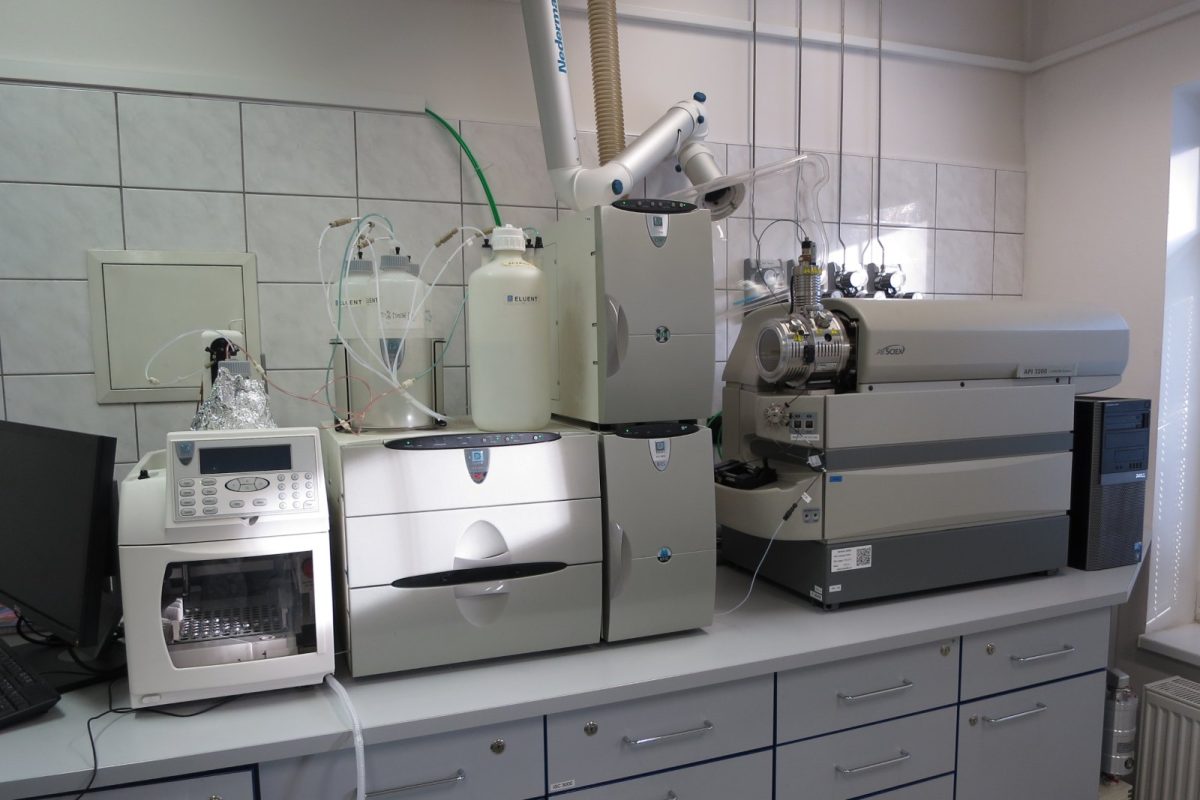
The material recovered from the capsules was a whitish powder. The researchers analyzed it without prior purification using several techniques: gas chromatography-mass spectrometry (GC-MS), ultra-high-performance liquid chromatography-time-of-flight mass spectrometry (UHPLC-TOF-MS), Fourier-transform infrared spectroscopy (FTIR), and nuclear magnetic resonance (NMR) spectroscopy.
In gas chromatography, ZC-B showed characteristic fragments linked to bromine isotopes, with masses of 242/244, 226/228, and 148. The molecular ion was barely visible. With the other technique, the protonated molecule appeared at mass 272.0282, and the main fragments were 228.9860 and 198.9752. When cross-referencing the data with the NIST spectral library, there were no matches, meaning that catalog did not contain the substance. NMR allowed for the confirmation of the complete structure and, by comparing it with recent literature, identified it as ZC-B succinate.
What this implies
For those who analyze substances, the practical value lies in the fact that a reference framework now exists for its detection. The authors consider it simple and suitable for the qualitative detection of ZC-B in forensic seizures, and useful as a reference for other new psychoactive substances. The fact that NIST did not recognize it highlights a common limitation of drug-checking services: what is not in the library cannot be identified by simple comparison.
It is also important to be clear about what is missing. The abstract does not report how many capsules were analyzed, what quantity they contained, or how they were sold, and there is no data on pharmacology, dosage, or safety. Nothing can be said about how this molecule behaves in the human body based on this work. Those who use drug-checking services would do well to ask if their equipment can detect recent compounds in this family. For other cases of new molecule identification, you can read our report on the first confirmed case of ETH-LAD intoxication and the one comparing 2C-B with MDMA and psilocybin. Further context is available in the harm reduction and responsible use guide.
Source
- Song H, Zeng L, Wu L, Wang H, Yuan C, Zhang H, Gao J. Forensic Identification and Structural Characterization of ZC-B: A New Azetidine 2C-Series Phenethylamine From Illicit Seized Capsules. Drug Testing and Analysis, October 1, 2026. DOI: 10.1002/dta.70155.
Educational content written from a harm reduction perspective and with respect for individual freedom. It is not a substitute for advice from a healthcare professional and is not intended to encourage or condemn any drug use.