

Psiconáutica Editorial Team · November 15, 2026
In brief
- An online survey of 1,088 adults, published in Scientific Reports by a Durham University team, compared people who had used classic psychedelics, such as psilocybin or LSD, with the other participants: people who had never used them and people who had used only non-classic psychedelics.
- The association with lower anxiety was significant around ages 23 and 36, but not around 50. For depression, it appeared only at the youngest end. Among older users, those who had used classic psychedelics scored somewhat higher on anxiety than those who had used only non-classic ones.
- This is a cross-sectional, self-reported study: it describes small associations and does not show cause and effect.
Why do some observational studies link psychedelics with better mental health while others do not? A team at Durham University (United Kingdom) suggests that part of the answer lies in age. Their paper was published on 24 September 2026 in Scientific Reports and publicised by the university on 9 November. It concludes that the relationship changes with the respondent’s age and that, for anxiety, it even reverses among older users.
How the study was done
Between November 2024 and August 2025, the researchers recruited adults fluent in English online, through Prolific, the university’s participant pool, social media, email and word of mouth. Of 1,270 people who enrolled, 1,088 completed the questionnaire: 564 had never used psychedelics, 84 had used only non-classic psychedelics, 132 only classic ones and 308 classic psychedelics together with other substances.
The survey measured anxiety (GAD-7) and depression (PHQ-9) over the previous two weeks, as well as wellbeing (WHO-5) and life satisfaction (SWLS). Mystical-type experiences were recorded with a ten-feature checklist adapted from the MEQ-30 questionnaire. Statistical models adjusted for gender compared the 440 classic users with the remaining 648 participants and tested whether age modified that difference.
What they found
Across the full sample
For anxiety, the interaction between age and classic psychedelic use was significant (p < 0.001). Classic users scored lower around age 23 and, more weakly, around the sample’s mean age of 36 (p = 0.024). By around 50, the difference was no longer significant (p = 0.204). For depression, the interaction was also significant (p = 0.022), but the association appeared only at the youngest end. There was no age interaction for wellbeing or life satisfaction.
Among users only
When the analysis was restricted to the 524 people who had used any psychedelic, younger classic users scored lower on anxiety than non-classic-only users (p = 0.016). Among older participants the pattern reversed, and classic users scored higher (p = 0.041). For depression, the age interaction was significant (p = 0.048), but none of the age-specific comparisons were. In this subsample, the interactions held after adjusting for time since last use, dose and cumulative use.
The role of mystical experiences
Classic users reported mystical-type experiences more often than non-classic-only users (OR 1.637). In the mediation analysis, this factor statistically accounted for part of the association with lower anxiety and depression at younger and middle ages, but not at older ages. Among older adults, the authors also describe a direct, non-mystical association between classic use and higher anxiety (p = 0.020).
Limitations
The authors stress that the cross-sectional design rules out causal inference and is vulnerable to self-selection. Symptoms refer to the past two weeks, whereas drug use and mystical experiences cover the whole lifetime. Everything is self-reported and depends on memory. Age was collected in bands, and the top band (“55+”) was capped at 60, so the authors urge caution with the findings for older participants. In addition, the non-classic group is heterogeneous, socioeconomic status was not controlled for, effects are small and self-medication cannot be ruled out. The work received no funding and the authors declare no competing interests.
What it means
The study does not show that psychedelics benefit young people or harm older ones. The reversal for anxiety is a small association, observed only among users. What it does suggest is that pooling ages in one sample can hide differences, and that age is worth analysing when comparing studies. Moving beyond correlation will require follow-up before and after people’s experiences. From a harm-reduction perspective, the basics do not change: a psychedelic experience is no substitute for mental health care. Along similar lines, we covered a US survey on psilocybin use and treatment seeking; the broader context is in our guide to psilocybin and magic mushrooms.
Sources
- Di Gregorio G, Basset S, Manmohan H, Nixon WC, Pogaku A, Zhou J, Sanderson DJ, Lengieza ML, Bocchio M. “Age moderates the relationship between psychedelic use and mental health in naturalistic settings”. Scientific Reports 16, 36576 (2026). Published 24 September 2026. Open-access full text (CC BY 4.0) read on nature.com; supplementary materials not consulted.
- Durham University, via EurekAlert!, 9 November 2026: “Age may influence links between psychedelic use and mental health”.
Image
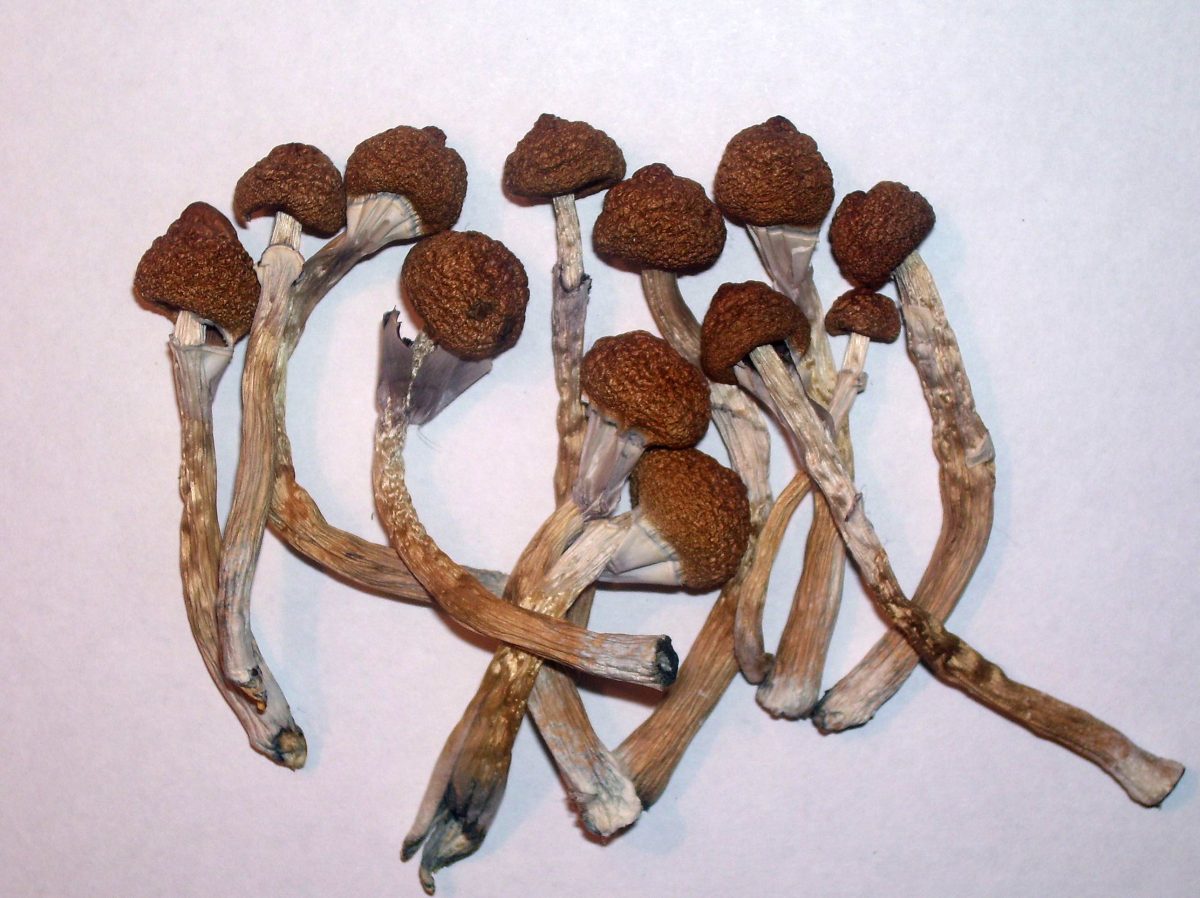
Illustrative image, unrelated to the study or its participants: “Dried P. cubensis var. Mazatapec” (dried Psilocybe cubensis specimens). Photo: Wowbobwow12, via Wikimedia Commons, licensed under CC BY-SA 3.0.
Educational content written from a harm-reduction perspective and with respect for individual freedom. It does not replace information from a healthcare professional and does not aim to encourage or condemn any drug use.