

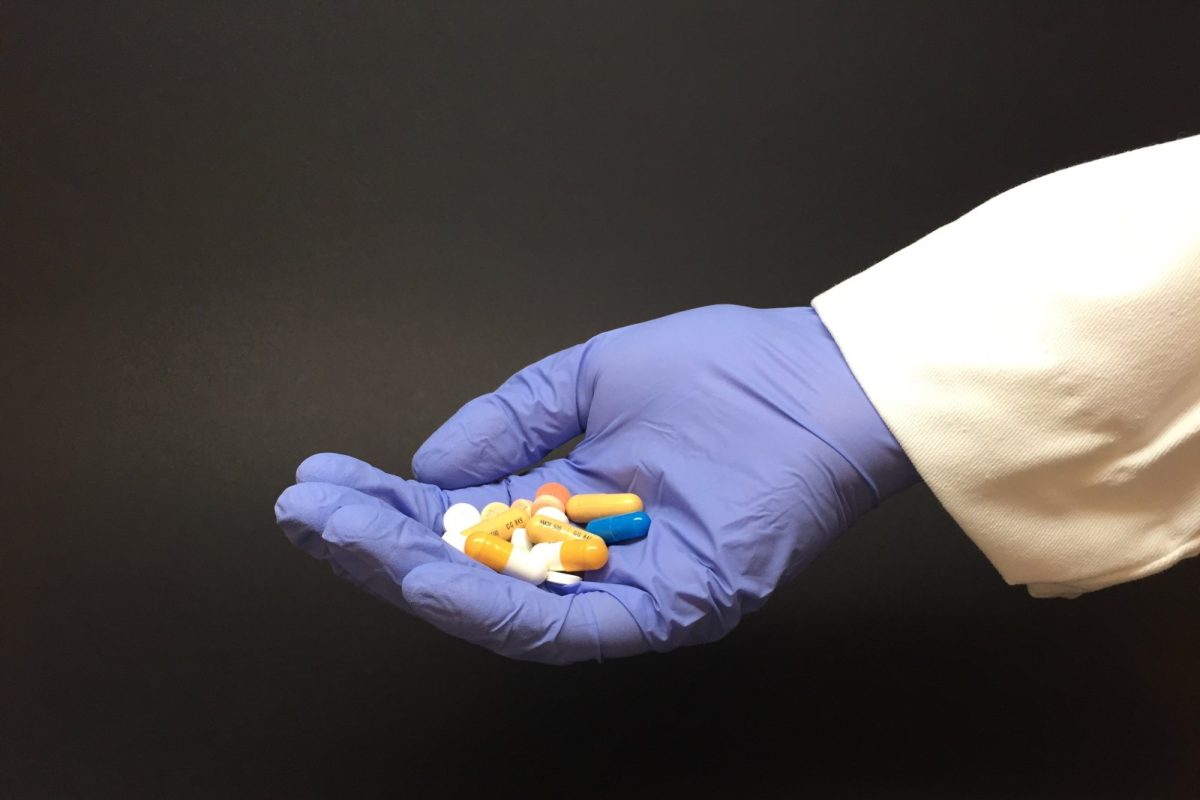
Three ways to present the same molecule
In the first installment, we focused on the most well-known version of methylphenidate, the fast-acting formulation typically prescribed to minors diagnosed with Attention Deficit Hyperactivity Disorder (ADHD). Its effect lasts between three and six hours, so it must normally be administered twice a day to cover the hours of activity. That practical burden—having to re-dose in the middle of the day, often at school—explains a good portion of the subsequent formulations.
The second presentation is the extended-release version. It works through a system that releases a fraction of the active ingredient initially and then releases the rest gradually, allowing the effect to be maintained for about twelve hours. According to the product information of the most widespread brand at the time, the outer shell dissolves first, and the internal layers disintegrate afterward, reaching maximum blood concentration several hours after ingestion. The attributed advantage is twofold: it smooths out the peaks and valleys in drug concentration and allows for a single morning dose at home, without visiting the school nurse.
The third variant is dexmethylphenidate, the isolated dextrorotatory isomer. Of the molecule’s two isomers, the dextrorotatory one concentrates most of the therapeutic activity, so in theory, using only that would allow for lower doses and, consequently, fewer adverse effects. In practice, available studies have been lukewarm: minors treated with dexmethylphenidate showed no clear improvements over those taking conventional methylphenidate, and the argument is circular, because if the discarded isomer was inert, the amount of effective stimulant the child receives—and therefore their side-effect profile—does not change much. (As a cultural nod: the “Focusyn” prescribed to Bart Simpson was a parody of the American drug Focalin.)
Let’s return to the uncomfortable question: what exactly is ADHD?
Having described the presentations, the underlying issue is not pharmacological but diagnostic. Restless, rowdy, disobedient, or distracted children have always existed, and a good portion of those behaviors are related to environment, upbringing, and learning. What has changed is not the behavior, but the label: what was once called “minimal brain dysfunction” or “hyperkinetic syndrome” is now named ADHD, and its list of symptoms paints a portrait familiar to anyone who has spent time in a classroom:
- Lack of attention, especially toward tasks perceived as boring, such as schoolwork.
- Distractibility by visual, auditory, or bodily stimuli, or by one’s own imagination.
- Impulsivity: acting without measuring the consequences.
- Hyperactivity: difficulty remaining still, a constant need for movement.
- Impatience: an inability to tolerate waiting.
- Emotional lability: sudden swings between euphoria and tantrums.
- Disobedience and forgetting rules.
- Social adaptation difficulties and a tendency toward rejection by peers.
- Disorganization and a poor sense of time.
It is worth noting one thing: none of these traits is, in itself, an organic anomaly. They are descriptions of behavior. And describing a behavior is not the same as explaining its cause.
What the manual itself admits it doesn’t know
The reference manual of psychiatry—the DSM in its edition of the time, published by the American Psychiatric Association—places ADHD among disorders with onset in childhood and defines it by symptoms of inattention and/or impulsivity-hyperactivity. The description goes into detail: the subject “seems to have their mind elsewhere,” switches tasks without finishing any, gets distracted by a passing car or a distant conversation, interrupts, answers before the question is finished, and does not wait their turn.
So far, this is a portrait of a difficult child. The decisive part comes in the fine print. The same manual admits that “no laboratory tests have been established as diagnostic” for ADHD, and that there are no physical characteristics associated with the disorder. The only “anomalies” it mentions—eyes set somewhat apart, high-arched palate, low-set ears—are so nonspecific that no one would seriously argue they have anything to do with attention or behavior. In other words: by its own admission, the diagnosis is not supported by any biological marker. That is why, technically, ADHD is classified as a syndrome, not a disease.
The vagueness reappears in the criteria: it is enough for certain “inappropriate” behaviors to persist for at least six months. And if the suspicion exists but not enough criteria are met, the manual offers an emergency exit: the “not otherwise specified” diagnosis. A category that, in practice, makes it almost impossible for a labeled child to fall outside the diagnostic system.
The biological argument and why it should be weighed carefully
Faced with this, many professionals argue that even if the ultimate cause of ADHD is unknown, the disorder is strongly genetic and originates in a malfunction of certain neurotransmitters—dopamine and norepinephrine—in the frontal regions of the brain, which are responsible for executive function. If this were provable, it would be good news: we would finally have a cause. The problem is that moving from “reasonable hypothesis” to “established medical fact” is a leap that the evidence does not authorize.
The so-called aminergic hypothesis—the idea that many psychiatric disorders are due to alterations in neurotransmission—is useful as a framework for research and treatment, but knowing with certainty if a specific person “has that” in their brain, or if their distress responds to external causes, is another matter. Here, a logical trap appears that is worth naming: when the origin of the problem is experiential—as happens with most depressive states, linked to real losses or frustrations—medicating neurotransmission can end up turning a problem that was not biological to begin with into one that is.
Something similar happens with minors diagnosed with ADHD, and here we reach a point that is often overlooked. The fact that a stimulant improves symptoms does not prove that the child had a prior neurochemical alteration. Stimulants increase concentration and performance in anyone—this is an effect known for decades, not a specific response from someone who “suffers” from the disorder. Reasoning that “they improve with the drug, therefore they were lacking the drug” is reversing the logic.
When everything becomes a diagnosis
It is very likely that a minority of particularly disruptive children have a real, biologically-based disorder. But attributing the behavior of the majority to genetics—when prevalence figures range between 5% and almost 8% of students, meaning at least one or two per classroom—clashes with a fact that is hard to ignore: the climate in many educational centers is worsening for social reasons that have little to do with the neurochemistry of each student. It is convenient to explain the “bad kid in class” as a medical case; it is less convenient, and more honest, to look at the environment.
The underlying risk is the growing medicalization of everyday life: stress, poor sleep due to worries, low mood due to economic or family problems. When any of life’s setbacks becomes a clinical condition, the boundary between helping and labeling becomes blurred, and the pill—which masks symptoms rather than resolving causes—takes the place of questions that may be neither medical nor strictly psychological. We leave that question open for the next installment.
Critical reading and harm reduction
This text is educational and does not replace clinical judgment, nor does it constitute any recommendation to start, modify, or suspend a treatment: those decisions belong to the professional following each case. Some cautions for reading the topic with a cool head:
- Be suspicious of sweeping certainties. Both “it is purely genetic” and “it is a total invention” oversimplify. The evidence is more nuanced and remains open.
- Distinguish describing from explaining. A list of behaviors is not a cause, and the fact that a drug works does not prove what was wrong.
- Methylphenidate is a stimulant with real effects. Its off-label use, as a “study drug” or performance enhancer, is not harmless: it alters sleep, appetite, and the cardiovascular system, and its apparent appeal is not equivalent to safety.
- Sources age. Part of the data in the original article corresponds to manuals and formulations from years ago; diagnostic criteria and the portfolio of drugs have changed since then.
Note: this article reworks an older educational piece. Where the original cited the DSM-IV and specific commercial package inserts, we have preferred to describe their content without reproducing links or references that we cannot verify today.


