

A Series That Ends Where It Began: In the Laboratory
We have reached the last chapter of the texts by—and about—Albert Hofmann that we have been collecting. It is significant that the chemist of LSD closes his journey not with a personal anecdote but by returning to the lab bench: to formulas, to alkaloids, and to the question of why certain molecules alter the mind so specifically.
Hofmann himself describes something here that sounds permanently current today—the use of entheogens in psychotherapy—but that for him was recent memory. In the 1950s and early 1960s, before prohibition, these substances were part of the clinical practice of researchers such as Humphrey Osmond, Abram Hoffer, and Stanislav Grof. The “new psychedelic era” we hear so much about is, to a large extent, a return to a path that was cut off for political rather than scientific reasons.
Ololiuqui: Sacred Seeds With a Molecular Surprise
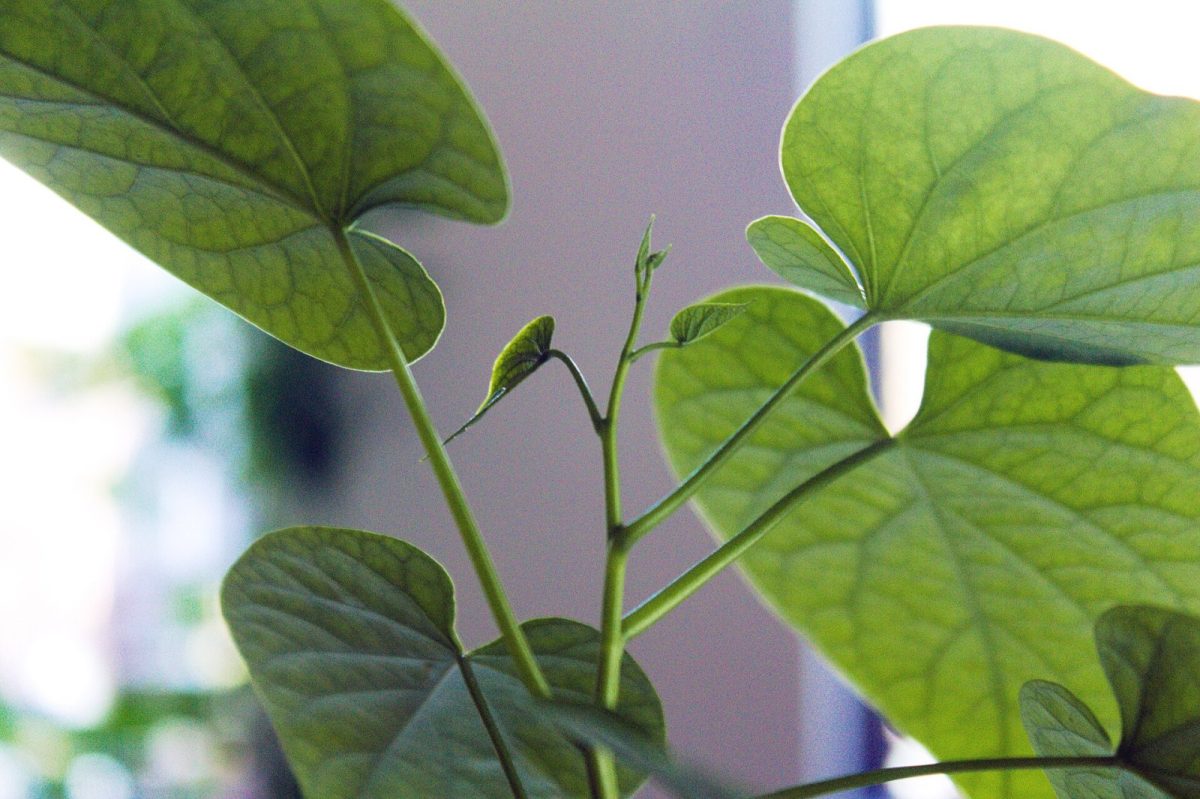
Ololiuqui is the Nahuatl name for the seeds of certain climbing plants of the morning glory family (Convolvulaceae), used in ritual and divinatory ceremonies by peoples of southern Mexico. Hofmann recalls that their use was still alive in his day among Zapotec, Chinantec, Mazatec, and Mixtec communities in relatively isolated mountain regions.
The first known written description was left by the physician Francisco Hernández, sent by Philip II to study the nature of New Spain between 1570 and 1575. In his Rerum Medicarum Novae Hispaniae Thesaurus, he wrote of a white-flowered climbing plant that priests ingested to “communicate with their gods.” The colonial gaze resolved it with the usual formula of the time: those visions were, he said, of “satanic origin.” These testimonies should be read knowing where they were written from.
The breakthrough came in the twentieth century. Working from samples collected near Oaxaca and supplied by the ethnomycologist R. Gordon Wasson, Hofmann and his colleagues studied two types of seed: the brown ones (badoh, from Rivea corymbosa) and the black ones (badoh negro, from Ipomoea tricolor). The analysis produced an unexpected result: their active principles were derivatives of lysergic acid, the same ones previously known only in ergot (the Claviceps fungus). Finding those alkaloids in a higher plant, and not in a fungus, was a small shock for phytochemistry.
The irony was not lost on Hofmann: lysergic acid amide had already been synthesized and studied in his laboratory—alongside LSD itself—years before he discovered it was one of the active principles of a Mexican magic plant. Modern chemistry had unknowingly recreated the heart of an ancestral sacrament.
Indoles, Tryptamines, and a Family Resemblance to Serotonin
Put the formulas of the main “classic” psychedelics side by side and a pattern jumps out. Apart from the non-nitrogenous compounds of cannabis and, in part, mescaline, almost all are derivatives of indole and, more specifically, of tryptamine. Hofmann stresses that even this kinship is no coincidence: most of these molecules resemble serotonin structurally, a neurotransmitter central to the regulation of mood and of numerous processes of the nervous system.
From this he draws an intuition that time has partly confirmed: studying the relationship between indole metabolism in the body and indole-structured psychedelics was—and remains—fertile ground for psychopharmacology. The idea that these substances act by “conversing” with serotonin receptors is today a pillar of research, though at the time it was only sensed.
Within that group, Hofmann points out a fine detail: LSD and psilocybin share a structural oddity, a substitution at position 4 of the indole ring. The Mexican mushrooms (psilocybin and psilocin) and the ergot alkaloids from which LSD derives were, in his time, the only indole compounds with that feature. The question remained open of how far that trait explained their particular potency. (Note: here we describe chemical kinships only in broad strokes; you will find no synthesis or extraction procedures in this text.)
“Model Psychosis”: When Altering the Mind Served to Study It
For the experimental psychiatry of the mid-century, these substances were valuable tools. The resemblance between some of their effects and certain symptoms of mental disorders led to the coining of the term model psychosis: the idea of provoking, transiently and reversibly, a state that would make it possible to observe, under controlled conditions, processes that were otherwise inaccessible. The discovery of LSD notably accelerated that line of work.
The expression “model psychosis” should be taken with a grain of salt. Today we know that the psychedelic experience is not equivalent to a psychosis, and that context, expectations, and accompaniment (what psychonaut culture calls set and setting) deeply condition what happens. The language of the era itself—“psychotomimetics,” that is, “psychosis mimics”—reflects an interpretive framework that later research has considerably qualified.
Two Effects That Interested Therapists
Hofmann sums up why these compounds attracted clinicians. He attributed to them, in essence, two actions. The first was helping some patients emerge from their isolation and from rigid patterns of behavior, facilitating a more open relationship with the therapist. The second was reactivating forgotten or repressed memories—even from early childhood—especially useful when those experiences were at the root of the distress.
From that contrast comes an idea he formulates clearly: unlike tranquilizers, which sedate and “cover up” conflicts, these substances activated and brought psychic material to the surface. This is the historical moment when the term psychopharmacology becomes popular. Hofmann even calls these compounds “mental drugs,” in the sense of drugs that act on the content of the mind, not just on its level of arousal.
There is a warning of his that has not lost its relevance: because of their profound and unpredictable effects, he insisted they should not be taken without supervision. He said it with a clinical setting in mind, but the substance remains valid—and is, in fact, the heart of any harm reduction approach.
A Critical Reading
This text is a document of its time and deserves to be read as such. Some keys to placing it:
- Early therapeutic enthusiasm. The results of the 1950s and 1960s were promising, but many studies lacked the controls we demand today (control groups, rigorous double-blinding, large samples). Current research with psilocybin or MDMA picks up that thread precisely to test it with modern methodology; its conclusions remain provisional.
- The “deficit” framework. Talking about “releasing” repressed memories points to a specific psychodynamic model. It is one possible reading, not a neutral fact: memory reactivated under intense effects can be reconstructed or distorted, something cognitive psychology has documented well.
- The colonial context of the ethnographic sources. The earliest descriptions of ololiuqui reach us filtered through the gaze of European chroniclers. Recognizing the knowledge of the peoples who had been using these plants for centuries—and not treating it as a mere Western “discovery”—is part of an honest reading.
- Real risks. These substances can trigger acute psychological crises, interact with other drugs, and be especially inadvisable for people with a psychiatric history. Using them outside a controlled setting carries legal and health risks that this article does not minimize.
On the sources cited by Hofmann himself: the original text drew on R. E. Schultes’s work on ololiuqui (Harvard, 1941), on his publications with H. Tscherer in Experientia (1960), on a review by A. Cerletti on serotonin, and on an article by Delay, Pichot, and Lemperière on psilocybin. We mention them by name, without linking, so that anyone who wants to dig deeper can trace them in reliable primary sources.


