

Psiconáutica Editorial Team · 13 November 2026
At a glance
- Five labs at UC Berkeley, UCSF and Stanford used harmonized protocols to repeat the same behavioral experiments with a single dose of psilocybin (2 mg/kg) in mice.
- Acute effects replicated: more anxiety- and avoidance-related behavior and less fear-related freezing. Persistent effects, measured from 24 hours to about 9 days after dosing, were not consistently reproduced.
- This is animal research using indirect behavioral tests: it does not measure subjective experience and does not speak directly to efficacy in people.
A consortium of five US labs has published in Nature Neuroscience an unusual exercise for preclinical psychedelic research: running the same psilocybin experiments in mice in parallel to see which results survive replication. According to the paper, published open access on 2 November 2026, the immediate effects were solid. Several persistent effects previously described in the animal literature, however, were not reproduced.
What was done
The paper is by Odilia D. Lu and colleagues, with Robert C. Malenka as senior author, within the Psy-BAANC consortium. Two labs at Berkeley, two at UCSF and one at Stanford standardized the dose, mouse strain, age, sex, protocols and measurement times. Some things varied, such as apparatus size and time of day. Mice were randomly assigned to psilocybin (2 mg/kg intraperitoneally) or saline, and the people scoring behavior by hand did not know which treatment each animal had received. Each experiment pooled about 200 male and female mice across the five sites.
Acute tests took place about 10 minutes after dosing. Persistent tests included assessments at 24 hours, fear extinction at 24 and 48 hours, a repeated forced swim test and, in a chronic corticosterone stress model, a test battery 1 to 4 days after dosing. For social conditioned place preference, adult mice were dosed 4–5 days before the start of a 5-day protocol: pre-test on day 1, conditioning on days 2 to 4 and post-test on day 5. The final measurement therefore came about 8–9 days after dosing.
What was found
Acute effects
Psilocybin reduced time in the center of the open field in all five labs and time in the open arms of the elevated plus maze in three. In rodents, these behaviors are interpreted as anxiety-like or avoidance-related: the acute effect went in that direction, not an anxiolytic one. It also reduced freezing to a conditioned fear cue in every lab, a result the authors describe as “remarkably replicable.” Acute social preference was unchanged at four of the five sites. Every lab recorded head twitches, a motor response used in rodents as an indicator of 5-HT2A receptor activation. It is not equivalent to a subjective experience.
Persistent effects
There were no replicable effects on anxiety- or depression-like behavior, fear extinction or social reward learning in adult mice. Isolated positive results appeared in individual labs: six among close to a hundred independent experiments. The authors note that with the usual statistical threshold (α = 0.05), about 5% false positives are expected, and they consider these results compatible with chance. In the corticosterone model, preference for sugar water increased in the pooled analysis. However, only two labs saw the effect, and the authors urge caution because it may have reflected the animals drinking less water.
Limitations
Every experiment used a single 2 mg/kg dose. The authors note that other studies with positive results used different doses, other stress models or longer timepoints, and that these might give different results. They also point out that the forced swim and tail suspension tests have limited predictive validity. In addition, methodological conditions were not sampled evenly across labs, which limits the analysis of their influence: the fact that they were not shown to matter does not prove that they do not. And the human psychedelic experience cannot be reproduced in mice.
We read the full text on the publisher’s website, but not the supplementary tables or source data. The study was funded by an anonymous donation and by NIH grants. Two authors declare ties to companies in the field.
What it means
The study is not about safety or efficacy in people, but about how far certain animal models can be trusted. It suggests that some persistent effects attributed to a single dose in mice may be modest or inconsistent, and that results from any single lab should be interpreted with caution. For more context, see our piece on another recent mouse study, psilocybin, 5-HT2A and synaptic remodeling, and our guide to magic mushrooms and psilocybin.
Sources
- Lu OD, et al. “A multi-institutional investigation of psilocybin’s effects on mouse behavior.” Nature Neuroscience, 2 November 2026. doi:10.1038/s41593-026-02500-z. Open-access full text (CC BY-NC-ND 4.0); supplementary materials were not consulted. Record in Europe PMC (PMID 42972049).
- UC Berkeley News, 2 November 2026: “In parallel mouse studies, researchers fail to replicate many reported effects of psilocybin”.
Image
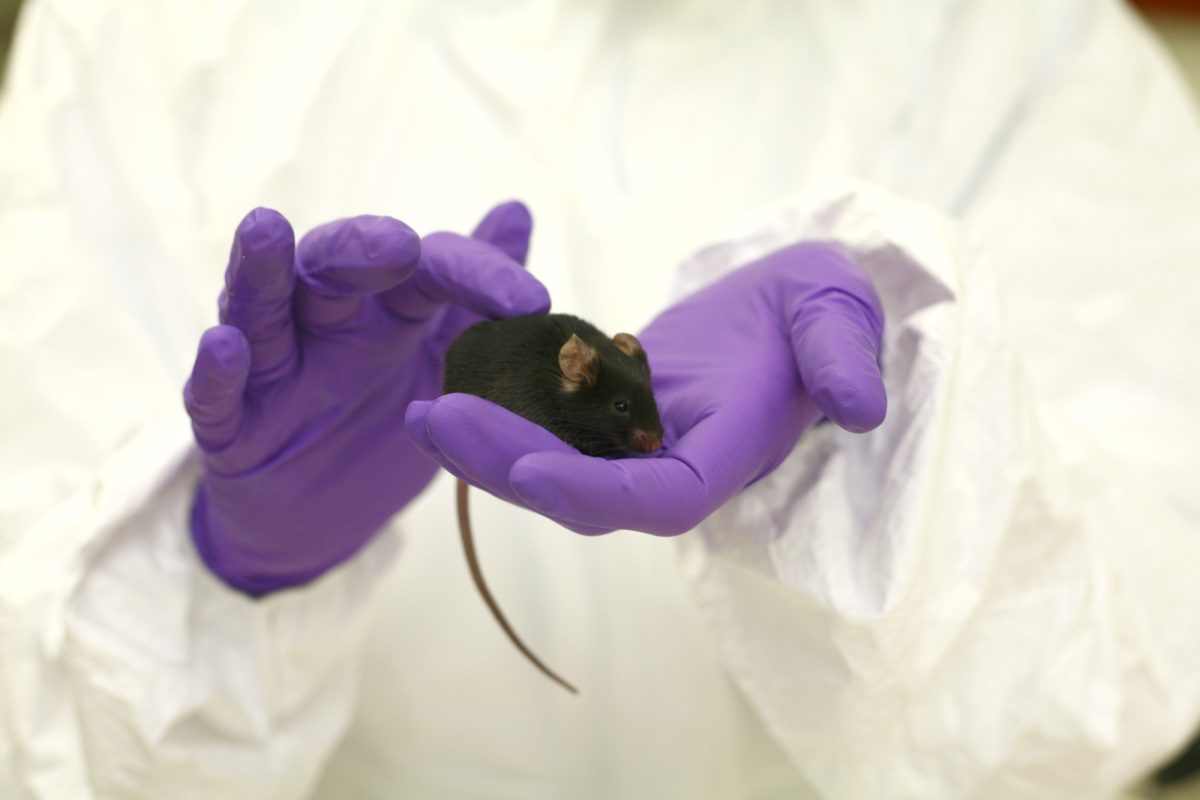
Illustrative image of a black laboratory mouse held in gloved hands. It does not show animals from the study. Credit: commissioned by Understanding Animal Research, via Wikimedia Commons. License CC BY-SA 4.0.
Educational content written from a harm-reduction perspective and with respect for individual freedom. It does not replace information from a healthcare professional and does not aim to encourage or condemn any drug use.