

In brief
- A study on Wistar rats shows that psilocybin reduces the grooming triggered by a new environment, a behavior used to model affective disorders.
- This effect depends on the 5-HT2B receptor, which is distinct from the 5-HT2A receptor responsible for the substance’s classic psychedelic effects.
- A selective blocker of this receptor, the molecule RS-127445, reversed psilocybin’s effect on this behavior.
A team of researchers has published a study in the journal Progress in Neuro-Psychopharmacology & Biological Psychiatry that isolates the molecular pathway in rats responsible for one of psilocybin’s behavioral effects: the reduction of excessive grooming that occurs when an animal faces an unfamiliar space. The finding points to a serotonin receptor, the 5-HT2B, which is distinct from the one that produces the psychedelic effect itself.
What was measured
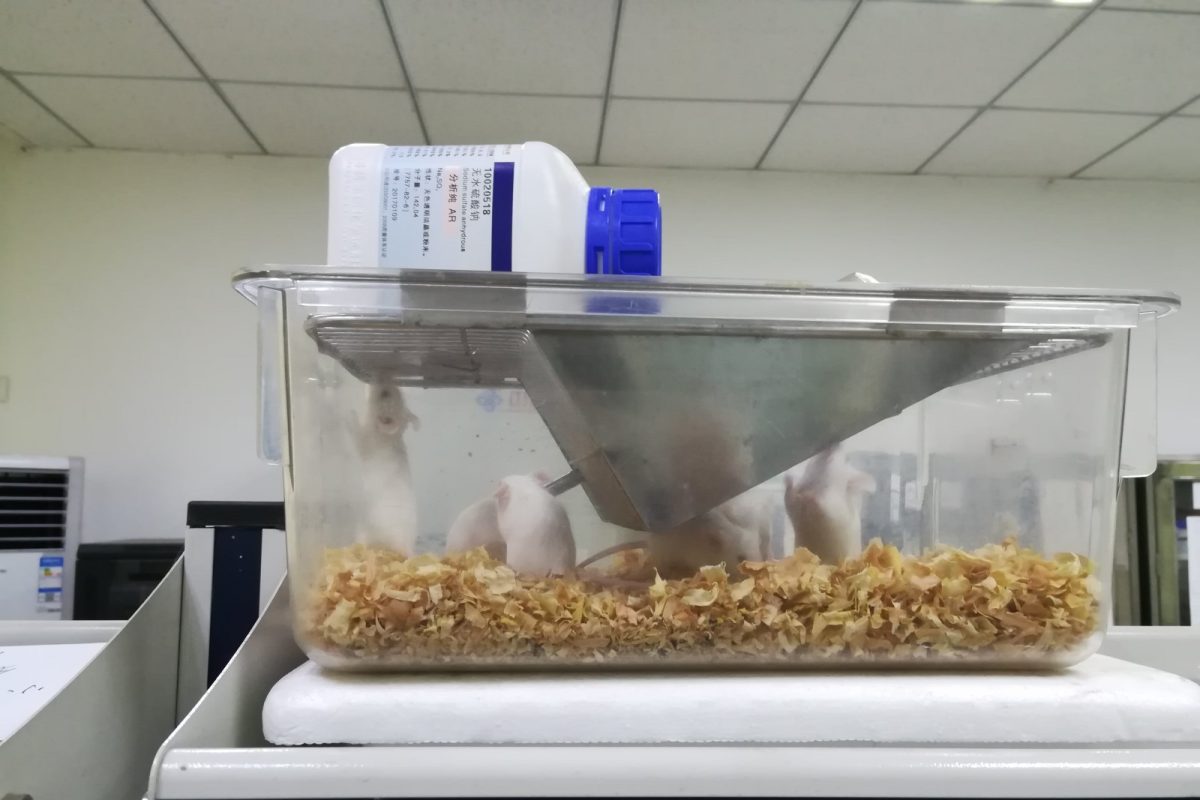
The authors, Alexandre Seillier, Ghinwa Ibrahim El Dannan, and Lenka Seillier, exposed Wistar rats to a new environment and analyzed their grooming behavior using a computer program called the Grooming Analysis Algorithm (GAA), designed to break down this behavior into its microstructure: how long it lasts, how many episodes it is fragmented into, and how its phases are linked. Excessive or disorganized grooming in the face of novelty is used in basic research as a marker for altered affective states.
The role of the 5-HT2B receptor
Psilocybin reduced both the total grooming time and the number of episodes, and it did so selectively: it did not eliminate normal hygiene behavior, but specifically the “anomalous” pattern, characterized by fragmented episodes and erratic transitions between phases. When the animals were pre-treated with RS-127445, a selective 5-HT2B receptor blocker, this effect of psilocybin was reversed. The authors note that in previous work by their own group, they had already observed that this same receptor—rather than the 5-HT2A receptor, which is involved in altered perception—explained another behavioral effect of psilocybin in a different test (the forced swim test, used to model antidepressant response). This new study extends that dissociation to a different behavior: grooming in response to novelty.
What it implies
The result is one more piece in the map of which receptors do what when the body processes psilocybin: the 5-HT2A is responsible for the subjective experience or “trip,” but at least part of its effects on behavior appear to occur through a different pathway, the 5-HT2B. It is important to place this finding within its limits: it is a study in healthy rats, not in a model of obsessive-compulsive disorder or in humans, and it measures a behavior (grooming in response to novelty) that serves as an indirect model of affective states, not a psychiatric diagnosis. It does not prove that psilocybin treats any human compulsive condition; however, it does provide a concrete molecular clue as to which receptor to investigate if the goal is to separate behavioral effects from psychedelic ones. The authors themselves suggest that mapping the action profile of the 5-HT2B in other behaviors, beyond the forced swim test and grooming, is the next step.
For those who want to delve deeper into how psilocybin acts and what is known about its use, the Psilocybin and Magic Mushrooms Guide from Psiconáutica summarizes the current state of the evidence.
Source
- Seillier A, El Dannan GI, Seillier L. Psilocybin selectively suppresses novelty-induced grooming via 5-HT2B receptors: A microstructure analysis in Wistar rats. Progress in Neuro-Psychopharmacology & Biological Psychiatry, September 2026.
Educational content written from a harm reduction perspective and with respect for individual freedom. It is not a substitute for advice from a healthcare professional and is not intended to encourage or condemn any drug use.