

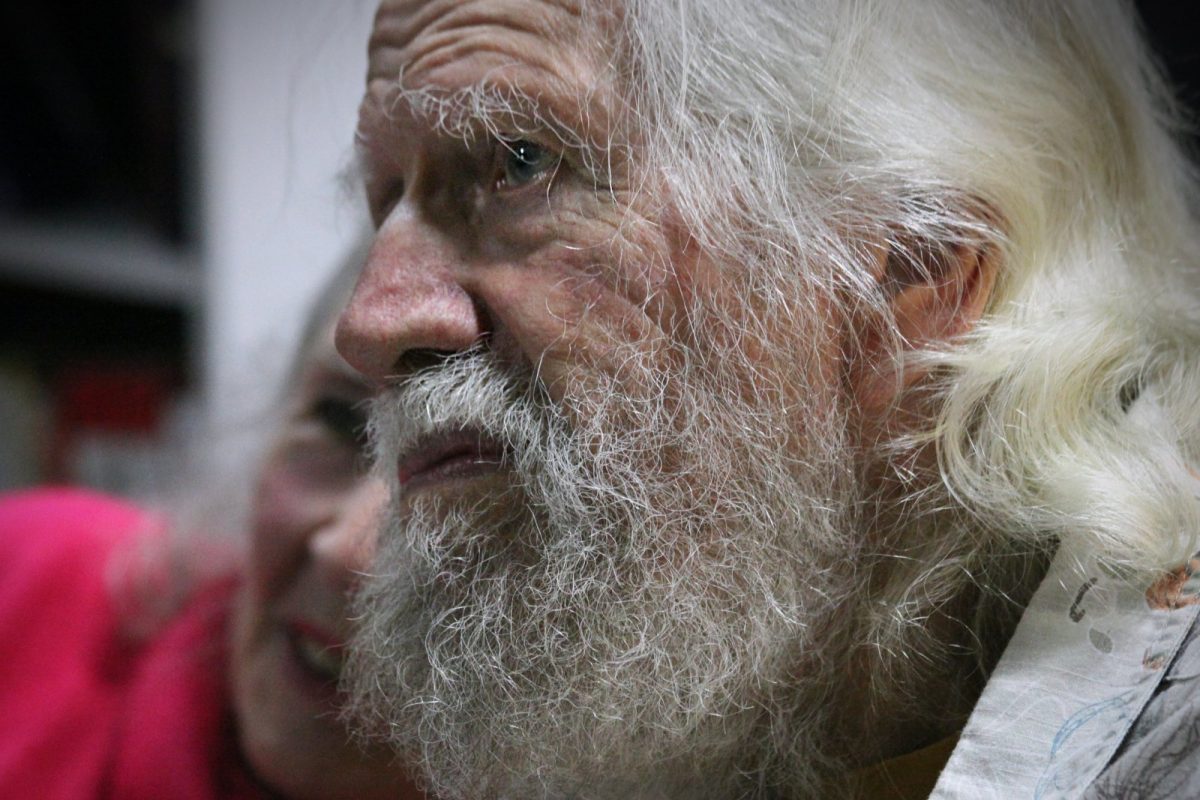
A Chemist Who Painted Molecules
In June 2014, Alexander Theodore Shulgin died at the age of 88. To his friends, he was “Sasha”; to readers of his two autobiographical books, PIHKAL and TIHKAL, he was “Shura.” Behind those monikers stood a figure difficult to pin down with a single label: a pharmacologist by training, a chemist by trade, and a methodical self-experimenter who spent much of his life designing psychoactive molecules and detailing their effects with remarkable discipline.
Shulgin often compared his work to that of a painter. A painter knows technique, light, and color, envisions a piece, and then renders it on canvas, even if the final result does not quite match what was imagined. Shulgin did something similar: drawing on a deep grasp of neuroscience and chemistry, he intuited how a given molecular structure might interact with specific receptors to produce a particular psychological effect. First, he constructed the compound in his mind; then, he synthesized it and tested it. That image—the laboratory as an artist’s studio—captures his distinct approach to psychopharmacology.
The “Godfather” of MDMA, with Caveats
Shulgin is widely remembered as the “godfather” of MDMA. The moniker is fitting, provided it is understood with precision: he was not the first to synthesize the molecule (that occurred in an industrial setting in the early 20th century), nor was he the first to experience its effects. His actual contribution was monumental in its own right: he characterized its pharmacology and introduced it to therapeutic circles in the 1970s after self-experimenting with the compound.
His fascination with this chemical family began much earlier. In the 1960s, alongside Chilean psychiatrist Claudio Naranjo, he investigated MDA—MDMA’s psychedelic “cousin”—and safrole, the natural precursor to both, exploring MDA’s psychotherapeutic potential. This collaboration places Shulgin not as a solitary eccentric, but as a key node in an informal network of researchers exploring these compounds before regulatory doors slammed shut.
In 1978, working with a team that included a young David Nichols—who later synthesized novel molecules such as MBDB—Shulgin published the first pharmacological profile of MDMA. The study highlighted a crucial detail: unlike LSD and MDA, which exhibit more pronounced hallucinogenic qualities, MDMA derives most of its psychoactive potency from the S(+) isomer, similar to amphetamines. This made it a close relative of amphetamines with a distinctly different psychoactive profile. To establish this, his group synthesized the racemate and each enantiomer separately, scoring their effects on a plus scale (+ to ++++) to measure intensity. In a second paper published that same year, Shulgin and Nichols described the effect as an “easily controllable altered state of consciousness” marked by emotional and sensory undertones, comparable to other compounds but lacking their overt hallucinatory component.
DiPT and the Curiosity of Exploring Perception
Beyond MDMA, Shulgin was defined by his methodology: conceiving a function and designing a molecule to test it. The case of DiPT (diisopropyltryptamine) offers the clearest example. Shulgin suspected that a specific molecular alteration might selectively alter auditory perception. After synthesizing and testing it, he noticed that music playing on his lab radio sounded noticeably out of tune: he had discovered a compound that distorted pitch perception. Decades later, this finding remains virtually untapped in basic research on how the brain processes sound—a stark reminder of how much scientific insight was shelved for legal rather than empirical reasons.
2C-B: His Most Beloved Molecule
If he had a favorite compound, it was 2C-B, a structural analogue of mescaline that shortens the duration of the experience while sharpening its visual qualities. Many users describe it as emotionally cooler and more manageable, often noting an empathogenic or sensual edge. Despite its widespread popularity, 2C-B has received almost no formal human study in clinical environments. The only published human trial to date is a survey study led by physician Fernando Caudevilla in collaboration with Hospital de Sant Pau, the drug-checking service Energy Control, and researcher José Carlos Bouso, which mapped its acute and long-term subjective and adverse effects. That a substance so prevalent in underground culture still lacks extensive clinical literature says much about the regulatory barriers stifling this field.
From Therapeutic Circles to Clinical Trials
MDMA’s journey into medicine also ran through Shulgin. He shared samples with Leo Zeff, a retired psychotherapist who was so moved by the experience that he returned to practice and trained dozens of colleagues in using it as an adjunct to psychotherapy. Before the DEA placed MDMA in Schedule I in 1985, therapists had reportedly administered hundreds of thousands of doses alongside rapidly growing recreational use. In Spain, Shulgin even served as an expert witness in one of the country’s first ecstasy trafficking trials; his testimony helped categorize MDMA temporarily as a substance causing “minor harm to health” before the Supreme Court reversed the decision.
The personal account of José Carlos Bouso, now a leading figure in psychedelic research in the Spanish-speaking world, highlights that direct influence. Bouso has recounted how a lecture by Shulgin at a summer symposium in Dénia in the mid-1990s—where he also crossed paths with Jonathan Ott—pivoted his career toward investigating MDMA’s therapeutic value, later focusing on post-traumatic stress disorder (PTSD). By the time Shulgin passed away, the first modern clinical trials evaluating MDMA-assisted therapy for PTSD had been published, inaugurating a research pipeline that continues to expand today.
A Critical Reading
Viewing Shulgin objectively means resisting hagiography. His self-experimentation, though rigorous and documented in painstaking detail, was inherently high-risk and is neither reproducible nor advisable today. It relied on world-class chemical and pharmacological expertise, a controlled home environment, and a conscious willingness to take personal risks that modern institutional review boards would never permit. Moreover, enthusiasm for “therapeutic potential” requires sober evaluation: many claims surrounding MDMA or 2C-B still trace back to anecdotal accounts or preliminary trials rather than an exhaustive body of clinical evidence.
His true legacy is twofold. On one hand, he left an extensive catalog of novel psychoactive molecules whose pharmacology has barely been explored, largely due to legal hurdles rather than scientific disinterest. On the other, his life is a testament to how prohibition curtails not just drug use, but scientific inquiry itself. Celebrating Shulgin as an educator and chemist does not mean treating his notebooks as an instruction manual, but rather viewing his life as a unique chapter in the history of science—one deserving of equal measures of curiosity and caution.


