

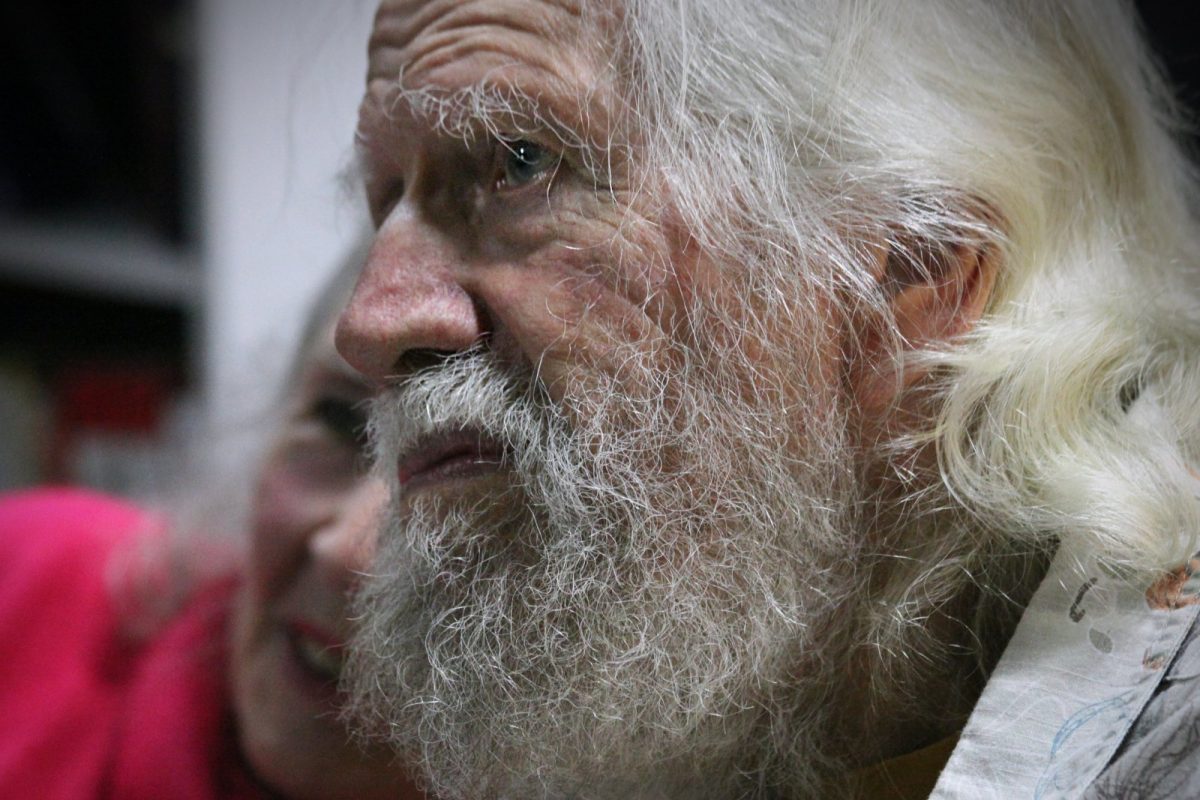
A chemist who painted with molecules
In June 2014, Alexander Theodore Shulgin passed away at age 88. To those who knew him, he was “Sasha”; to readers of his two autobiographical books, PIHKAL and TIHKAL, he was “Shura.” Behind those nicknames lies a figure difficult to fit into a single label: a pharmacologist by training, a chemist by trade, and a methodical self-experimenter who dedicated much of his life to designing psychoactive molecules and describing, with remarkable discipline, what they did.
Shulgin often compared his work to that of a painter. A painter knows technique, light, and color; they imagine a painting and then bring it to the canvas, without the result necessarily matching the initial vision. He did something similar: starting from a solid foundation in neuroscience and chemistry, he would intuit how a specific molecular configuration might fit into certain receptors to produce a concrete psychological effect. He would first build it in his mind; then, he would synthesize and test it. That image—the laboratory as a painter’s studio—nicely summarizes his approach to psychopharmacology.
The “godfather” of MDMA, with nuances
Shulgin is known, above all, as the “godfather” of MDMA. The label is accurate provided it is understood precisely: he was not the first to synthesize the molecule (that occurred in the early 20th century in an industrial context), nor was he the first to experience its effects. His contribution was different and significant: he was the one who characterized its pharmacology and introduced it to therapeutic circles in the 1970s after self-experimenting with it.
His interest in this family of compounds went back a long way. As early as the 1960s, he had worked with Chilean psychiatrist Claudio Naranjo to characterize MDA—the psychedelic “cousin” of MDMA—and safrole, the natural precursor to both, in addition to exploring the psychotherapeutic potential of MDA. This collaboration situates Shulgin not as an isolated inventor, but as a piece of a network of researchers who probed these compounds before regulation slammed the door shut.
In 1978, with a team that included a young David Nichols—later known for synthesizing molecules like MBDB—Shulgin published the first pharmacological description of MDMA. There, he showed a key detail: unlike LSD and MDA, which have more hallucinogenic profiles, the primary psychoactive activity in MDMA lies with the S(+) isomer, as is the case with amphetamines. We were, therefore, looking at a compound related to amphetamines but with a distinctly different effect. To arrive at this, his group synthesized the racemic mixture and each isomer separately, evaluating them with a scale of signs (from + to +++++) to grade the intensity of the experience. In a second article that same year, Shulgin and Nichols described the effect as “an easily controlled altered state of consciousness,” with emotional and sensory connotations, comparable to other substances but without their hallucinatory component.
DIPT and the curiosity of exploring perception
Beyond MDMA, what distinguishes Shulgin is his method: imagining a function and designing a molecule to test it. The case of DIPT (diisopropyltryptamine) illustrates this best. Shulgin suspected that a certain configuration could specifically affect auditory perception. After synthesizing and experiencing it, he recounted how the music playing on his lab radio began to sound out of tune: he had stumbled upon a substance that distorted the perception of harmonics. Decades later, that finding has barely been utilized in basic research to understand how the brain processes sound—a reminder of how much potential knowledge was sidelined for legal rather than scientific reasons.
2C-B, his most cherished molecule
If he had a declared favorite, it was 2C-B, a modification of the mescaline structure that shortens the duration of the effect and accentuates its visual character. Many users describe it as “colder” emotionally and having a controllable profile, and it is reputed to be an aphrodisiac. Despite that profile, 2C-B has barely been studied in humans in a controlled environment. The only work published to date on people is a survey study led by physician Fernando Caudevilla, in collaboration with the Hospital de Sant Pau, the drug-checking service Energy Control, and researcher José Carlos Bouso, which characterized subjective and short- and long-term side effects. That a compound so well-known in psychedelic culture continues to have such meager clinical literature says a lot about the barriers weighing on this research.
From therapeutic circles to clinical trials
The journey of MDMA toward the clinic also passed through Shulgin. He sent samples to psychotherapist Leo Zeff, who, after trying it, returned to practice to train other therapists in its use. Before the DEA included it in the list of most restricted substances in 1985, it is estimated that hundreds of thousands of doses had been administered in therapeutic contexts, in addition to growing recreational use. In Spain, Shulgin even acted as an expert witness in one of the first trials for ecstasy trafficking: his testimony contributed to MDMA being classified for a few months as a substance of “mild harm to health,” before the Supreme Court reversed that category.
The testimony of José Carlos Bouso, today one of the leading voices in Spanish-language psychedelic research, illustrates this influence in concrete terms. Bouso has recounted how a lecture by Shulgin at a summer course in Dénia in the mid-nineties—where he also met Jonathan Ott—reoriented his career toward the study of the therapeutic potential of MDMA, which he would later explore in post-traumatic stress disorder. By the time Shulgin died, the first clinical trials with MDMA for PTSD had already been published, a line of work that has continued to grow since then.
Critical reading
It is advisable to read Shulgin’s figure without turning it into hagiography. His self-experimentation, performed with method and record-keeping, was also a high-risk practice that is neither transferable nor recommended: it depended on exceptional chemical and pharmacological knowledge, a controlled environment, and the conscious assumption of dangers that no research ethics board today would endorse. Enthusiasm for “therapeutic potential” must be nuanced: many claims circulating about MDMA or 2C-B come from accounts of the era or studies that are still limited, not from a consolidated body of evidence.
His real legacy is twofold. On one hand, an enormous catalog of compounds whose pharmacology has barely been studied rigorously, largely due to legal rather than technical obstacles. On the other, the reminder that prohibition does not only limit consumption: it also halts knowledge. Championing Shulgin as a popularizer and scientist is compatible with emphasizing that his biography is not a user manual, but an episode in the history of science that deserves to be read with equal parts curiosity and caution.


