

The “Coca of Africa”: Understanding Iboga
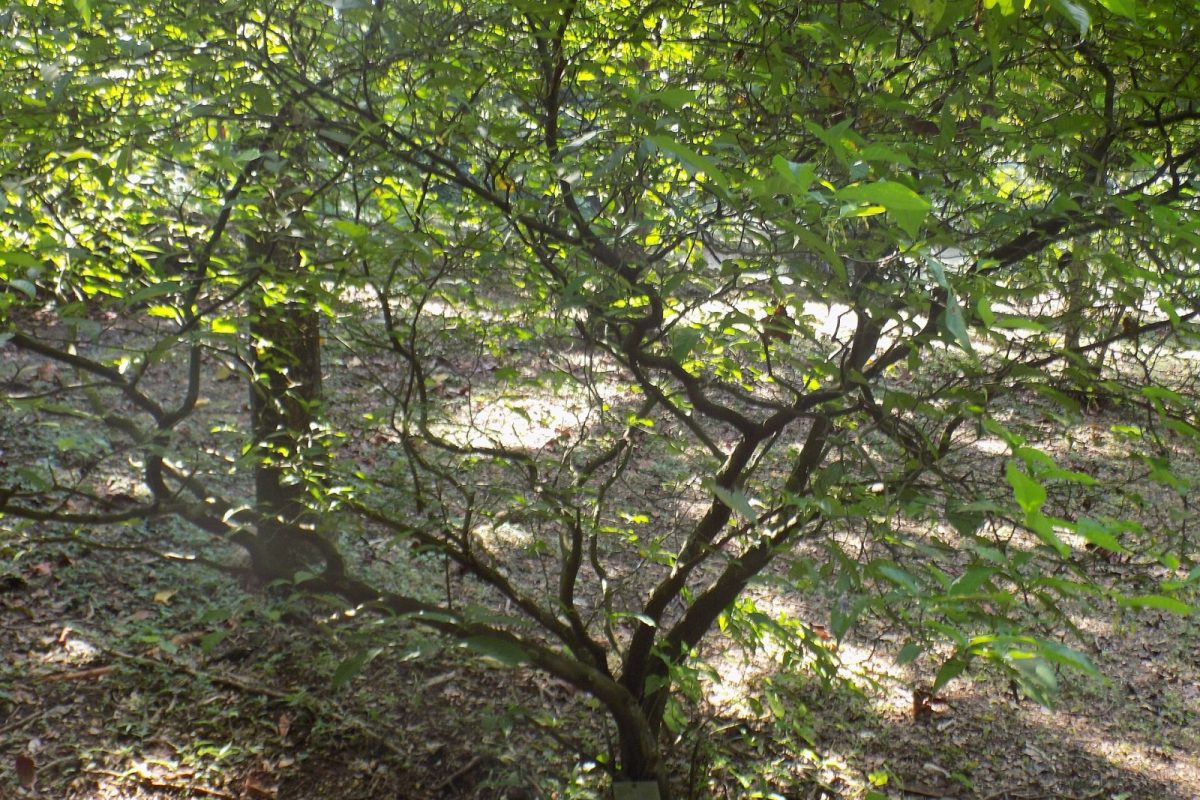
Iboga, or éboka, is an evergreen shrub of western equatorial Africa rarely exceeding two meters in height, bearing small yellowish blossoms and edible orange fruits. Its pharmacological power lies beneath the soil: the root bark concentrates the indole alkaloids that account for its global renown. At low amounts it serves as a central nervous system stimulant—earning the moniker “the coca of Africa”—whereas at high doses it induces a protracted, profound visionary state.
Indigenous oral tradition attributes its initial discovery to Pygmy hunter-gatherers of the Congo rainforest, who passed their ethnobotanical knowledge to neighboring Bantu communities. From there, it became the foundation of the Bwiti spiritual tradition, which flourished throughout Gabon—where recognized temple networks have made it a cornerstone of national cultural identity—extending into Equatorial Guinea, the Republic of the Congo, and Cameroon. Western botanical reports on its stimulant properties date back to 1864; the shrub was taxonomically classified in 1889, and French chemists isolated ibogaine in 1901 (Ott; Rätsch).
Bwiti: Iboga as Living Sacrament, Not Mere Decoration
Within Bwiti spiritual practice, iboga is not an incidental ceremonial decoration: it is the ritual itself. Initiates revere it as the true tree of knowledge, an experiential conduit to touch the divine and encounter truths that conventional institutional churches preach without experiential delivery. A statement recorded by Italian ethnobotanist Giorgio Samorini from a Bwiti elder captures this perspective directly: inside Western churches “one talks about God”; through iboga, “one lives God.”
This sacramental primacy explains historical tensions with colonial missionary establishments. In contrast to European liturgy, Bwiti initiations unfold over multiple days of communal polyphonic singing, sacred dance, and ritual ingestion within a rigorously coded ancestral framework. This context is essential: historically, iboga is a sacred botanical guarded by complex community structures, ritual ethics, and collective guidance, never an isolated, recreational drug.
Phytochemistry: Ibogaine and a Vast Alkaloid Suite
The root bark can yield multiple times more total alkaloids than the whole root, which is why raw root and root bark are never pharmacologically equivalent. Ibogaine represents the primary active constituent, accompanied by an extensive family of related indole alkaloids—tabernanthine, ibogamine, voacangine (carbomethoxy-ibogaine), catharanthine, and others—spanning several structural classes.
This complex botanical matrix matters: consuming raw root bark produces distinct neuropharmacological effects compared to isolated synthetic ibogaine hydrochloride, as secondary alkaloids modulate diverse receptor systems (for instance, tabernanthine displays activity at GABA and benzodiazepine sites, according to Rätsch). In early 20th-century Europe, iboga enjoyed a brief vogue as an over-the-counter neuromuscular tonic and antidepressant before regulation, with its stimulant profile likened more closely to cocaine than amphetamine.
The Promise of the Cure: Ibogaine and Opioids
The claim that brought iboga international attention is its purported capacity to rapidly interrupt opioid withdrawal and eliminate drug cravings. Popularized by American activist Howard Lotsof, this hypothesis requires close examination: clinical follow-ups within Lotsof’s circle (documented by Fraga) indicated that only roughly 10% of treated individuals remained abstinent at two years, while a comparable percentage relapsed within the first two weeks.
In other words: ibogaine is not an effortless miracle, but rather an intense psychopharmacological catalyst of modest, highly setting-dependent efficacy. There is also a conceptual question. Treating substance dependence by administering another powerful stimulant echoes past pharmacological dead ends—such as attempting to treat heroin dependence with higher-affinity opioids—conflating replacing a habit with resolving it. As psychiatrist Thomas Szasz observed, society often labels as “abuse” what individuals undertake autonomously, while calling the same behavior “medical treatment” when mediated by prescription. The clinically useful distinction is not legal status, but separating grounded, mindful use from destructive misuse (uncontrolled doses, compulsive frequency, dangerous adulterations), whether prescribed or unprescribed.
Experimental evidence is more robust regarding psychotherapy: in 1969, Chilean psychiatrist Claudio Naranjo explored ibogaine as a facilitator of psychotherapeutic breakthroughs, summarizing its action as fostering fantasy elaboration and spontaneous retrieval of repressed childhood memories. This psychotherapeutic role is far more honest and grounded than claims of an instant addiction cure.
Medical Risks: Why Iboga Is Not a Casual Substance
Being an “ancient sacred plant” does not make iboga harmless; on the contrary, ibogaine possesses documented cardiac toxicity. It lengthens the ventricular QTc interval, precipitating fatal cardiac arrhythmias, and several deaths have occurred in non-clinical settings. Two tragic cases illustrate the core hazards: an individual with preexisting structural heart disease who suffered cardiac arrest hours after a ceremony, and a young person who died after co-ingesting ibogaine with heroin. These deaths emphasize the two major clinical perils: latent cardiovascular vulnerability and poly-substance combinations.
As basic harm reduction—not an endorsement of use—it must be recognized that iboga root bark delivers potent stimulation persisting for over 24 hours, toxicity varies widely between individuals, and co-administration with opioids, alcohol, or other psychoactive compounds is life-threatening. Regulated clinical research requires formal cardiac screening, telemetry monitoring, and emergency readiness; unsupervised self-administration carries grave medical hazards.
Voacanga africana: The Discreet Botanical Cousin
Voacanga africana is a small West African tree closely related to iboga, producing a comparable suite of indole alkaloids. Its relevance extends beyond ethnobotany: hundreds of tons of its seeds are harvested in Cameroon annually and shipped to European pharmaceutical laboratories to extract vincamine, an alkaloid prescribed in geriatric medicine to enhance cerebral perfusion. The plant thus supplies both licensed pharmaceutical industries and ethnobotanical supply chains.
In tropical West African folklore, the root bark was utilized in ritual ceremonies and as a stimulant during arduous hunts. It shares iboga’s toxicological risks—dose-dependent convulsions and respiratory depression at excessive quantities—and the warning remains identical: high doses carry real physical danger, and co-ingestion with alcohol or other central nervous system depressants heightens acute risk.
There is, however, an important legal distinction. While iboga is strictly scheduled in multiple jurisdictions, Voacanga historically remained unregulated, making it a common grey-market substitute. This legal ambiguity underscores why readers should always verify current statutory drug laws within their own jurisdictions rather than relying on historical literature.
Critical Reading
Three essential principles help contextualize iboga free from sensationalist hype. First: what functions as an ancestral sacrament anchored in communal liturgy within Bwiti culture is often stripped of its supportive context when imported to the West, reduced to a commodified “miracle cure.” This decontextualization destroys the very social scaffolding that historically ensured safety. Second: anti-addiction marketing exaggerates real, modest clinical signals into magical cures unsupported by long-term data; one must distinguish preliminary pharmacological findings from commercial slogans. Third: cardiac toxicity is the least romantic yet most critical empirical fact, frequently omitted by overzealous advocates.
Across all psychoactive culture, the central issue is rarely the botanical in the abstract, but the surrounding context: accurate knowledge, clinical oversight, drug combinations, and realistic expectations. This essay is an educational cultural history, not a consumption guide: it contains no sourcing or dosing instructions, and genuine clinical engagement with ibogaine belongs within licensed medical environments, never reckless self-treatment.
Sources cited throughout the text include Jonathan Ott, Christian Rätsch, Giorgio Samorini, Claudio Naranjo, Thomas Szasz, and clinical records compiled by Gaspar Fraga regarding Howard Lotsof.


