

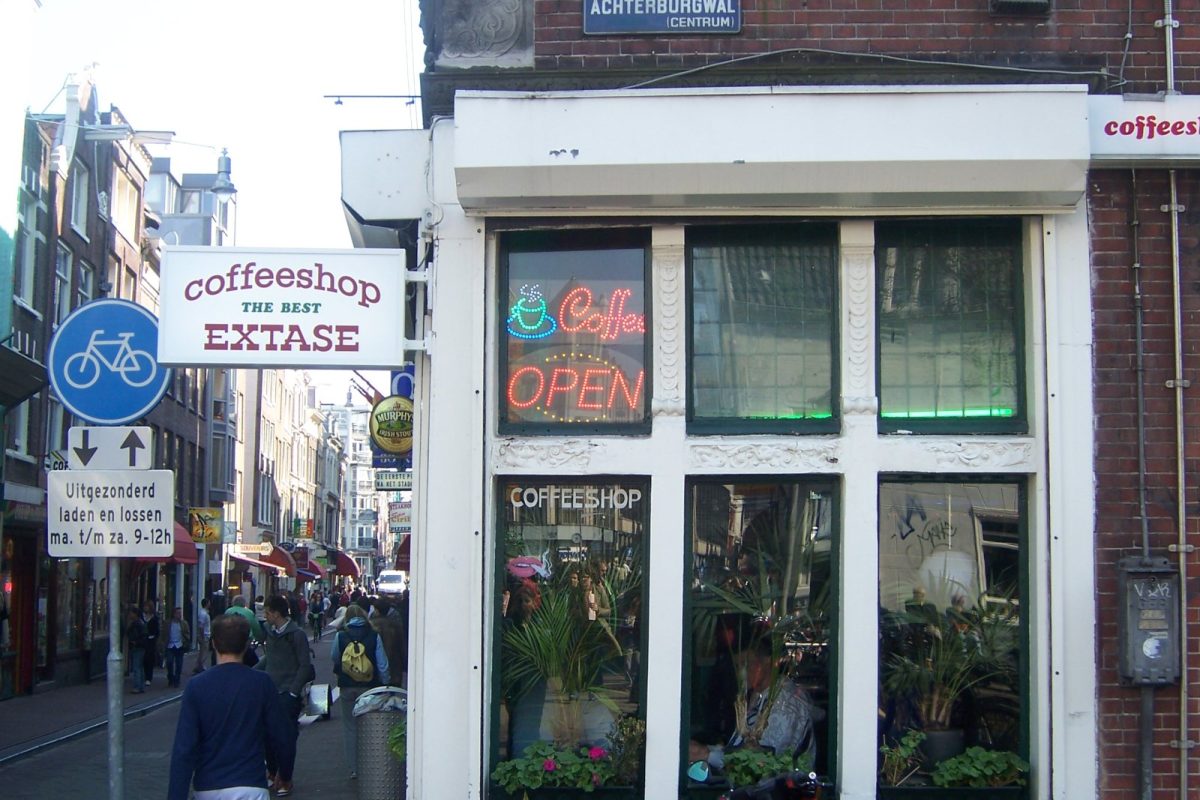
Tolerance That Was Never Legalization
It is vital to dispel a persistent international misconception at the outset: cannabis was never formally “legalized” in the Netherlands. What exists instead is an official policy of pragmatic tolerance (termed gedoogbeleid) under which prosecutors deliberately decline to penalize certain prohibited offenses under specified guidelines. The retail sale of small amounts over the counter in a licensed coffee shop is tolerated; however, the commercial cultivation, transport, and wholesale distribution that supply those shops remain criminal offenses. The entire administrative framework rests upon this foundational legal contradiction.
National policy coordination is overseen jointly by the Ministries of Health, Justice, and the Interior, but day-to-day enforcement falls upon local authorities: municipal mayors, local prosecutors, and regional police commissioners. Within each municipality, a triangular committee brings these authorities together to determine whether coffee shops may operate locally and under what specific municipal constraints. The outcome is an extremely fragmented national landscape.
A Geographically Concentrated Reality
Contrary to the tourist myth of a country blanketed in cannabis cafes, historical reality was markedly restrained: the overwhelming majority of Dutch municipalities never authorized a single venue. According to records from the early 2000s, 433 out of 538 Dutch municipalities prohibited them entirely. Of roughly one thousand establishments nationwide, nearly half were concentrated within four major urban hubs: Amsterdam, Rotterdam, The Hague, and Utrecht.
Industry surveys by European trade publications (such as Highlife, 2003–2004) recorded even narrower numbers: approximately 638 licensed shops across merely 95 municipalities, led by Amsterdam (197), followed by The Hague (47), Rotterdam (42), Maastricht (19), Utrecht (15), and Haarlem (14). While exact counts fluctuated, the underlying distribution was unambiguous: a distinctly urban phenomenon, not an omnipresent national reality.
Opposition and International Criticism
Skeptics argued from the beginning that the tolerance policy generated more complications than it resolved. High-ranking legal scholars, such as Supreme Court advocate Mappie Veldt, warned that the policy risked creating convenient retail fronts where cannabis commerce might intersect with hard narcotics. Meanwhile, international law enforcement officials—such as Paris narcotics chief Michael Bouchet—regularly deployed undercover agents across the border, claiming to observe illicit transactions involving hard drugs within certain venues.
Conservative prohibitionists further argued that the policy violated the 1961 UN Single Convention on Narcotic Drugs, a critique reiterated regularly by the International Narcotics Control Board (INCB). Additionally, unintended market distortions emerged: aggressive police raids against large-scale outdoor plantations drove commercial cultivation indoors into residential properties, frequently co-opted by organized criminal rings. Transnational syndicates invested wholesale profits into real estate and legitimate enterprises, occasionally operating coffee shops through nominal straw owners. Nevertheless, the broad domestic indoor growing scene was by no means entirely mafioso-controlled.
The Back-Door Paradox
The central structural vulnerability of the Dutch model has a definitive name. In April 2000, the national government submitted a landmark report to Parliament titled The Path to the Back Door, addressing the core dilemma: a coffee shop can sell cannabis legally through the front door, but how does the product enter the establishment? Sourcing stock through the “back door” remained completely illegal. Transporting cannabis to the shop constituted a criminal offense, yet authorities had to overlook it so that the business could operate. This glaring contradiction steadily eroded public and judicial credibility.
As early as 1999, twenty Dutch mayors formally proposed pilot programs for municipal closed-loop cultivation and regulated supply, pursuing three goals: ensuring supply-chain transparency, reducing illicit organized crime, and guaranteeing product safety. Parliament debated allowing shops to source from registered agricultural growers under strict quality controls. However, national ministers rejected both initiatives, arguing that regulated cultivation would violate international treaty commitments and ignite severe diplomatic friction with European Union neighbors.
In response, some conscientious proprietors established private arrangements, cultivating their own crop or forming stable alliances with trusted artisan growers to keep their supply chain independent of organized crime. Yet these remained informal arrangements entirely devoid of statutory protection.
Cross-Border Drug Tourism
A massive percentage of patrons frequenting border coffee shops traveled from neighboring countries like Germany, Belgium, and France, alarming foreign governments whose domestic laws strictly prohibited possession. Seeking a remedy, hardliners proposed barring foreign nationals from coffee shops under Schengen provisions; however, enforcing nationality-based discrimination proved legally fragile, prompting foreign visitors simply to hire local Dutch intermediaries as street runners. Diplomatic pushback eventually spurred stricter domestic measures: reducing personal purchase allowances, restricting shop licenses, and increasing surveillance over grow shops and seed banks.
The Mandatory Criteria of Tolerance
National guidelines formalized in 1994 established the strict “AHOJ-G” criteria that defined the strict operational boundaries of tolerated retail:
- Strict prohibition of commercial advertising or overt marketing.
- Absolute prohibition on selling hard drugs (cocaine, heroin, amphetamines).
- Strict duty to avoid creating public nuisance or neighborhood disturbances.
- Absolute prohibition against admitting or selling to minors under eighteen years old.
- Restricting maximum individual sales transactions from thirty down to five grams.
- Imposing an absolute ceiling on on-site commercial inventory (maximum 500 grams).
- Strict prohibition against serving alcohol or installing slot gambling machines.
- Municipal authority to enforce zoning distance rules near schools or sensitive areas.
- Discretionary municipal authority to ban coffee shops entirely within their territory.
- Mandatory compliance with standard commercial income tax obligations.
- Thorough background screenings of business owners, excluding individuals with criminal records.
- Intensified legal prosecution of large-scale stockpiling aimed at foreign export.
The declared goal was maintaining a rigorous separation between soft cannabis consumers and hard drug markets, promptly revoking licenses from non-compliant venues.
Closures and the Restrictive Turn
Consequently, total venue numbers plummeted: from roughly 1,200 shops in 1997 down to 754 by 2003, according to the Trimbos Institute, the Netherlands’ primary addiction research agency. Public health advocates worried that shuttering regulated venues would drive consumers back into unregulated street markets—precisely the outcome the policy was designed to prevent.
The most publicized clash occurred in Amsterdam, where the city was pressured to close 43 of its 228 venues by 2011 under a national distance mandate prohibiting cannabis sales within 250 meters of secondary schools. The measure faced vocal resistance even from educators: administrators at the prestigious Barlaeus Gymnasium defended neighboring venues—including The Bulldog, the city’s earliest establishment—for strictly policing youth access and alerting school staff if students loitered outside. Meanwhile, Christian Democratic Prime Minister Jan Peter Balkenende declared the tolerance policy obsolete, targeting drug tourism amid European political pressure.
Biometric surveillance peaked in border cities such as Maastricht, where venues introduced fingerprint scanning and digital identification systems to verify visitor eligibility. While records were wiped nightly, consumers overwhelmingly rejected biometric tracking. The ultimate paradox was striking: to survive, cannabis coffee shops were compelled to demonstrate far greater regulatory compliance than ordinary licensed alcohol bars.
Critical Appraisal
This historical overview captures an important transitional era—the turn of the millennium—and its figures reflect that period. The Dutch model has continued to evolve through contemporary regulated supply pilots, so this account should be read as a historical case study rather than a snapshot of current law. Furthermore, statistics vary across agencies (Trimbos Institute, industry surveys, ministerial white papers), representing indicative trends rather than absolute constants.
Beyond statistics, the Dutch experiment remains an invaluable case study for drug policy reform. It demonstrates that tolerating retail sale while keeping agricultural production criminalized leaves an unresolvable structural flaw—the “back door”—through which organized crime inevitably operates. From a public health harm-reduction perspective, lessons are twofold: a supervised retail counter separates markets, enforces age limits, and monitors product handling; yet omitting wholesale supply regulation risks pushing distribution into opaque criminal channels. Any thoughtful assessment of future cannabis regulation must confront this structural dilemma rather than relying on tourist clichés.