

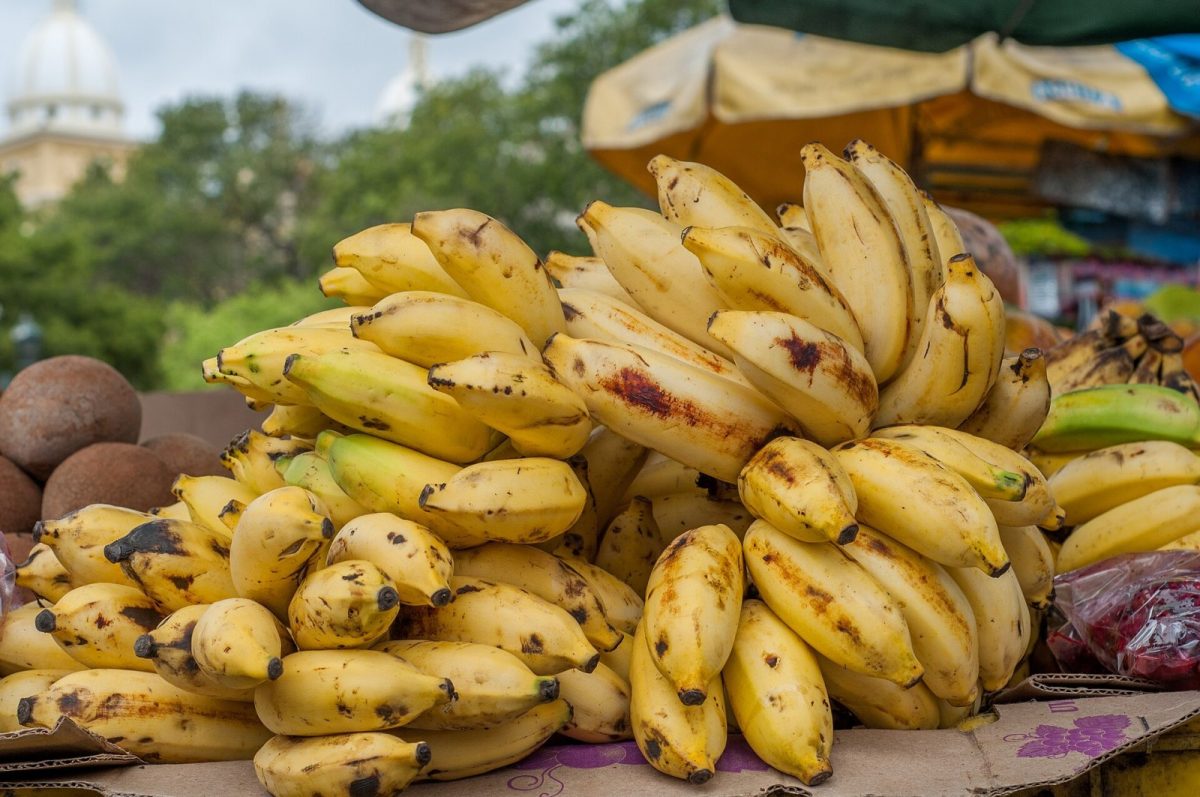
For decades, the name of the banana has been associated in the collective imagination with a hidden psychoactive substance. The story goes that by extracting certain internal fibers from its peel and subjecting them to a specific thermal process, one could obtain a potent hallucinogen capable of inducing altered states of consciousness similar to LSD or opium. This narrative has permeated popular culture, appearing in film, literature, and everyday conversations, to the point that many young people assume its veracity without questioning its foundations.
In brief
- Origin of the hoax: The story has no scientific basis; it was born in 1967 as a satirical prank published in the fanzine Berkeley Barb.
- “Bananadine” does not exist: There is no evidence of any psychoactive compound derived from the banana. The hypothetical substance is a literary invention.
- Real risks: Smoking dried fibers exposes you to natural toxins, mycotoxins, and environmental contaminants present in any dried organic material.
- Historical context: The legend expanded thanks to the acid humor of the hippie counterculture and was replicated by later satirical manuals.
A classic of film and literature
The persistence of this myth is such that it has managed to transcend the borders of marginal circles to take hold in the mass imagination. A paradigmatic example is found in Spanish cinema of the late sixties, where iconic characters discuss the hallucinogenic capacity of these fibers. In a memorable scene from La dinamita está servida, two actors argue about the quantity needed to achieve a psychoactive effect and the methods of preparation.
Although the script uses absurd humor, the anecdote has been passed down as if it were a true fact. The popular phrase that completes the internet search—”smoking banana…”—demonstrates how curiosity and oral tradition have kept this conceptual error alive for more than half a century.
The origin: a prank, not a discovery
To understand the nature of the phenomenon, it is necessary to look back in time. The story did not begin with a scientist who isolated a new molecule, but with a satirical publication titled The Barb, edited by Berkeley students in March 1967.
At that time, the American counterculture was exploring the limits of consciousness and psychedelic drugs. The fanzine published an article pretending to discover a new drug accessible to everyone: dried banana skin. According to the satirical text, this compound would have effects comparable to opium and points of contact with psilocybin.
The prank quickly came to life. University students began organizing “smoke-ins” of bananas as a form of protest or fun, and merchants were flooded with requests to buy Ipomea seeds, a plant that at the time was indeed a subject of interest for its hallucinogenic properties. The confusion between the prank and reality was such that even legislators proposed absurd laws regarding the banana trade, while large agricultural corporations were alarmed at the possibility that their product would be considered illegal.
The impossible recipe: scientific analysis
Over the years, numerous “recipes” for preparing the fibers emerged. Some proposed prior boiling and oven drying; others suggested the use of microwaves or even solar dehydration. However, all these variants share a common denominator: they lack pharmacological validity.
In 1968, a humorous publication titled Cookbook for Anarchists reprinted and expanded the original prank. Later, in the year 2000, the website Erowid archived these instructions under an ironic title: Bananadine and banana peels. The text describes a supposed “polar-nonpolar extraction” using methylene chloride and ether to isolate the substance.
From a chemical point of view, this process is impossible. There is no compound in nature called bananadine. The chemical structure described in these satirical texts does not correspond to any known molecule, nor one that can be isolated from a banana. Furthermore, the fungicides applied to fruits to prevent mold are complex chemical substances that cannot spontaneously transform into hallucinogens through drying or cooking.
The only real psychoactive substance present in significant quantities in the banana peel is acteoside, a compound related to alkaloids of the indolamine family. However, its concentration is extremely low and it has no perceptible pharmacological effects in humans.
Harm reduction: why not smoke fibers
Although the myth lacks a scientific basis, the practice of consuming these fibers presents real risks that must be considered under a public health approach. Smoking any dried organic material involves inhaling microscopic particles that can damage the respiratory tract.
Contaminants and toxins
Banana peels, like other dried vegetable skins, can contain mycotoxins produced by environmental fungi. In addition, the process of drying in the open air or in a microwave can concentrate residues of pesticides and fungicides applied during agricultural production.
When burning these materials, volatile organic compounds (VOCs) and fine particles are generated that enter directly into the lungs. Although the banana does not contain nicotine or theobromine like tobacco or cocoa, the combustion of any biomass produces tar and carbon monoxide.
The placebo effect and subjective sensations
Some users report slight alterations after smoking dried fibers. These sensations are usually attributed to a combination of factors: the heat of the smoke, the presence of nicotine if mixed with tobacco, or simply the placebo effect derived from cultural expectations.
It is important to distinguish between a subjective sensation and a pharmacological effect. The mild headache or slight dysphoria that is sometimes experienced is not exclusive to the banana; it can occur when smoking any dried material, including virgin wool, cork, or even shoe soles, as mentioned in satirical anecdotes.
Conclusion: the importance of critical reading
The story of banana fibers is a valuable reminder of the need to question the information that circulates on the internet and in the social environment. What began as a witty prank has become a persistent myth, fueled by human curiosity and a lack of scientific literacy.
At Psiconáutica, we always promote critical thinking and the verification of references. Regarding any claim about the psychoactive properties of common foods or plants, it is essential to consult rigorous scientific literature and not rely on anecdotes or unfounded internet recipes.
The banana remains a nutritious food, rich in potassium and fiber, but its dried skin does not possess the magical qualities that urban legend attributes to it. Knowing the origin of the myth allows us to enjoy pop culture without falling for deceptions or putting our respiratory health at risk.