

The Eleusinian Enigma and Wasson’s Question to Hofmann
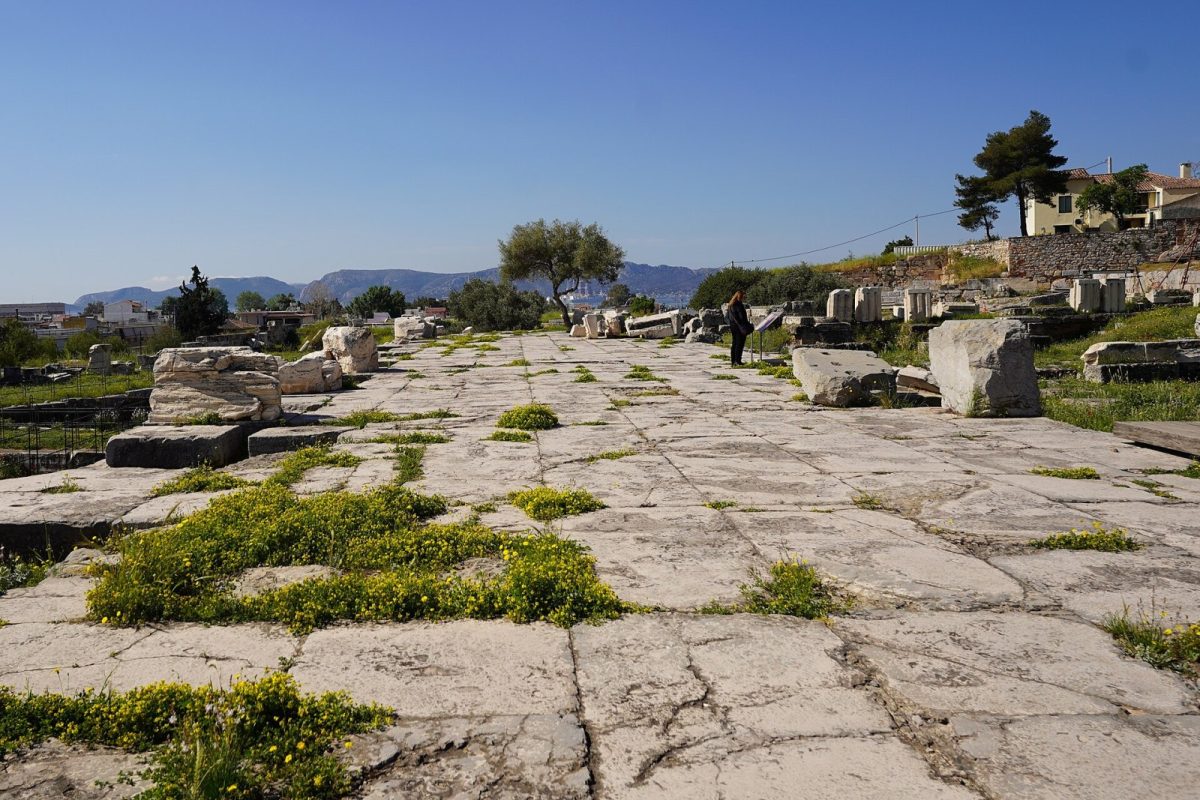
For nearly two millennia, thousands of Greeks made an annual autumn pilgrimage to Eleusis to be initiated into mysteries that promised to transform their relationship with life and death. Those who experienced them were bound to secrecy under penalty of death, and that vow was kept so rigorously that today we still do not know with certainty what transpired inside the Telesterion. The little we do know is that initiates drank a concoction known as the kykeon.
The idea that this brew was the crux of the ritual did not originate with the authors who popularized it. The classicist Karl Kerényi had already suggested that the heart of the rites lay in the contents of the kykeon, not merely in the dramatic staging. Gordon Wasson—the banker and amateur mycologist who had studied sacred Mexican mushrooms years earlier—picked up the scent: he suspected Eleusis might conceal a visionary substance akin to those found in Mesoamerica. To test his intuition, he turned to Albert Hofmann, the chemist who had synthesized LSD.
Hofmann recalled that during a visit in July 1975, Wasson asked him whether ancient Greeks could have isolated an active principle from ergot capable of inducing an experience comparable to LSD or psilocybin. The chemist took his time to consider it and replied two years later. Carl Ruck, a professor of mythology and ethnobotany, provided the historical framework, giving rise to what became known as the “LSA theory,” named after lysergic acid amide.
Why the Ergot Hypothesis Is Plausible
Several pieces of evidence support this view. Cereal ergot is abundant in the region, particularly in strains rich in psychoactive alkaloids and relatively low in toxicity. The fungus does not only parasitize rye—a rare grain in ancient Greece—but also barley, wheat, and various wild grasses, undermining the traditional objection that the Greeks could not have encountered it. Furthermore, scholars agree that the kykeon contained at least mint and cereal flour, and that the ear of grain was the central symbol of the mysteries, appearing in certain depictions with dark coloration consistent with ergot; this interpretation has been applied, for example, to a fifth-century BCE funerary urn depicting Triptolemus holding contaminated stalks.
The chemical detail that excited Hofmann was that the visionary, less toxic ergot alkaloids are water-soluble, whereas the genuinely lethal ones are not. In theory, simply steeping the infected grains in water would suffice to separate the two. The authors also pointed to wild grasses containing almost exclusively the former type, which in principle would make the process even simpler.
Antonio Escohotado summarized three conditions that any viable explanation of this kind must fulfill: the brew had to contain a visionary compound, it had to be obtainable year after year in sufficient quantities for all initiates, and it had to be active in doses small enough to remain undetected. The LSA theory satisfies all three without stretching the facts.
The “Theatrical” Alternative and Its Shortcomings
In contrast to this perspective, the traditional interpretation holds that the visions were the result of theatrical staging: fire, sacred relics unveiled at the climactic moment, prior fasting, and collective suggestion. Escohotado countered that the nocturnal rites were barely illuminated by torches, offering poor visibility to a massive crowd. He added a deeper philosophical point: it is difficult to imagine that minds like Plato, Pindar, Sophocles—or skeptics like Aristotle and Cicero—would be permanently transformed by mere stagecraft. Something far more potent had to move thinkers of that stature.
The argument is compelling, but it is not proof. It appeals to psychological plausibility rather than material evidence, and a sound objection should not be mistaken for definitive proof.
The Myth of Demeter: Poison and Insight
Whatever the underlying mechanics, Eleusis revolved around the myth of Demeter, inherited from Asia Minor: an allegory of the agricultural cycle, the fertility of the earth, and the withdrawal of crops in winter. For societies that had only recently settled into farming, understanding why the soil yields and then withholds was an existential question. The full narrative was detailed by Isidro Marín in Spannabis Magazine, so we will not recount it here.
If the ergot hypothesis were true, the symbolism would be remarkably neat: the very fungus that blights crops and sickens those who eat them would be transformed, through priestly knowledge, into a vehicle for revelation. A lethal substance turned into the key to the mystery. It is an elegant narrative—and perhaps a bit too neat, as stories that fit our preferred conclusions often are.
A Mutilated Heritage
Only a fraction of ancient Greek culture has survived. The rise of institutional Christianity—the privileges granted by Constantine, followed by the prohibitions under Theodosius I after Emperor Julian’s brief interlude—hastened the disappearance of much of the pagan legacy. That anything endured at all is due to historical chance, the preservation work of medieval Arab scholars, and later, the Renaissance and modern humanists. Eleusis remains one of the loose threads left by that cultural loss, and the proposal by Hofmann, Wasson, and Ruck is, above all, an attempt to tie it back together.
A Critical Assessment
The LSA theory is coherent and elegant, but it lacks direct confirmation: to date, there is no chemical analysis of kykeon residue demonstrating the presence of ergot alkaloids. Much of the case rests on botanical inferences, iconographic readings, and plausibility arguments rather than hard physical evidence. Scholars of ancient Greek religion have also pointed out that the historical silence of the sources can be explained in other ways, and that a “clean separation” of toxic and psychoactive alkaloids through simple aqueous extraction is much simpler on paper than in practice.
It is also worth emphasizing a harm reduction caveat that popular accounts often gloss over: ergot is, first and foremost, a dangerous poison. Ergotism caused deadly epidemics for centuries—gangrene, violent convulsions, and agonizing hallucinations known as “Saint Anthony’s fire”—and its chemical profile is erratic and unpredictable. This is strictly not material for self-experimentation. The intrigue of Eleusis lies not in a recipe, but in an enduring historical question: how the ancients understood and ritualized altered states of consciousness.
Further reading (cited, unlinked): R. Gordon Wasson, Albert Hofmann, and Carl A. P. Ruck, The Road to Eleusis; Antonio Escohotado, General History of Drugs; Karl Kerényi, Eleusis: Archetypal Image of Mother and Daughter and The Religion of the Greeks and Romans.