

In brief
- A team at the Weizmann Institute in Israel has genetically modified a tobacco relative to synthesize five psychedelics at once: DMT, psilocybin, psilocin, bufotenine, and 5-MeO-DMT.
- Researchers identified the genes plants naturally use to produce DMT and combined them with fungal pathways alongside the pathway that yields bufotenine and 5-MeO-DMT.
- A single amino acid mutation in an enzyme boosted 5-MeO-DMT production fortyfold, an advance aimed at researching these compounds more sustainably.
Researchers at the Weizmann Institute of Science in Israel have achieved something unprecedented in nature: a single plant capable of producing five distinct psychedelic compounds originating across three different biological kingdoms. Published in the journal Science Advances, the study opens a new avenue for sourcing DMT and related molecules without relying on wild-harvested plants, fungi, or animals.
A “biological cocktail” in a single plant
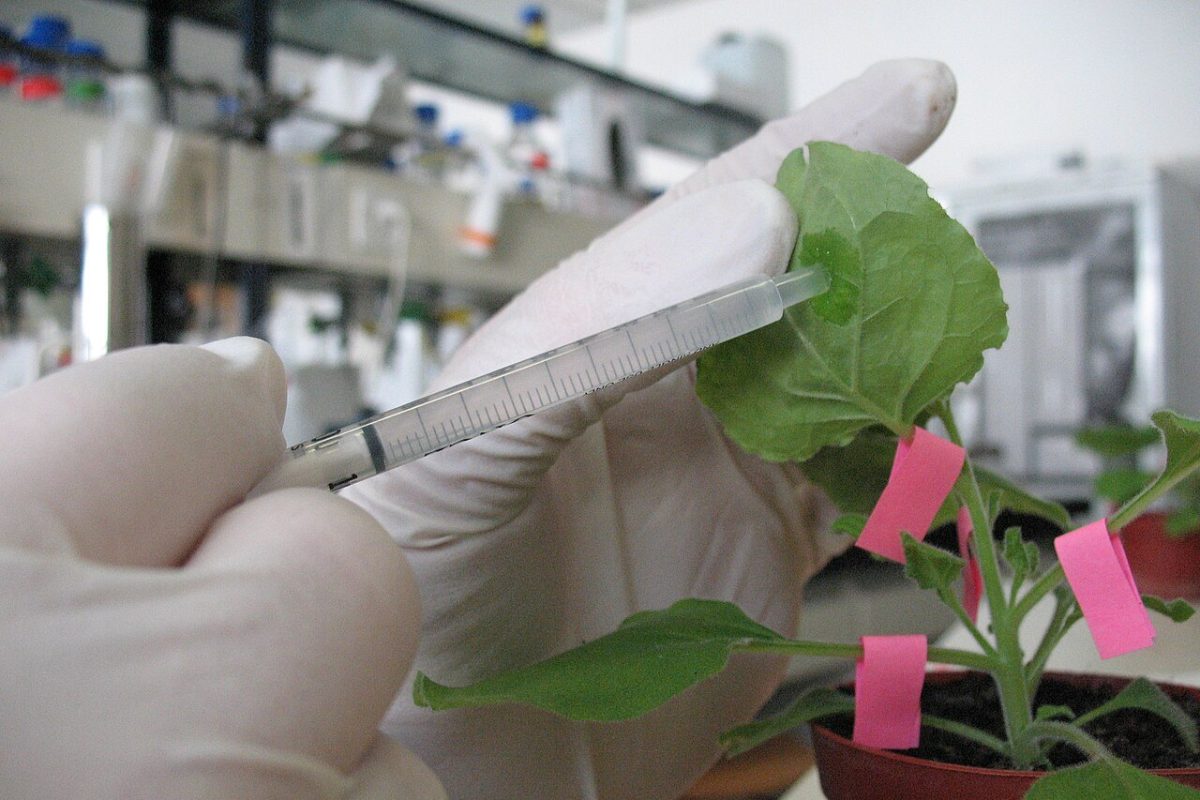
The team, led by researcher Paula Berman (now at the Volcani Institute) and Professor Asaph Aharoni, began by tackling a decades-old question: which genes enable certain plants to synthesize DMT naturally? Once identified, they inserted these genes into Nicotiana benthamiana, a tobacco relative widely used in plant research due to its fast growth. The plant began producing DMT within days. Next, the team introduced fungal metabolic pathways responsible for psilocybin and psilocin, alongside the pathway found in Sonoran Desert toad skin that produces bufotenine and 5-MeO-DMT, ultimately engineering all five molecules to coexist within a single organism.
A mutation with a multiplying effect
The most striking finding emerged when optimizing the 5-MeO-DMT pathway: swapping a single amino acid in an enzyme’s sequence boosted its yield fortyfold. The authors describe the result as a “biological cocktail” achieved by integrating biosynthetic pathways within the same plant cell, rather than mixing separately extracted compounds. However, the team also notes a key limitation: when all five pathways operate simultaneously, they compete for the same precursor, the amino acid tryptophan, creating a bottleneck that currently restricts the system’s overall yield.
What this means
For now, this remains a proof-of-concept laboratory achievement in synthetic biology—not a method ready for manufacturing consumer-grade doses, nor a clinical trial in humans. The researchers plan to optimize yields and explore whether similar plants could synthesize even more intricate mixtures. The immediate significance is twofold: first, it presents a sustainable alternative to harvesting vulnerable or slow-growing plant and animal species; second, it provides a powerful platform for dissecting the biochemical pathways that unrelated organisms independently evolved to craft structurally similar molecules. For observers of psychedelic science, the study highlights how much of the field’s near-term progress will hinge not just on clinical trials, but on the fundamental chemistry and biology needed to produce these compounds cleanly and sustainably.
Source
- Weizmann Institute of Science / Phys.org. Scientists decipher how a psychedelic substance is created, then engineer a plant to produce several at once. Phys.org, July 12, 2026.
Educational content written from a harm reduction perspective and with respect for individual freedom. It is not a substitute for advice from a healthcare professional and is not intended to encourage or condemn any drug use.