

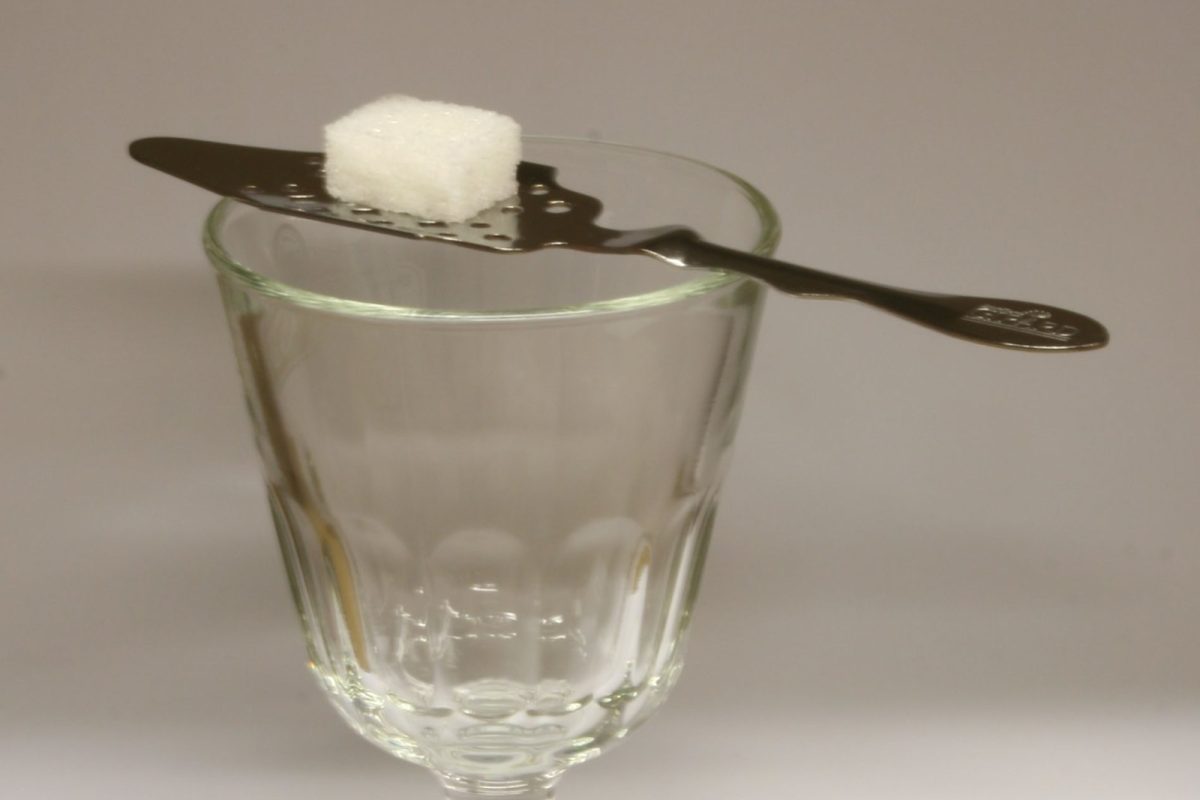
Absinthe has held a privileged place in the collective imagination for more than two centuries. From Parisian literary salons to contemporary digital forums, this alcoholic beverage has become a cultural symbol that transcends its nature as a simple botanical infusion. However, rigorous analysis requires us to distinguish between mythical narrative and available scientific evidence.
In brief
- Factual differentiation: Separating the real effects of ethyl alcohol from the hallucinations attributed to active principles that do not exist in the plant.
- Actual composition: Absinthe is an alcoholic beverage distilled with herbs, primarily wormwood (Artemisia absinthium), and does not contain additional psychoactive substances as popularly believed.
- The triad of consumption: Effects depend fundamentally on the person (metabolism, tolerance) and the context (environment, mood), rather than a magical substance.
- Associated risks: The primary danger lies in the excessive intake of ethyl alcohol and unregulated artisanal distillation practices.
The veil between myth and reality
It is common to find testimonials describing supernatural experiences under the influence of this drink. Phrases like “seeing little green fairies” or references to magic powders circulate on the internet frequently. These accounts are often attributed to historical references or foreign anecdotes, but it is crucial to examine their veracity.
Occult literature and 19th-century poetry—authors like Aleister Crowley or Baudelaire—did indeed describe altered experiences. However, these experiences must be interpreted within a specific cultural context: the ritualized use of high-proof alcohol, mixed with aromatic herbs that induce states of introspection and olfactory hallucination (a phenomenon known as chemical synesthesia), not by the direct action of an unknown drug.
Today, descriptions mentioning fictional chemical components or magical effects lack any scientific basis. It is fundamental to remember that ethyl alcohol is a central nervous system depressant. Its effects range from mild euphoria to coma and death, depending on the dose ingested.
Chemical composition: What is really in a glass?
To understand the effects, we must first know the actual active ingredient. Absinthe is a distilled beverage made from ethyl alcohol (ethanol) and macerated with specific plants.
The botanical components
The primary plant is Artemisia absinthium, known as wormwood. This herb contains essential oils, most notably anethole and thujone. Thujone is a chemical compound present in various plants (such as thyme or rosemary) that can have neurological effects if consumed in very high concentrations.
Traditionally, absinthe also included:
- Lavender and mint: To soften the bitter taste of the wormwood.
- Saffron: Which gives it its characteristic green color (the “Green Fairy”), although this effect is purely aesthetic and not psychoactive.
The myth of thujone
There is a persistent belief regarding the dangers of thujone. Historically, the use of absinthe was banned in Europe at the end of the 19th century due to the fear that high concentrations of thujone would cause seizures and neurological toxicity (“absinthism”). However, modern studies indicate that the concentrations present in a standard glass are too low to cause these toxic effects. The real risk remains the ethyl alcohol.
The distillation process
Absinthe is prepared through a process of maceration and distillation. The herbs are submerged in alcohol, extracting their essential oils. Subsequently, the mixture is filtered, and water is sometimes added to dilute the alcohol content to an appropriate level (generally between 40% and 75%, depending on the region and recipe). It is important to highlight that there are no “magic powders” or unknown substances added in traditional recipes.
The triad: Person, Context, and Drug
In the field of public health and pharmacology, the effects of any psychoactive substance are analyzed under three fundamental variables:
- Person: Factors such as genetics, body weight, alcohol tolerance, age, and metabolic state determine how the organism responds to a specific dose.
- Context: The physical environment (location, temperature), social environment (presence of others, type of group), and cultural environment (expectations about what “should” happen) decisively influence the subjective experience.
- Drug: The exact dose, the purity of the product, and the method of consumption are determining factors. In this case, the critical variable is always the amount of ethanol ingested.
An illustrative example: Drinking a shot of absinthe on a quiet Parisian terrace with friends (positive social context) can generate relaxation and fluid conversation. Conversely, consuming large quantities quickly to attempt “hallucinations” (an erroneous expectation) in an isolated environment or under stress (negative context) could lead to acute alcohol poisoning, severe nausea, and loss of motor control.
Risk reduction and critical reading
Although absinthe does not contain illicit drugs or dangerous active principles in normal quantities, its consumption carries risks inherent to alcohol:
- Acute intoxication: The risk of alcohol poisoning or death increases drastically if mixed with other substances or if tolerance is low.
- Chronic toxicity: Excessive and frequent consumption can damage the liver, the nervous system, and increase the risk of cancer.
- Risks in homemade distillation: Artisanal production without quality control can result in the presence of methanol (wood alcohol), an extremely toxic substance that causes blindness or death. One should never consume home-distilled alcohol without professional equipment and knowledge.
- Drug interactions: Alcohol interacts negatively with many medications, potentiating their side effects.
It is fundamental to maintain a critical attitude toward claims that promise mystical or curative experiences. Science does not support the existence of “fairy dust” or hallucinatory effects induced by herbs in safe concentrations. What is perceived as seeing fairies is usually the result of mild hypoxia, spatial disorientation due to alcohol, and cultural suggestion.
Editorial closing
Absinthe invites us to reflect on how we construct our reality. We often project onto substances what we wish to experience: ecstasy, visionary clarity, or spiritual connection. However, mental and physical health require an honest understanding of biological mechanisms.
From Psiconáutica, we advocate for a sober, evidence-based approach. Recognizing that the “Green Fairy” is simply alcohol with herbs allows us to enjoy its cultural history without falling into dangerous illusions. True magic lies in the human capacity to find beauty and meaning even in the simplest incidents, always from a position of prudence and knowledge.
Let us remember that the art of contemplating life with clarity does not depend on consuming psychoactive substances, but on cultivating mindfulness and critical awareness. May every glass be an act of informed choice, respecting the limits of the body and mind.


