

In brief
- Ibogaine can lengthen the heart’s QT interval and, in some cases, promote serious arrhythmias such as torsades de pointes, even with a single dose and in individuals without prior heart disease.
- This effect is explained by the blocking of hERG potassium channels by ibogaine and its metabolite, noribogaine, whose action can persist for several days.
- There is no ibogaine-based medication authorized in the European Union, and clinical evidence remains preliminary; anyone choosing to explore it assumes a real cardiac risk that is worth understanding and managing with care.
Ibogaine, an alkaloid from the African plant Tabernanthe iboga, is drawing increasing interest as a potential aid for opioid and other substance addictions, and it has been part of ritual traditions in Central Africa for centuries. Alongside this potential exists a trait that should be thoroughly understood: its ability to alter heart rhythm. Below, we review—calmly and without sugarcoating the data—what science currently knows about QT prolongation and what it implies for those considering this experience.
What the QT interval is and why it matters
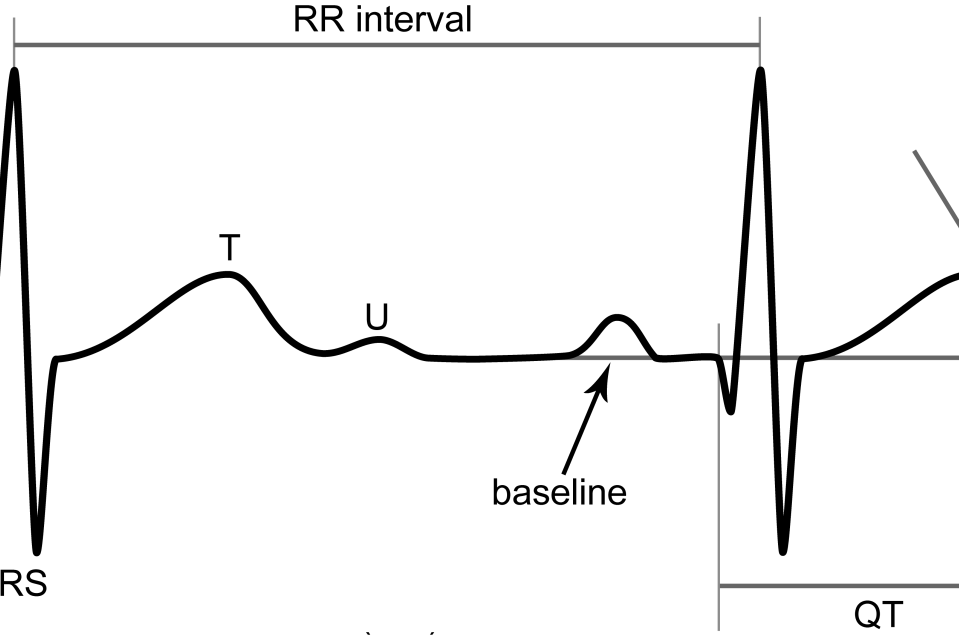
The QT interval is an electrocardiogram measurement that reflects the time it takes for the heart’s ventricles to contract and electrically “recharge” (the repolarization phase). When this process is excessively lengthened—known as long QT or QTc prolongation—the heart becomes more vulnerable to certain arrhythmias. The most significant is torsades de pointes, a ventricular tachycardia that, in extreme cases, can degenerate into ventricular fibrillation and cardiac arrest. This is why any substance capable of prolonging the QT interval must be clearly identified.
How ibogaine interacts with the heart
The best-documented mechanism is the blocking of hERG (ether-à-go-go-related gene) potassium channels, which are responsible for the current that repolarizes the heart muscle. By inhibiting these channels, both ibogaine and its active metabolite, noribogaine, delay repolarization and lengthen the QT interval. Recent reviews describe this effect as an intrinsic characteristic of the molecule itself, not a random accident: it is structural information that is useful for understanding what one is working with.
Pharmacokinetics add an important nuance. Noribogaine has a very long half-life and can remain detectable in the blood for days, meaning its effect on the heart can appear or persist long after ingestion. Added to this is individual variability: people with certain variants of the CYP2D6 liver enzyme (slow metabolizers) reach higher concentrations and, therefore, have a narrower margin of safety—something that cannot be anticipated by eye without specific testing.
What documented cases show
Clinical reports record marked QTc prolongations, in some cases exceeding 600 milliseconds and even reaching extreme figures near 714 ms, which required emergency defibrillation. In one published case, an individual went from a QTc of 435 ms to 588 ms within a few hours of ingestion. Among the described arrhythmias are torsades de pointes, ventricular tachycardia, and ventricular fibrillation, sometimes requiring electrical cardioversion and intensive care for several days.
Regarding mortality, a reference review counted 19 deaths temporally associated with ibogaine between 1990 and 2008, several of which had cardiac complications as a contributing factor; subsequent analyses have raised the total figure. Many of these episodes coincided with added risk factors: electrolyte disturbances (low potassium or magnesium), pre-existing cardiovascular disease, bradycardia, non-standardized preparations, and, above all, the combination with other drugs that also prolong the QT interval, such as methadone, or with benzodiazepines. It is honest to point out that serious events have also been described in people with no known cardiac history: the risk is not limited to those who started with a fragile heart.
Caring for the body and the context
Ibogaine is on the list of controlled substances in many countries, and in Spain, it is not authorized as a medication; neither the EMA nor the AEMPS has approved any product containing it, and the WHO has noted the lack of solid clinical data regarding its safety and efficacy. The available evidence comes from open-label, observational studies and isolated cases, not controlled trials, so it remains preliminary today. That is the objective context; from there, each person decides.
For those evaluating the experience, the most useful information is that the cardiac effect is real and difficult to predict in advance, so the care of the environment makes all the difference. Having electrocardiographic monitoring, trained personnel, and resuscitation equipment completely changes the safety margin compared to doing it alone. Checking electrolytes beforehand, knowing personal and family history of arrhythmias, heart disease, or long QT, and avoiding combinations with methadone or other drugs that prolong the QT interval are concrete ways to reduce risks. If palpitations, dizziness, fainting, or chest pain appear after ingestion, the most cautious approach is to go to the emergency room without delay and indicate what was consumed and when, as the effects can last for days. And for those looking to leave behind an opioid or other substance dependency, it is worth knowing that there are treatments with well-demonstrated efficacy and safety within the healthcare system that can be considered as an option or as a supplement.
Sources
- Ibogaine: Therapeutic Potential, Cardiac Safety, and Translational Perspectives in the Treatment of Substance Use Disorders — A Scoping Review. Molecules (PMC/NCBI), 2026.
- Meisner JA, Wilcox SR, Richards JB. Ibogaine-associated cardiac arrest and death: case report and review of the literature. Therapeutic Advances in Psychopharmacology (PMC/NCBI), 2016.
Educational content written from a harm reduction perspective and with respect for individual freedom. It is not a substitute for advice from a healthcare professional and is not intended to encourage or condemn any drug use.


