

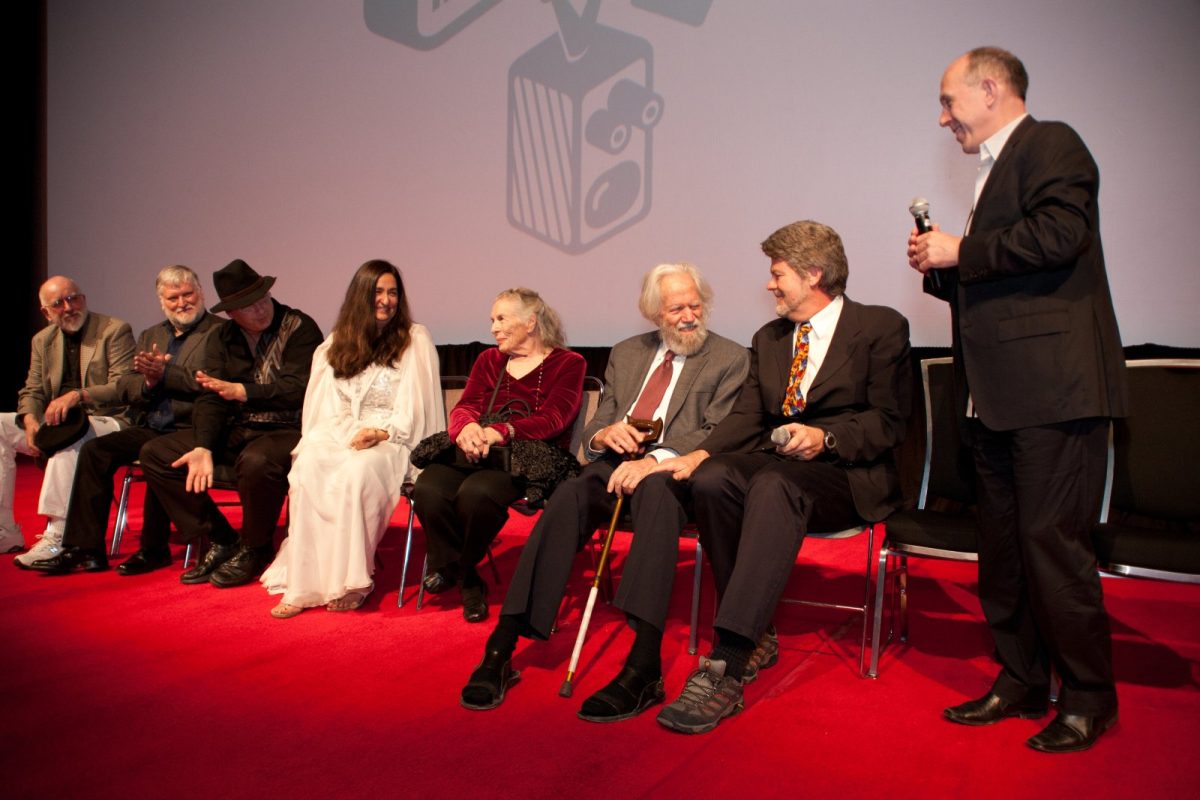
A Chemist Who Took Himself Seriously as a Subject
After leaving Dow Chemical in 1966 to work independently, Shulgin made a choice that defined his entire career: rather than relying solely on animal models, he resolved to map each compound’s effects through his own experience and that of an intimate circle of friends. His procedure was methodical to the point of obsession: he always began with tiny, cautious amounts and escalated only when he noticed nothing, clinically documenting every physical and mental shift.
From this came his famous intensity rating scale, a shorthand vocabulary psychonauts recognize instantly. It should be taken for what it was: a personal descriptive system, not a safety protocol or an assurance of harmlessness.
The “+/−” Scale: A Vocabulary, Not a Manual
Shulgin summarized the potency of each substance using a simple notation:
- −: No perceptible effect; baseline state remains unchanged.
- ±: A subtle threshold shift, but with no certainty whether the cause is the compound, suggestion, or a placebo response.
- +: A genuine and measurable effect in duration, though indistinct in character; mild physical side effects (nausea, dizziness, restlessness) may emerge and typically fade quickly.
- ++: The effect is unmistakable and its nature can be articulated, with cognitive faculties still intact.
- +++: Maximum intensity; onset, plateau, and comedown phases are clearly distinct, and cognition is markedly altered.
- ++++: A category apart, qualitative rather than quantitative: what Maslow termed a “peak experience,” a mystical state experienced as profoundly transformative.
Shulgin maintained that neither he nor his group—half a dozen people initially, expanding to around a dozen in later years—suffered lasting physical or mental harm, experiencing only fleeting discomforts. This is a valuable historical record, but it does not constitute clinical proof of safety: it involved a tiny, self-selected cohort guided by an expert under tightly controlled conditions. Generalizing those outcomes to broad, uncontrolled use would be an unwarranted leap that the method itself does not justify.
MDMA Before Shulgin: A Century of Footnotes
The most repeated tale about MDMA—that Merck was looking for an appetite suppressant—is false. The most reliable archival reconstruction, conducted by Freudenmann and colleagues, disproves this myth. The misunderstanding likely stemmed from MDA, a closely related compound that was indeed investigated as a potential antidepressant and anorectic in the mid-twentieth century, combined with the media’s appetite for sensationalizing psychoactive substances.
In reality, around 1912 Merck was pursuing hemostatic (blood-clotting) agents similar to hydrastinine, whose patent was held by a competitor. In that context, the molecule we now call MDMA appeared merely as an intermediate chemical precursor within a broader patent, bearing no prominent standalone name and with nobody suspecting its psychoactive properties. Internal records listed it simply as “methylsafrylamin.”
From then on, the compound spent decades in obscurity. In 1927, it was examined for its structural resemblance to adrenaline; in 1952, it surfaced in a minor toxicology screening. Between 1953 and 1954, at the height of the Cold War, U.S. military and intelligence programs screened it—under the code name “EA 1475”—in animal tests seeking interrogation aids. A few more assays occurred later in the decade, and in 1960, two Polish chemists published its synthesis, once again as a mundane intermediate. No one had yet considered what it might do in a human being.
1965: The Rediscovery
Shulgin synthesized it independently in 1965, unaware of whether anyone had ever bioassayed it before. A passing remark by a student reignited his interest in 1967, though for years he confined his exploration to private trials before gathering impressions from others. Interestingly, by 1970 street use had already been detected in parts of Illinois and Chicago, long before any formal scientific literature on the molecule existed.
Those years eventually led to his first public presentations: a lecture on the psychopharmacology of hallucinogens in 1976, followed by a 1978 paper co-authored with David Nichols that characterized its emotional and sensory effects, tentatively comparing it to other known compounds. In 1985, addressing the California Association of Toxicologists, Shulgin characterized it as “psychedelic” in a unique sense: lacking the visual distortions and loss of control typical of mescaline or LSD, displaying what he saw as a distinct pharmacological profile.
The Therapeutic Window and Its Closure
The appeal of MDMA for Shulgin and the therapists who adopted it during that era did not lie in visions or intoxication, but quite the opposite: a brief window of emotional openness and diminished fear that, as they noted, allowed patients to discuss intimate issues without becoming defensive. In his own reflections in PIHKAL, Shulgin noted that “nothing was happening” in a theatrical sense, yet something profound had shifted: an uncommon clarity, a quiet serenity, and the capacity to look at one’s life without the usual emotional armor.
He also documented its limitations. Tolerance trials showed that daily repeated doses quickly exhausted its effects—leaving little more than dilated pupils—and that a break of several days was needed to restore them. This is a critical observation: MDMA is decidedly not a “more is better” compound, and its acute, self-limiting pharmacological nature makes frequent use counterproductive. Shulgin lamented that its classification as a Schedule I controlled substance in the United States shut down rigorous research just as science was beginning to understand it.
On a more personal note, PIHKAL also captures the perspective of Ann Shulgin, who was introduced to the compound by Sasha—complete with his warning that it could be demanding for anyone who was hesitant—and described their first shared session as revelatory. It offers a humanizing glimpse into a history that subsequent media hysteria would flatten into caricature.
Why We Avoid the Word “Ecstasy”
Throughout this series, we have deliberately bypassed that label. Not out of prudery, but for precision: “ecstasy” is a commercial and tabloid moniker that bears little relation to what Shulgin observed. As its godfather—though not its father, since he did not invent it—he favored the term “empathy.” The distinction is not merely cosmetic: naming a substance accurately is the first prerequisite for thinking about it without hysteria or propaganda, which stands in stark contrast to mainstream portrayals.
Critical Reading and Harm Reduction
This history warrants three notes of caution. First, Shulgin’s accounts are autobiographical memoirs of significant cultural value, not clinical trials; they describe subjective experiences rather than proving safety or efficacy. Second, the careful, accompanied settings explored in the 1970s and 1980s bear little resemblance to modern recreational settings, where the purity of products sold as “MDMA” is frequently uncertain, and where hyperthermia, dehydration, polydrug use, or underlying cardiac conditions drive most real-world risks. Third, this article is an educational history; it deliberately omits synthesis routes, dosing instructions, or usage guidelines.
For those wishing to explore original sources, reliable documentation is readily accessible: the archival history by Roland Freudenmann and colleagues in the journal Addiction, Shulgin’s own writings on MDMA, his paper with David Nichols on novel psychotomimetics, and above all, PIHKAL by Alexander and Ann Shulgin. In the next installment, we will examine its therapeutic applications in greater detail, along with the debate reignited decades later.


