

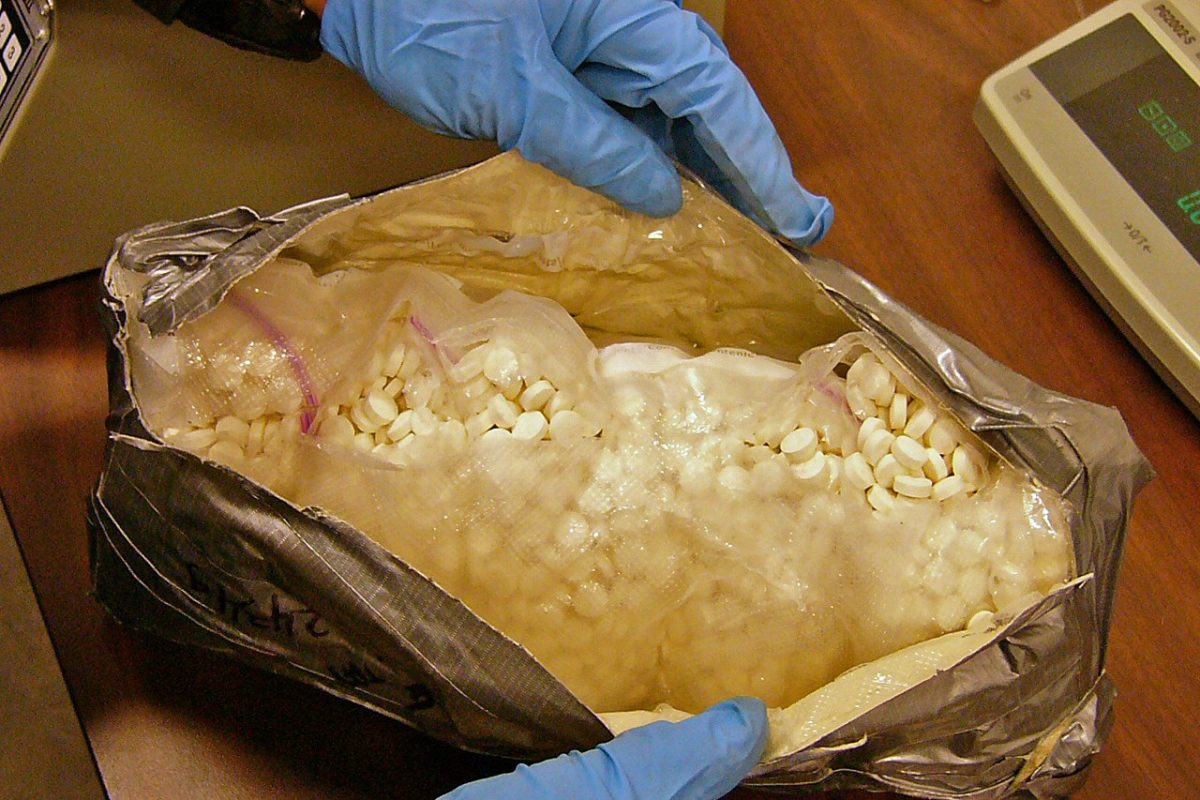
A Rumor That Refuses to Die
Every few years, the same nightlife warning resurfaces: “be careful, some of these pills are cut with heroin.” The rumor has circulated for decades with remarkable staying power, passed along by word of mouth in clubs, festivals, online forums, and casual conversations. What remains striking is that despite repeated debunks by drug checking services, the myth survives virtually unscathed.
It is therefore vital to disentangle subjective hearsay from empirically verified lab data. When that distinction is made, the narrative transforms dramatically.
Three Objective Reports Across the Entire World
When searching for rigorous, documented chemical analyses confirming the presence of heroin in tablets sold as MDMA, the global tally is remarkably short. In practice, the literature comes down to three isolated references:
1. The DanceSafe tablet (2000). A pill tested by the US harm reduction organization revealed a tiny but detectable trace of diacetylmorphine on the outer surface, rather than blended throughout the matrix. This pattern is characteristic of surface contact contamination: trace residue transferred during packaging, transport, or multi-drug storage, rather than an adulterant pressed intentionally into the tablet.
2. The Nicholas Saunders mention. The late British author and activist referenced a field test conducted in the United Kingdom in the late 1990s, but offered no analytical data and cited it as an unverified anecdote. Indeed, his broader writings consistently argued the opposite: refuting the notion of heroin-cut ecstasy.
3. The EcstasyData case. A sample submitted to this testing database did contain opioids, yet its physical appearance was so crude and hand-pressed that Erowid staff concluded it was likely a fabricated homemade specimen created specifically to plant an anomaly into the dataset and perpetuate the rumor.
One surface contamination, one unsubstantiated passing comment, and one probable hoax. Everything else belongs to the realm of urban mythology rather than forensic science.
What About Fentanyl and Other Opioids?
Scientific rigor requires precision here to avoid swinging to the opposite extreme of complacency. The illicit drug market in the United States represents a distinct scenario: potent synthetic opioids, including fentanyl, have indeed contaminated counterfeit pressed pills, though primarily counterfeit prescription benzodiazepines and analgesics rather than standard party ecstasy.
In Spain and across Europe, forensic facilities like the National Institute of Toxicology and harm reduction services have occasionally encountered street batches sold as MDMA that actually contained codeine, or very rarely traces of methadone. In short: opioids are detected on rare occasions. Heroin as a widespread, deliberate adulterant in ecstasy, however, simply does not exist in testing records.
This contrast is illuminating. If laboratory confirmation is so vanishingly rare, why do so many clubbers swear they felt the heavy, lethargic “smack” sensation associated with heroin? The answer lies not in an adulteration lab, but in the multifaceted neuropharmacology of MDMA itself.
Heavy Sedation Stems Directly from MDMA
Anecdotal accounts consistently describe the same sensations: instead of the expected euphoria, energetic drive, and social warmth, the user experiences heavy limbs, drooping eyelids, trembling legs, profound lethargy, and a harsh psychological crash. Users naturally assume they were dosed with heroin. However, the effects of MDMA are non-linear: they fluctuate between psychomotor stimulation, emotional openness, and profound physical sedation depending on dose, environment, baseline fatigue, and mental set.
In other words, the exact same molecule can produce dancing energy on one occasion and couch-lock immobility on another. Attributing a heavy bodily crash to a mysterious adulterant ignores the most straightforward pharmacological explanation.
What Drug Checking Services Reveal
The most decisive refutation of the myth comes directly from professional drug checking services. Over the decades, countless worried consumers have submitted “heavy, sedating” tablets that left them immobilized to projects like Energy Control. The laboratory results are consistent: pure MDMA, frequently in exceptionally high doses.
The inverse has never occurred. Not a single public or non-governmental analytical service in Spain has ever confirmed an ecstasy pill cut with heroin submitted by a consumer. The asymmetry is absolute: thousands of subjective anecdotes, zero chemical confirmations.
Eduardo Hidalgo noted this directly in his writings, highlighting that oral heroin produces negligible subjective psychoactivity due to substantial first-pass hepatic metabolism, whereas heavy physical sedation regularly emerged when pure MDMA was ingested at high doses. The forensic conclusion is clear: sedation requires no secondary compound to explain it.
The Economic Logic Does Not Add Up
Beyond pharmacology, the economic realities of the illicit drug trade directly contradict the rumor. Heroin possesses poor oral bioavailability; achieving noticeable intoxication via oral ingestion demands substantial milligram quantities whose street value far exceeds the retail cost of an ecstasy pill. Clandestine cartels frequently dilute products or substitute cheaper compounds, but they do not dispense expensive narcotics at a steep loss.
The argument collapses further when comparing consumer communities. On one side, heroin users consistently complain of low purity and high prices; on the other, clubbers claim market tables are brimming with free heroin hidden inside cheap ecstasy. For both scenarios to exist simultaneously, distributors would have to operate against their own financial self-interest, squandering a valuable product inside a cheaper commodity while alienating both customer bases. No black-market business model supports such a dynamic.
Critical Reading and Harm Reduction
Debunking the heroin myth does not mean letting one’s guard down; rather, it allows consumers to focus on actual, documented hazards. Key harm reduction principles include:
The real danger is compositional uncertainty. Just because heroin is absent does not guarantee a pill is pure MDMA: excessively high dosages, synthetic cathinones, or novel stimulants represent documented risks.
Sedating effects are not harmless simply because they stem from MDMA. Severe physical exhaustion, heat stroke, or adverse poly-drug interactions with alcohol remain dangerous regardless of chemical composition.
Drug checking turns rumors into data. Initiatives such as Energy Control exist specifically to replace street mythology with verified chemical facts; their laboratory work has disproven this rumor for decades.
Distrust absolute certainties on both sides. Neither “all pills contain heroin” nor “all pills are completely safe” reflects reality. Informed, skeptical harm reduction remains the smartest approach.


