

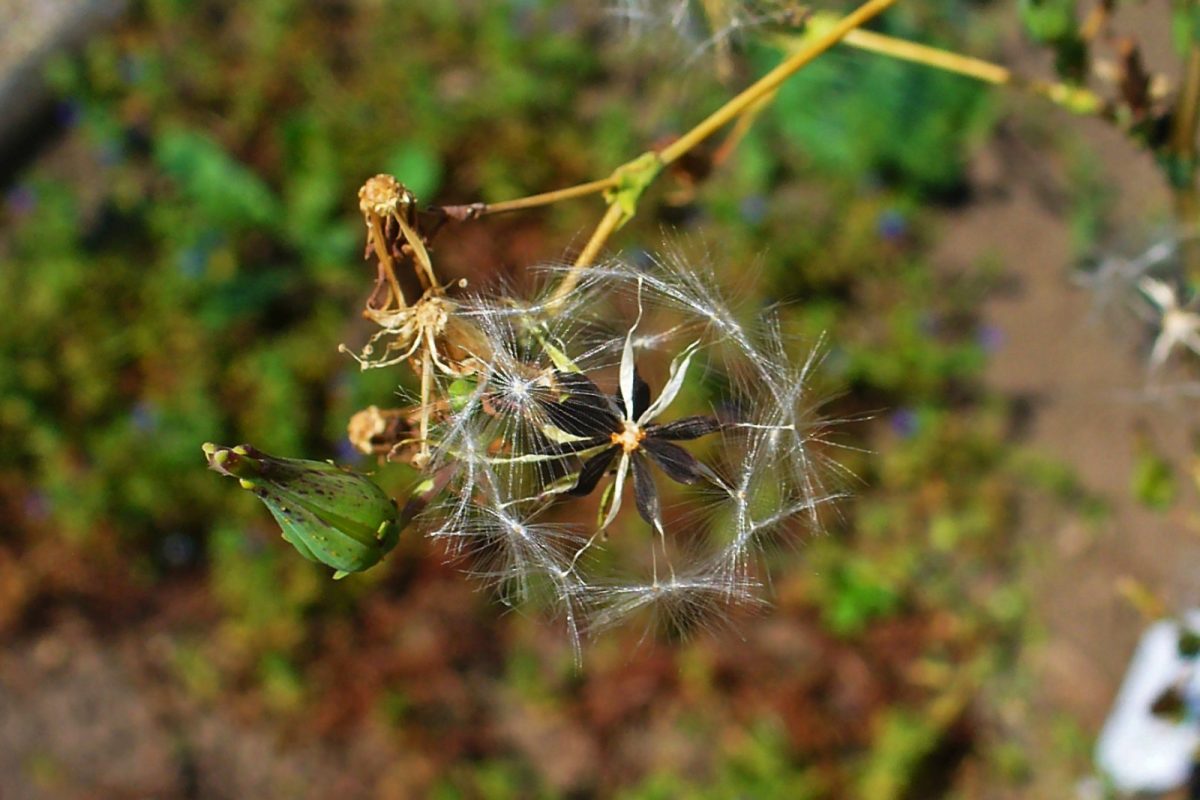
The realm of plants that promise and fail to deliver
There is a corner of health food stores and ethnobotanical shops where suggestion does almost all the work. Plants with exotic names, labels that speak of “nervous system stimulation,” “legal euphoria,” or “ancestral aphrodisiacs,” and very little demonstrable evidence behind them. Anyone who has tried them patiently—alone, mixed, or repeated over several days—usually reaches the same conclusion: the effect, if it exists, is so faint that it is hard to distinguish from having taken nothing at all.
This is not to deny that many have medicinal or culinary value. It is about separating two things that the market frequently conflates: a plant can be useful, tasty, or have real pharmacological properties without being psychoactive in the way its advertising promises.
Where the myth of the “legal high” comes from
A good portion of this mythology began in 1973, when Adam Gottlieb published Legal Highs, a small catalog of “legal” plants with supposed stimulant, euphoric, or calming effects. Along with plants that have real activity, the booklet included a long list of herbs with dubious effects—California poppy, catnip, damiana, valerian—that have circulated from shop to shop with the same aura ever since.
The underlying problem is methodological: much of these attributions comes from ethnographic accounts, second-hand compilations, and individual experiences, not from verified pharmacology. When a plant appears repeated in one book after another, the citation ends up looking like evidence. It is not.
Amazonian aphrodisiacs and tonics: lots of bark, little effect
Catuaba (Erythroxylum catuaba) is a botanical cousin of coca, but without the cocaine or the stimulation. Its bark is used in the Amazon as a tonic and aphrodisiac, and it contains its own alkaloids (catuabine A, B, and C), sterols, terpenes, lignans, and flavonoids. What research has documented are antiviral and antibacterial properties, which perhaps explain its traditional prestige better than any effect on the mind.
Clavohuasca (Tynanthus panurensis) inherits part of its fame for being a vine in the same family as ayahuasca, although it completely lacks its effects. It is poorly studied; it is attributed with analgesic properties and traditional use for rheumatic pain and as a digestive aid. Muira puama is a curious case: at least two species (Liriosma ovata and Ptychopetalum olacoides) coexist under that common name. For the latter, there are studies that point to a certain effect as a desire enhancer, which does not make it psychoactive.
Maca (Lepidium meyenii) is the latest herbal phenomenon, sold almost as a “natural” alternative to certain drugs. Some studies associate its consumption with an increase in sexual desire, but as a root vegetable, it is just that: a food. For ginseng (Panax ginseng), the most famous medicinal plant in Asia, its ginsenosides are attributed with a general tonic effect on the body, not a perceptible alteration of consciousness. Regarding ginseng cigarettes and dried leaves, the specialized literature itself (Rätsch) doubts they have any psychoactive effect at all.
The “legal weeds” that never replace cannabis
An entire category of these herbs is sold with the promise of being smoked “like weed.” Damiana (Turnera diffusa) carries a reputation as a euphoriant when smoked that almost no one manages to confirm; according to Rätsch, its effects are “subtly perceptible and not at all spectacular,” and if they exist, they seem very uneven depending on the person. Wild dagga (Leonotis leonurus), with its showy orange flowers, has a hallucinogenic reputation among some South African peoples; the literature grants it, at most, a “mild effect reminiscent of cannabis” in specific cultivars.
Skullcap (Scutellaria lateriflora) enters smokable mixtures with supposed cannabinoid effects; it contains scutellarin, a flavonoid with sedative and antispasmodic action, which is not the same as a recreational effect. Catnip (Nepeta cataria), famous for its effect on cats, is cited with an alkaloid called actinidine; in humans, its activity, if any, is negligible.
A separate mention goes to kinnikinnick, the name for the mixtures that various North American tribes smoked in pipes. Its base was usually bearberry (Arctostaphylos uva-ursi), a plant with very questionable psychoactive activity. The important detail for harm reduction is that some of those mixtures included Datura (jimsonweed): if they were “intoxicating” in any historical account, the most likely culprit was not the harmless bearberry, but a genuinely dangerous anticholinergic. We will return to this.
Sedatives so mild they go unnoticed
The other major group is “relaxing” plants. Valerian (Valeriana officinalis) is sometimes categorized as a legal high, when its effect is that of a mild sedative; anyone accustomed to more potent calmants will barely notice it. California poppy (Eschscholzia californica), despite belonging to the opium family, has—in the words of the ethnobotanical literature itself—effects that are “very subtle.” The same can be said of the common poppy (Papaver rhoeas): it shares a family with the opium poppy, but not its chemistry; the real sedative activity resides in Papaver somniferum, not in the red petals of the field.
Rooibos (Aspalathus linearis) is a caffeine-free South African infusion, nutritious and pleasant, to which a sedative effect is sometimes attributed that is difficult to support. And gotu kola (Hydrocotyle asiatica), which some authors describe as a “tonic and sometimes mild psychoactive plant,” is also sold under its Chinese name, fo ti tieng, mainly to add exoticism. In practice, its effect on consciousness is difficult to detect.
The case that deserves nuance: the blue lotus of the Nile
Among all these plants, the blue lotus of the Nile (Nymphaea caerulea) is the one that generates the most debate. It was a sacred flower of ancient Egypt, and specialized literature attributes real, albeit modest, effects to it: a certain feeling of calm, slight euphoria, and a state of daydreaming more marked by one route than another. Voogelbreinder and Rätsch even describe slight alterations in perception and initial nausea that give way to a fleeting placidity of a couple of hours.
It is advisable to read these accounts with caution: many come from unique sources, qualitative descriptions, and a field where expectation weighs heavily. Just because a plant has a documented effect does not mean it is intense, reliable, or the same for everyone. The blue lotus illustrates well the gray area between myth and pharmacology, which is precisely the territory of this review.
Critical reading and harm reduction
The great lesson of this catalog is the distance between a plant’s fame and its chemistry. Three ideas to navigate it wisely:
Individual testimony is not proof. “I didn’t feel anything” is just as inconclusive as “it got me really high.” Suggestion, expectation, dose, personal sensitivity, and context explain much of what is attributed to these herbs. The absence of controlled trials turns almost everything into an anecdote, in both directions.
“Harmless to the mind” does not mean “safe for the body.” Just because a plant does not alter consciousness does not automatically make it safe. Maca, for example, can accumulate heavy metals depending on the cultivation and processing, a real risk that has nothing to do with its supposed effect. And within some “traditional” mixtures, anticholinergic plants like Datura have slipped in, whose margin between an active dose and a toxic dose is narrow and dangerous. The exoticism of a label is no guarantee of anything.
Be wary of the easy promise. When a product is advertised as an ancestral aphrodisiac, legal cannabis substitute, or miracle tonic, it is almost always selling an expectation, not an effect. The classic sources that collect these plants—Gottlieb, Font Quer, Rätsch, Rivera, and Obón—are useful as a historical and ethnographic map, but they should not be confused with modern pharmacological evidence.
This article is not a user guide or a consumption recommendation: it is an exercise in skeptical hygiene. At the intersection of psychoactive culture and the market, knowing what does not work is just as valuable as knowing what does.


