

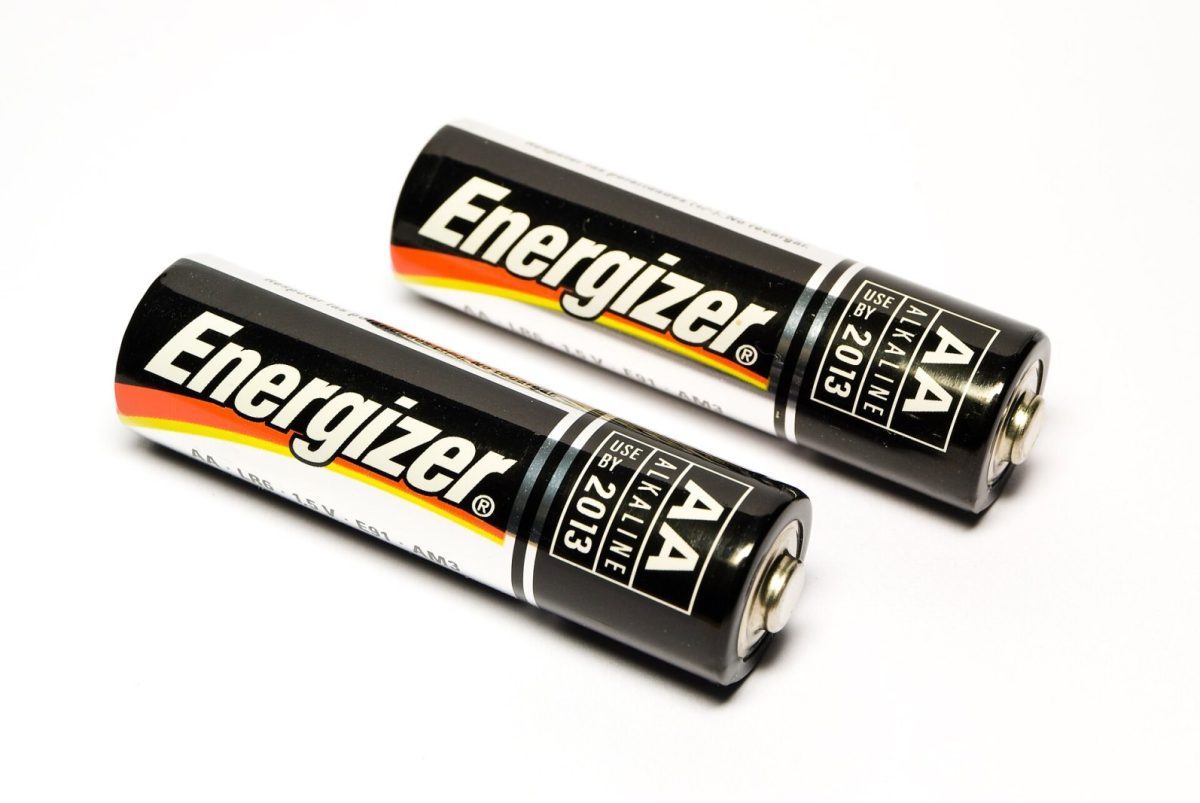
An alarm born from a single sentence
On May 10, 2009, the newspaper Las Provincias published a report on a conference regarding adolescent drug addiction held in Bétera (Valencia). During the event, the then-presiding judge of the Juvenile Court Number One of Granada, Emilio Calatayud, reportedly warned of two alleged trends among minors in marginalized environments: the return of glue as an inhalant and, above all, the snorting of liquid from inside batteries. According to the news report, the kids themselves called it “electrifying.”
In the following days, the story bounced across other media outlets and portals. It was a perfect headline: unsettling, easy to visualize, and with a catchy name. The problem is that, when read calmly, the entire construct rested on a single statement, made in passing at an anti-drug event, without a single documented case to back it up.
The detail almost no one checked
Anyone who wants to understand why this story limps doesn’t need a laboratory. The contents of a battery are not a substance that invites contact with mucous membranes: the amount is scarce, it does not present as a powder easy to inhale, and it is markedly irritating and even corrosive upon contact with the skin. The very mechanics the rumor takes for granted—easily snorting a caustic liquid and, furthermore, repeating the act—is exactly what clashes with any minimal experience regarding the physical reality of the product.
That is the first red flag of a hoax: it describes a practice that, for pure logistical reasons, almost no one could sustain more than once, and yet it is presented as a “growing trend.”
What toxicology actually says
The standard medical reference in Spanish on this subject, the MedlinePlus entry on battery poisoning, does not describe anything remotely resembling a “high.” It describes damage. Depending on the type of battery, documented cases include burns and irritation in the mouth, intense abdominal pain, vomiting, diarrhea, muscle cramps, tremors, neurological alterations, and, in cases of severe throat inflammation, difficulty breathing. Inhaling dust or vapors from damaged or incinerated batteries is associated with respiratory conditions such as bronchitis or pneumonia.
In other words: what the popular imagination sold as a new drug coincides, point by point, with the list of symptoms of chemical poisoning. There is no sought-after effect; there is an assault on tissues and respiratory tracts.
The “testimony” that wasn’t one either
When the rumor circulated through forums, someone provided the missing proof: an alleged “recipe” to prepare an infusion based on batteries, alcohol, and videotape, presented on a Peruvian forum. We are not going to reproduce that preparation, because it does not describe a drug: it describes a way to poison oneself with heavy metals and solvents. What is significant, for the purposes of this article, is that not even that text supported the original story. It was written in a provocative tone, riddled with warnings from the author himself about how dangerous it was, and it provided no real or verifiable cases. It was internet folklore, not evidence.
The real “epidemic”: the comments
What did spread massively after the news was not the consumption, but the mockery. Forums like El Otro Lado or Mediavida were filled with jokes about the Duracell bunny, about carrying batteries in one’s pocket “for personal use,” or about rechargeable batteries as an “infinite drug.” That reaction is, in itself, a piece of data: the community that knows the most about substances—real users, not headlines—treated the story as what it appeared to be: an absurd joke.
And that is where the most interesting mechanism of all appears. As one of those forum users ironically pointed out, it is possible that before the news, “four losers” might have done it; the real risk is that, after the news, the dissemination itself acts as an instruction and pushes someone to try it. Sensationalist reporting doesn’t just describe a danger: sometimes it manufactures one.
Critical reading
The case of “getting high on batteries” is a miniature manual on how a media drug panic is born. It brings together all the classic ingredients: a source with authority (a judge) whose statement is not verified; a media outlet that turns it into a headline; a stigmatized group (“marginalized adolescents”) to whom it is easy to attribute any extreme behavior; and a total absence of follow-up. A year after the story broke, no street educators, associations, or social resources in direct contact with that population had reported a single case. When an “epidemic” leaves no trace among those who should see it daily, it is most likely that it does not exist.
It is also useful to distinguish between two things that the rumor mixes up. One is whether someone has ever done something so self-destructive: in a world of billions of people, almost any behavior finds an isolated example. Another thing entirely is that this constitutes a trend. Jumping from “a case might exist” to “it is spreading among young people” is precisely the leap that no evidence supported.
Harm reduction: the only thing that really matters here
Beyond the analysis of the hoax, the practical message is simple and resounding: the content of batteries is not a recreational drug; it is a toxin. It does not produce a sought-after altered state, but rather chemical injuries. If someone—especially a minor—ingests or handles the inside of a battery, or if there is suspicion of contact with the eyes, skin, or respiratory tract, it is a toxicological emergency, not a “trip.” In Spain, the National Institute of Toxicology and emergency services (112) are the immediate reference; when in doubt, contact them and do not induce vomiting on your own initiative.
And there remains a lesson in information hygiene that applies to any “new drug” that appears in a headline tomorrow: before believing or repeating it, ask yourself who is claiming it, what concrete case supports it, and if those who are in real contact with the phenomenon confirm it. Almost always, when those three questions go unanswered, what you have in front of you is not a health alert: it is an urban legend.