
A Desert Succulent with Centuries of Documented Use
When Dutch colonists arrived at the southern tip of Africa in the 17th century, they observed indigenous populations chewing a prepared root and leaf mixture referred to as kanna, channa, or kougoed (literally, “something to chew”). This ethnobotanical tradition was already ancient: documented records suggest at least four centuries of use among San hunter-gatherers and Khoikhoi pastoralists.
The primary botanical species is Sceletium tortuosum, though it was historically harvested interchangeably alongside related taxa such as Sceletium expansum. For generations, these species were classified under the broader genus Mesembryanthemum, which continues to cause taxonomic confusion in horticultural catalogs.
In Europe, kanna entered the psychoactive botanical canon through two classic routes: Louis Lewin’s classification in his seminal Phantastica, which categorized it among hypnotic agents, and subsequent popularization in reference texts such as Schultes and Hofmann’s Plants of the Gods. This bibliographic lineage is noteworthy, as much of the popular information circulating about kanna originates from a handful of historical texts citing one another.
Reported Subjective and Physiological Effects
Pharmacological interest in kanna centers on mesembrine, an alkaloid functioning as a serotonin reuptake inhibitor and phosphodiesterase-4 (PDE4) inhibitor, sharing functional similarities with certain pharmaceutical antidepressants. Consequently, it is widely characterized as a “mild” natural mood lifter and anxiolytic.
Traditional accounts and observational field literature describe a subtle experiential profile: gentle psychological calm, relief from social inhibition and shyness, an empathogenic quality facilitating conversation, followed in some instances by mild sedation several hours later. A classic anecdote frequently cited involves a South African farmer observing his laborers, stating he detected no impairment other than “a certain faraway look in their eyes.”
These subjective claims must be evaluated cautiously. Large-scale human clinical trials verifying enthusiastic marketing claims remain limited, and subjective responses vary widely: while some individuals report clear relaxation, others perceive negligible changes. Pure mesembrine itself has been clinically described as “moderately narcotic,” far removed from dramatic psychoactivity. There is no evidence suggesting this botanical should replace conventional psychiatric medications without clinical oversight.
A Phytochemical Profile More Complex Than Assumed
Analytical research conducted by the University of Natal in South Africa revealed that kanna’s activity is not governed by a single isolated molecule, but rather by an ensemble of approximately nine alkaloids spanning three distinct structural classes. Their relative concentrations fluctuate throughout the seasonal cycle—with peak alkaloid yields documented during the austral autumn—explaining considerable potency variance among raw botanical samples.
Collectively, total alkaloids constitute roughly 1% to 1.5% of dried plant weight. Mesembrine predominates, accompanied by lesser quantities of mesembrenone, mesembrenol, and tortuosamine, alongside trace amounts of hordenine, a phenethylamine alkaloid also identified in peyote. This complex chemical mixture and its seasonal variation explain why rigid assertions regarding standard dosing or uniform effects remain scientifically ungrounded.
Why Fresh Foliage Fails: Oxalates and Fermentation
An important detail resolved empirically through indigenous tradition is that fresh, unfermented leaves fail to yield desirable effects and contain high concentrations of oxalic acid, capable of causing oral irritation and systemic discomfort. Traditional processing methods practiced in Southern Africa mitigated oxalate levels while transforming the alkaloid profile into an active preparation.
The historical method involved bruising the plant tissue, sealing it in airtight containers or animal skins, and leaving it in the sun for several days. Microbial fermentation carried out by the plant’s native microflora altered its chemical matrix prior to sun drying. We describe this solely for scientific context: the essential takeaway is that traditional processing represents an enzymatic biochemical transformation rather than simple dehydration, meaning raw succulent foliage is not pharmacologically equivalent to cured traditional preparations.
Botany and Natural Distribution
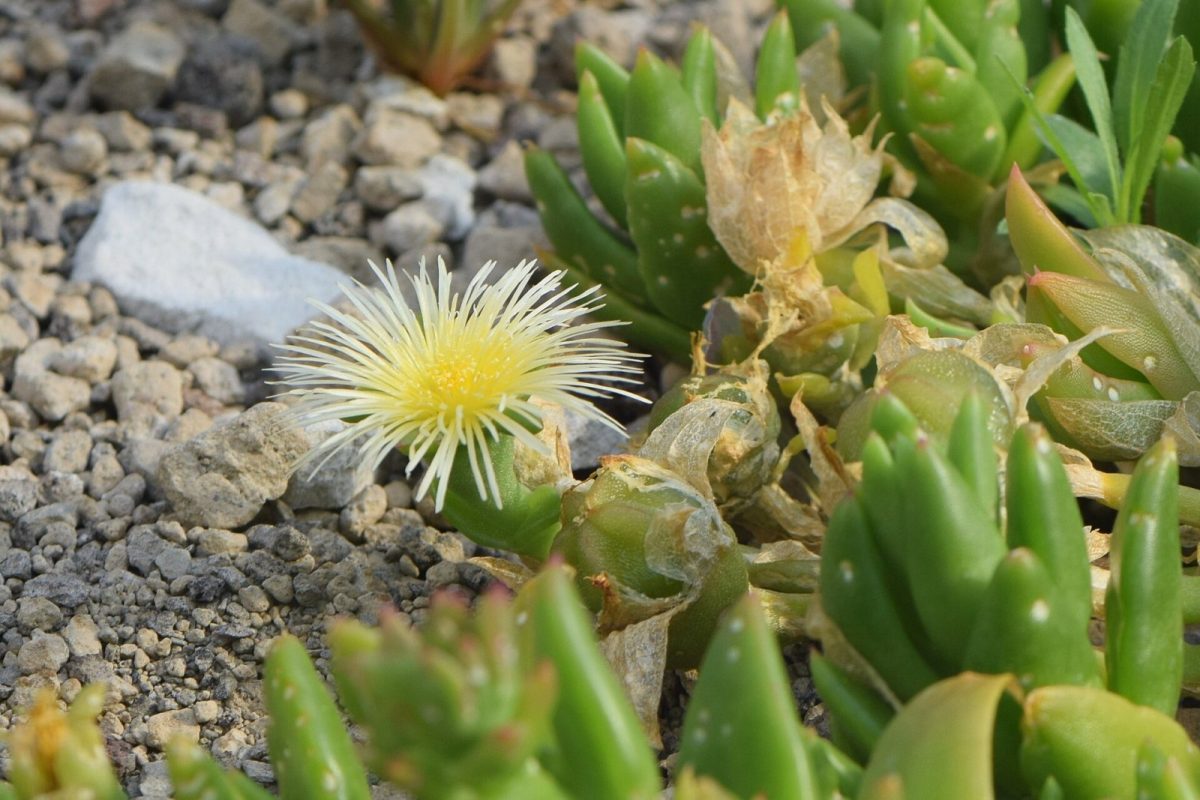
Sceletium tortuosum is a low-growing succulent shrublet rarely exceeding 30 cm in height, bearing fleshy, pale-green leaves whose vascular skeletons remain persistent on older stems—inspiring the generic name Sceletium (“skeleton”). It produces delicate yellowish-white flowers and minute brown seeds.
Endemic to arid regions of South Africa, wild populations have faced significant habitat pressure, stimulating commercial agricultural cultivation. Several closely related species—including S. anatomicum, S. expansum, S. joubertii, S. namaquense, and S. strictum—share overlapping chemical markers and vernacular names, complicating field identification outside formal taxonomic botany.
Risks, Pharmacological Interactions, and Contraindications
Although commercial marketing often depicts kanna as completely benign, essential medical precautions apply. Co-administration with alcohol or cannabis accentuates sedation, and mixing with alcohol has been linked to severe headaches. In elevated doses, acute adverse reactions include nausea, dizziness, diaphoresis, tachycardia, anxiety, and transient hypertension.
The most acute clinical hazard involves drug-drug interactions. Given its potent serotonin reuptake inhibition, combining kanna with monoamine oxidase inhibitors (MAOIs), SSRIs, SNRIs, or other serotonergic medications risks triggering life-threatening serotonin toxicity (serotonin syndrome). Furthermore, it is strictly contraindicated during pregnancy, lactation, in pediatric populations, in individuals with severe bipolar or psychotic disorders, and prior to driving. Anyone taking prescription medication should consult a healthcare professional.
Critical Reading
Kanna serves as an instructive case study of how documented ethnographic remedies can accumulate exaggerated commercial claims. Empirically grounded facts remain modest: authentic traditional use among the San and Khoikhoi, alkaloids exhibiting plausible serotonergic activity, and pronounced seasonal chemical variability. The fragile aspects encompass marketing comparisons to potent pharmaceutical sedatives and unverified health claims.
Foundational references—Louis Lewin’s Phantastica, Schultes and Hofmann’s Plants of the Gods, Christian Rätsch’s Encyclopedia of Psychoactive Plants, and Smith and colleagues’ benchmark study in the Journal of Ethnopharmacology (1996)—provide valuable starting points, yet must be read recognizing that much of the literature cross-references the same limited field data. Moving past sensationalism, harm reduction principles remain paramount: objective information, acute awareness of drug interactions, and healthy skepticism toward miraculous wellness claims.