

When the body reacts before the mind
Imagine someone—let’s call him John—preparing for the most important presentation of the year before the entire board of directors. He has spent a week sleeping poorly, plagued by nightmares about being fired after a disastrous performance. His nervousness has seeped into everything: his commute, his family life, his gym routine. On the big day, he steps onto the podium with heart palpitations, cold sweats, and tremors, convinced that something terrible is happening to him. He tries to speak, but he can’t; he feels the weight of every gaze upon him and ends up fainting. An assistant finishes the presentation while he is taken away in an ambulance. At the hospital, they find nothing wrong: it was simply an excess of physiological arousal. And he knows he will have to face it again.
This story encapsulates a common phenomenon in our fast-paced, competitive society: the body triggers before the mind has time to interpret what is happening. Learning to regulate that arousal—bodily, mental, and behavioral—is one of the most useful skills we can cultivate.
Stress is not the same as distress
What happens to John is often labeled “stress,” but the more precise term would be distress: the negative side of arousal. Not all arousal is harmful. A runner in the middle of a race also experiences tachycardia, sweating, and the redistribution of blood flow, which is a physiological stressor for their body. The decisive difference is the interpretation: the runner does not read those signals as proof that something is wrong, whereas John does.
This brings us to the central idea: the ability to separate oneself from the situation, to open a small “mental space” between what is happening and our reaction. That delay—between the stimulus and the response, whether mental or behavioral—is what gives us a margin of maneuver before we are swept away.
Three levels of response: body, mind, and behavior
The reaction to a situation always unfolds on three levels that feed back into one another.
Physiological arousal. The body generates signals (tachycardia, sweat, muscle tension) that the mind interprets to construct an emotion. If there is no obvious external cause to attribute them to, those signals can be read as a threat, triggering a spiral of anxiety.
Mental arousal. With arousal, processing speed increases, but the focus also narrows: the mind filters and prioritizes information congruent with the emotion already in motion. Everything perceived is colored by that “danger” label and reinterpreted as a threat, fueling the cycle.
Behavioral arousal. An aroused body and mind push us to do something to reduce discomfort: exercise, call someone, go for a walk, eat sweets, or perform checking rituals. As long as the behavior is healthy and not impulsive or compulsive, it is benignly associated with arousal. The problem arises when a person becomes trapped in urgent or repetitive responses—checking, rituals—that turn a bodily reaction into an unproductive and, eventually, pathological action.
The “mental maneuver space” hypothesis
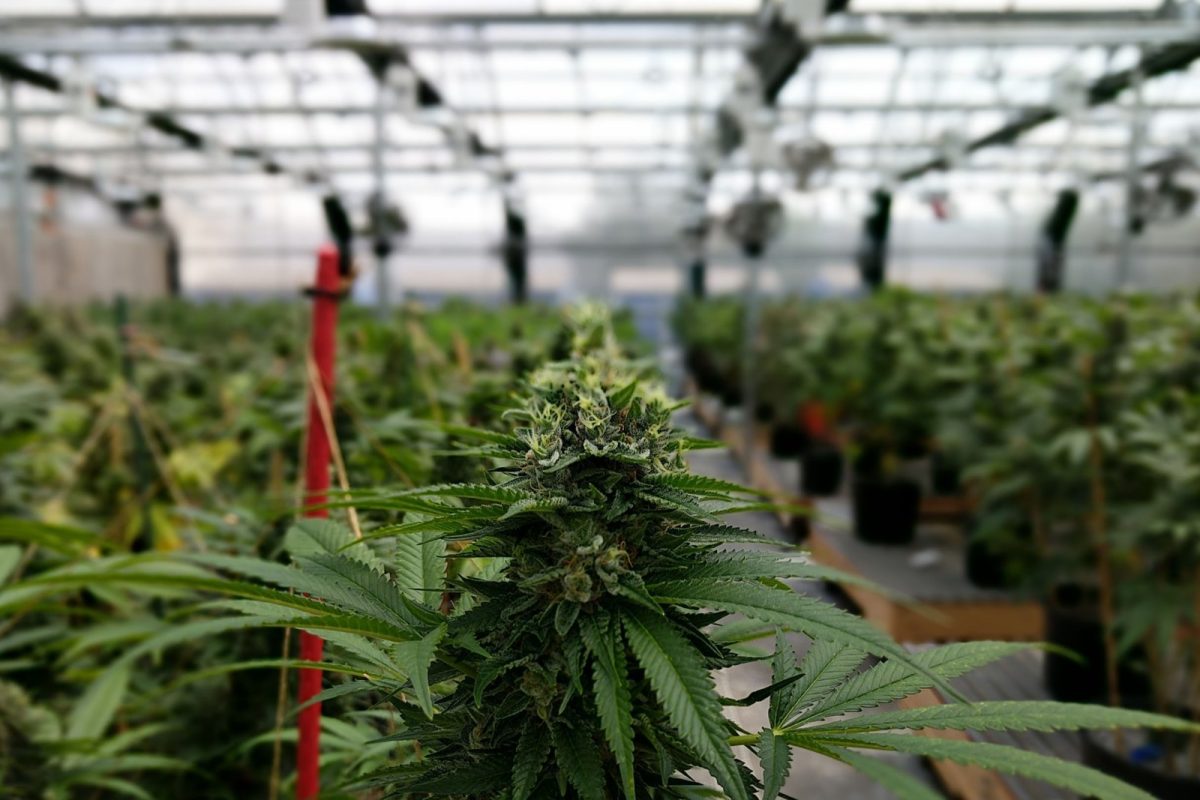
In literature on therapeutic cannabis, it has been argued that the substance could lengthen the time between an event and a reaction, favoring a more intuitive rather than analytical process and attenuating the emotional weight of an experience. This appeals to the presence of cannabinoid receptors distributed throughout the brain and body, and their potential influence on structures like the amygdala, which is heavily involved in emotional processing and anxiety disorders.
The underlying idea—relearning that intense arousal does not equal catastrophe—is reasonable and coincides with well-established principles of clinical psychology: remaining in the presence (real or imagined) of the feared stimulus and verifying that “nothing happens” allows the body to self-regulate and repairs the faulty association between the situation, the danger label, and the negative response. This is the basis of many treatments for anxiety. What should be clarified is the leap from that therapeutic principle to presenting cannabis as a privileged path to achieving it.
Critical reading: what should not be taken for granted
Several claims circulating about cannabis and anxiety require caution:
The effect is biphasic and person-dependent. Cannabinoids can reduce anxiety in some contexts and increase it in others: panic attacks, paranoia, and dysphoria are well-documented reactions, especially with high doses, potent THC products, or in predisposed individuals. Presenting it only as an anxiolytic offers only half the picture.
Cause and effect are not interchangeable. The original text notes—rightly—that studies associating consumption with alterations in the amygdala and hippocampus are usually conducted on people with underlying pathologies, which makes it impossible to know if the damage preceded the consumption or followed it. This methodological caution applies in both directions: it also does not allow us to conclude that cannabis is harmless or protective. The “self-medication” hypothesis (consuming to alleviate symptoms) is plausible, but it remains a hypothesis.
Striking claims need backing. Stories like the alleged systematic use of cannabis in militaries to prevent post-traumatic stress are repeated often but documented rarely. It is best to treat them as unverified anecdotes, not evidence.
Risk of inverting the means and the end. The original article warns: if the substance goes from being a means to experience a situation differently to becoming a quick way to escape discomfort, it stops helping and starts reinforcing avoidance—the very mechanism that maintains anxiety disorders. Regular use as an emotional “fire extinguisher” is one of the gateways to problematic consumption.
Self-regulation, self-observation, and homeostasis
Self-regulation is the ability to return to the midpoint of arousal, physically, mentally, and behaviorally. And its prerequisite is not a substance, but self-observation. A good starting point is to pause before a situation and ask yourself honestly: What am I feeling? What am I thinking? What am I doing? And check if all of that aligns with your own values or if you are simply reacting “the way you are supposed to react.”
We have been conditioned since birth by lessons installed long before we had the awareness to review them. Self-awareness opens that process of revision—of desires, needs, and tastes—and allows us to calibrate the distance between what we do and what we would like to do. Changes are made of small steps and take time.
It is also worth remembering homeostasis: the organism tends toward balance, and the body, brain, and mind are inseparable. What affects the body impacts the mind and vice versa. That is why self-regulation rests on very concrete foundations:
- Balanced nutrition. Many states of distress alter eating habits; a varied diet, with plenty of fruits and vegetables, is a simple foundation to start with.
- Restorative rest. Sleep is one of the first things affected and one of the most determining factors. Maintaining sleep hygiene—stable routines, natural light, moderate physical activity during the day—supports the functioning of the body and brain.
- Arousal control techniques. Progressive muscle relaxation, autogenic training, meditation, conscious breathing, physical exercise, or cognitive techniques for managing thoughts offer tools to reverse a specific excess of arousal without depending on anything external.
Harm reduction: an honest look
None of the above is medical advice or an invitation to consume. If anxiety seriously interferes with your life—sustained insomnia, panic attacks, avoidance—the first reasonable step is an assessment by a mental health professional, not self-experimentation. Cannabis interacts with psychiatric conditions and certain medications, and its recurrent use to mask discomfort tends to make it chronic rather than resolve it. As an elementary reminder: the tools that truly build self-regulation—self-observation, sleep, connection, gradual exposure to what is feared—are not externalized in a substance. One’s freedom regarding what they do with their body does not exempt them from looking with clarity at why they are doing it.