

In brief
- A retrospective study across three Spanish hospitals analyzes how intranasal esketamine performs outside the lab, involving 50 patients with treatment-resistant depression.
- 70% of patients responded to treatment and 68% achieved symptom remission; 86% of discharged patients remained stable for about ten months, without the abstract specifying how many formed that subgroup.
- The risk of suicidal behavior decreased within the first few weeks, and no attempts were recorded during monitored treatment; this does not establish absence of risk throughout later follow-up.
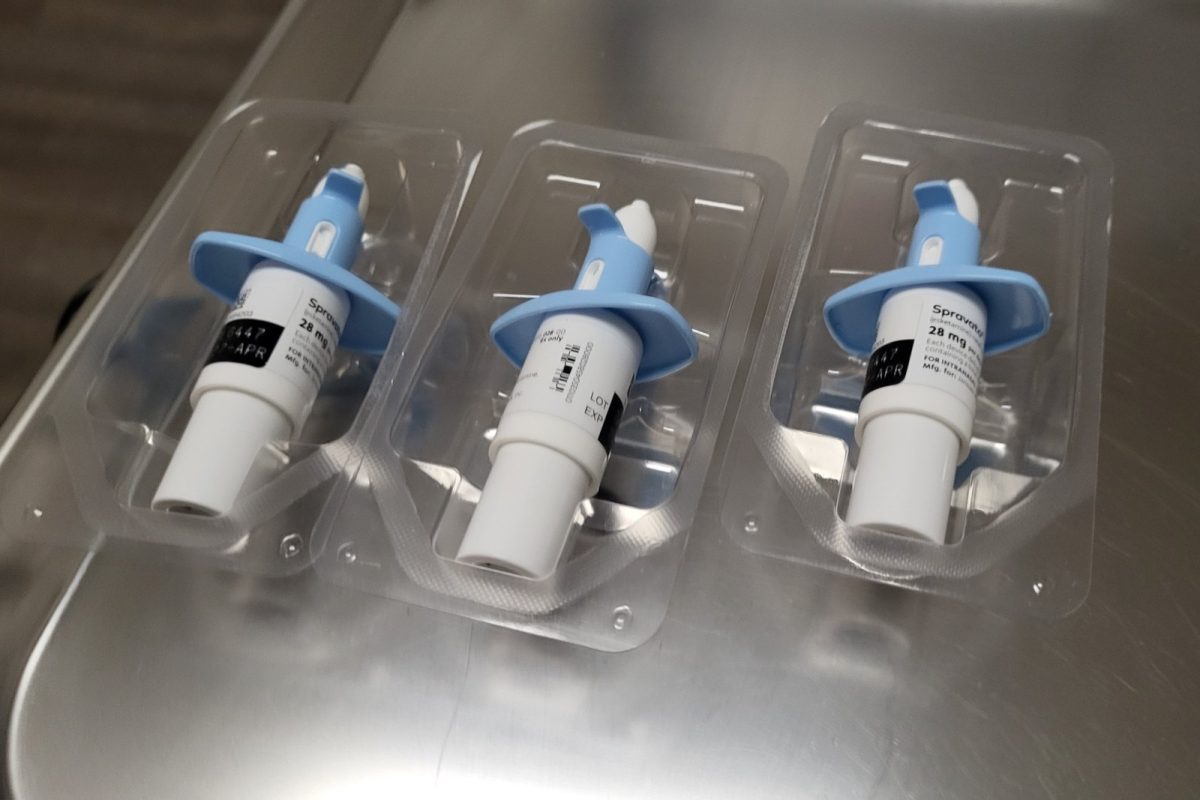
Spravato received an EU-wide marketing authorization on 18 December 2019, according to EMA, for treatment-resistant depression—cases that do not respond after trying at least two different antidepressants at adequate doses. The trials that led to its approval were conducted under highly controlled conditions. Now, a team of psychiatrists from three Spanish hospitals has published a study in the Journal of Psychopharmacology examining what happens when the drug is used in real-world clinical practice, with actual patients rather than the filtered population of a clinical trial.
How the follow-up was conducted
The team retrospectively reviewed the medical records of 50 adults (52% women) who began esketamine nasal spray and completed at least the induction phase of treatment. Progress was measured using the MADRS scale, which scores depression severity, and the SDS scale, which measures impact on daily life, at seven different points: at the start, at weeks 2, 4, 8, 12, and 16, and at discharge. Suicidal risk was also recorded using the C-SSRS scale, a standard clinical questionnaire for assessing suicidal ideation and behavior.
Results, week by week
MADRS and SDS scores improved significantly at every check-in. Median time to response was eight weeks and to remission sixteen weeks; these are not means or individual guarantees. By the end of the follow-up, 70% had responded to treatment and 68% were in remission, under the study’s remission criterion. Of those discharged, 86% remained stable about ten months later. Suicidal risk, measured by the C-SSRS scale, dropped within the first few weeks, and there were no suicide attempts during supervised treatment. The authors also observed that the higher the degree of prior resistance (according to the Maudsley scale), the lower the probability of response or remission.
What this implies
These data must be interpreted with the correct perspective. It is a retrospective study without a control group, involving 50 patients and limited to three centers in one country, so it does not allow for claims of causality with the strength of a randomized trial; the authors themselves note this as a limitation. The cohort complements trials but selects people completing induction and may not represent those discontinuing it. The abstract cannot establish every selection criterion or details of the discharged subgroup. Esketamine is always administered under direct medical supervision at the healthcare facility due to its dissociative potential and transient cardiovascular effects, and that protocol is part of the conditions under which these results were measured. It does, however, align with what another major real-world study comparing ketamine and esketamine previously suggested. For those living with depression that does not yield to conventional treatments, these findings are complementary descriptive evidence, not a personal prognosis or proof of suicide prevention.
Source
- García-Jiménez J, Nuñez-Arias D, Carretero Merelo G, Miller A, Martínez Romero A, Gutiérrez-Rojas L, Mesones Peral JE. Esketamine nasal spray for treatment-resistant depression: A retrospective multicenter real-world cohort study on effectiveness and suicidal outcomes. Journal of Psychopharmacology, June 2026 (published online March 21). PMID 41863095.
Educational content written from a harm reduction perspective and with respect for individual freedom. It is not a substitute for advice from a healthcare professional and is not intended to encourage or condemn any drug use.

