

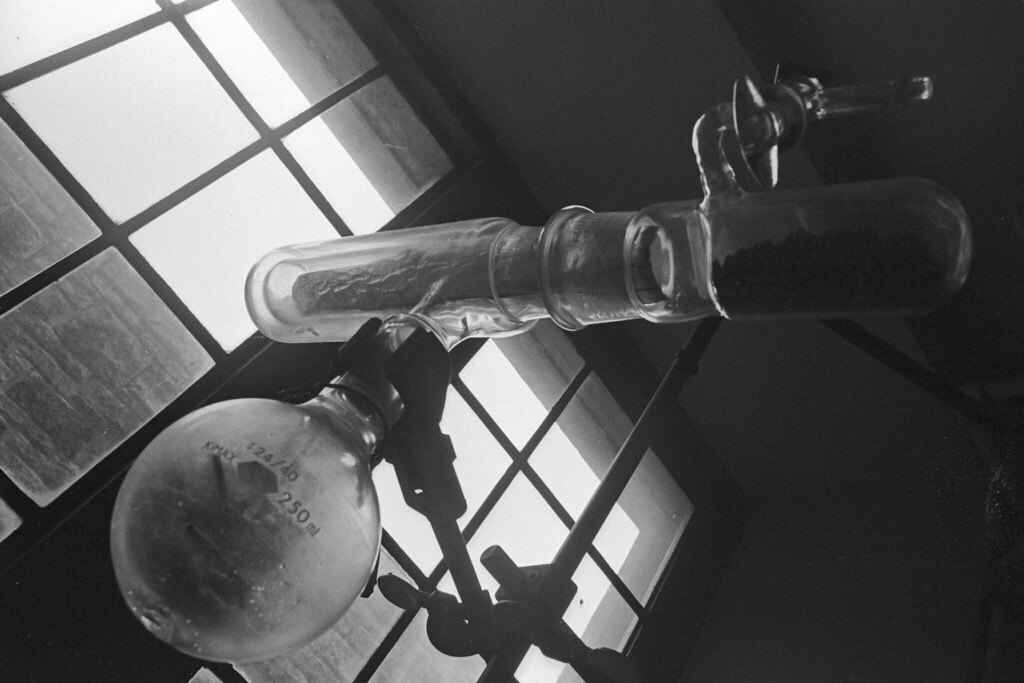
In the vast ecosystem of urban legends related to substance use, few stories have managed to transcend borders and cultures with as much persistence as that of Jenkem. It is a tale that blends social desperation in contexts of extreme poverty with Western morbid curiosity about forbidden or taboo practices. The premise is simple, albeit chilling: adolescents supposedly inhale gases generated by the fermentation of human excrement to reach an altered state of consciousness. Is it a terrifying reality or the result of media and cultural distortion? At Psiconáutica, we dedicate ourselves to separating scientific evidence from informational noise, and in this case, the scales tip decisively toward the latter.
In brief
- Lack of psychoactivity: The primary gas generated is methane, which is odorless and pharmacologically inert. It produces neither euphoria nor hallucinations.
- Real risk: asphyxiation: The danger lies not in the “drug,” but in oxygen displacement and the potential presence of toxic hydrogen sulfide.
- Zambian origin vs. global reality: Although there were initial reports in Zambia regarding homeless children, subsequent investigations have not confirmed its massive use or the described effects.
- Placebo effect and mild asphyxia: Supposed “trip reports” are usually attributed to hyperventilation or suggestion, not to a new psychoactive substance.
- Failure of the war on drugs: The case illustrates how irrational fear can generate disproportionate social alarms without a technical basis.
The origin of the myth and its media expansion
The narrative of Jenkem came to life in 1995, when Zambian journalist Joe Chilaizya published a report warning about the habits of certain vulnerable groups in Lusaka. According to the original chronicle, young people living on the streets would collect fecal matter from septic tanks, ferment it, and inhale the resulting gases to experience a sensation of power greater than that of cannabis.
This story was quickly amplified by major international media outlets. In 1998, The New York Times mentioned the phenomenon, and in subsequent years, correspondents like the BBC’s Ishbel Matheson provided anecdotal testimonies describing visions and the forgetting of one’s real environment. The narrative expanded until it reached the United States, where internet forums and concerned parents fueled an excessive social alarm. Municipal ordinances were even enacted in cities like Bettendorf, Iowa, to prohibit the deliberate inhalation of organic vapors for euphoric purposes.
It is crucial to understand that this phenomenon is not a scientific discovery, but a social construct. Lewin’s theoretical classification of psychoactive substances has been extended by some authors to include this fictional category, labeling it “Excrementia,” but such a taxonomy lacks support in serious pharmacological literature.
The science behind the gas: methane and hydrogen sulfide
To understand why Jenkem is not a drug, we must look at basic chemistry. When organic waste ferments under anaerobic conditions (without oxygen), specific bacteria produce gases such as carbon dioxide and methane.
Methane: inert and odorless
Methane is a simple gas, highly flammable but pharmacologically inactive. It does not interact with central nervous system receptors to produce pleasure, hallucinations, or mood changes. In other words, inhaling it does not get you “high.”
Hydrogen sulfide: a toxic risk
Symbolized as H2S, hydrogen sulfide is another gas that can appear during fermentation. At low concentrations, it has a characteristic rotten-egg smell; at higher concentrations, it paralyzes olfactory receptors and becomes odorless, which increases the risk of poisoning without the victim perceiving the threat.
Although this gas is toxic to respiratory mucous membranes and can cause lung damage during prolonged or massive exposure, it possesses no psychoactive properties. Its effect would be irritating or asphyxiating, never euphoric.
The reality experiment: Does Jenkem get you high?
Scientific curiosity and the desire to verify the rumors led some users on specialized forums to conduct home experiments. The procedure described in these narratives involved fermenting fecal matter for a week, sealing it in bags or balloons, and inhaling the accumulated gas.
The results documented by these “trip reports” are revealing: users reported a slightly fetid smell, similar to ammonia, but lacked the expected euphoria. Some described a slight feeling of dizziness or lightheadedness, which is perfectly explained by hyperventilation (breathing air with low oxygen content) and not by pharmacological effects.
An anecdotal example illustrates this: one user reported having performed the experiment after a week of fermentation. Upon inhaling the gas, they noticed the balloon deflating rapidly due to leaks or the nature of the gas. The subjective effects were minimal and did not confirm the visions or hallucinations described in the initial reports.
Harm reduction: lessons learned
Although Jenkem as a psychoactive drug is a myth, the practice surrounding it carries real risks that deserve attention from a harm reduction perspective:
- Gas poisoning: Repeated inhalation of displaced air can cause hypoxia (lack of oxygen), dizziness, loss of consciousness, and, in extreme cases, fatal asphyxiation.
- Transmissible infections: Handling human excrement without protection exposes one to gastrointestinal diseases like hepatitis A or Salmonella infections.
- Chemical toxins: The presence of hydrogen sulfide can cause burns to the respiratory tract and irreversible lung damage.
At Psiconáutica, we strongly recommend avoiding any practice that involves the handling of organic waste for recreational purposes. There is no psychoactive benefit whatsoever that justifies the risk to physical and mental health.
Conclusion: David vs. Goliath on the web
The case of Jenkem is a paradigmatic example of how misinformation, combined with an irrational fear of the unknown, can generate unnecessary social alarm. Health and pharmacological authorities have not recognized Jenkem as a psychoactive substance because it lacks the biological mechanisms necessary to alter the mind.
History teaches us that, in the realm of substance use, scientific evidence is our best tool against urban legends. While some media outlets and forums continue to fuel the myth with invented or exaggerated stories, the scientific community maintains a clear stance: Jenkem does not exist as a drug, but the risks associated with its supposed preparation are real and must be avoided.
At Psiconáutica, our commitment is to promote responsible use based on truth, evidence, and respect for integral health. The next time you hear a story about forbidden or exotic drugs, remember: if there is no scientific study, it is probably just another myth waiting to be debunked.


