
This article explores the famous case of Clairvius Narcisse, studied by Wade Davis. We analyze how the combination of neurotoxins like tetrodotoxin and hallucinogenic plants, added to Vodou religious beliefs regarding the dual soul, could have generated this phenomenon.
In brief
- The case of Clairvius Narcisse challenges the popular view of the zombie, revealing a complex biochemical and cultural process.
- Tetrodotoxin from the pufferfish induces total paralysis that mimics clinical death.
- Hallucinogenic plants like Datura enhance the state of unconsciousness and perceptual alteration.
- The sociocultural context and beliefs in the dual soul are decisive for the “zombie” experience.
The paradox of a man who walked after his burial
In the history of forensic anthropology and ethnobotany, few cases have generated as much fascination as that of Clairvius Narcisse. This Haitian farmer became a legendary figure not through a supernatural act, but through a tragic convergence of toxicology, traditional medicine, and deep religious beliefs.
The story begins in the spring of 1962. A man in his forties was admitted to the Albert Schweitzer Hospital in the Artibonite Valley with acute symptoms: high fever, generalized pain, and hemoptysis (spitting up blood). His clinical state deteriorated rapidly until, two days later, he was declared dead by the attending physicians. The family attended the funeral ritual; the eldest sister signed the death certificate, and the body was buried in the local cemetery.
Eighteen years later, in January 1980, a village woman found a semi-naked and confused man. He identified himself as Clairvius Narcisse, who recounted having been conscious during the entire funeral process: he heard the certification of death, saw his family crying, and felt them closing the coffin. In his own words, he remained in the casket for hours before being resurrected by the drums and chants of a figure he called a bokor.
This testimony is not a fairy tale, but the basis of a rigorous investigation carried out by ethnobotanist Wade Davis in the 1980s. His goal was to unravel whether this phenomenon was a product of collective fear or had a tangible scientific explanation.
The chemistry of apparent death
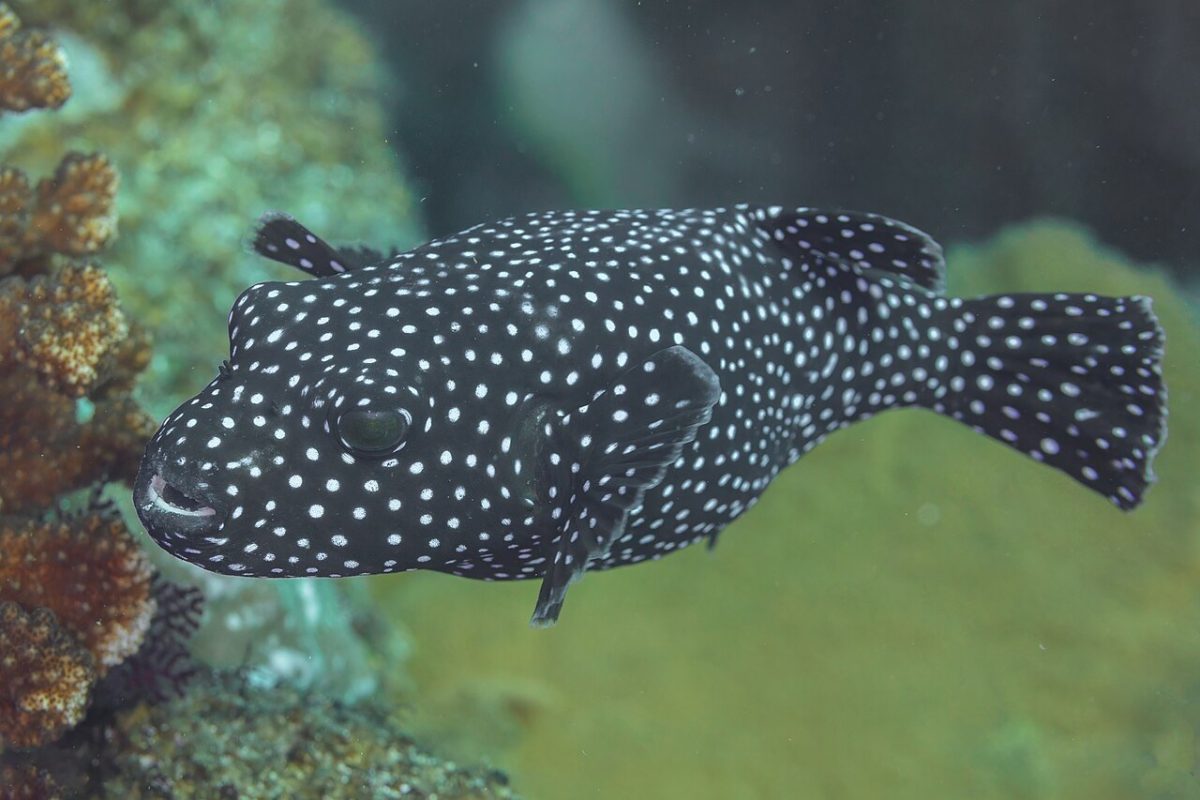
To understand what happened to Narcisse, it is necessary to delve into the world of neurotoxins. Davis collected samples of powders used by local practitioners and analyzed them in Western laboratories. The analysis revealed a complex composition: insects, reptiles, stinging plants, and, crucially, parts of the pufferfish (fugu).
The lethal ingredient is tetrodotoxin. This substance, present in fugu tissue, is a potent neurotoxin capable of blocking sodium channels in neurons. The result is a progressive neuromuscular paralysis that affects the extremities first and then the trunk, causing cyanosis (bluish coloration due to lack of oxygen), respiratory distress, and finally cardiac arrest.
In a Western medical context, this poisoning would be treated as a lethal emergency. However, in the Haitian context described by Davis, the symptoms matched perfectly with those reported by Narcisse before being declared dead: paresthesia (abnormal sensations), pulmonary edema, and hypothermia.
Tetrodotoxin does not kill instantly; it induces a state of deep coma and paralysis that can last for hours or days. If the patient receives basic care, such as oxygen and maintenance of body temperature, it is possible to survive acute poisoning. Narcisse, upon being removed from the coffin and taken far from the burial site, may have received non-medical attention that was sufficient to maintain his basic vital functions while his nervous system slowly recovered.
The role of hallucinogenic plants
Nevertheless, tetrodotoxin alone explains the physical paralysis, but not necessarily the mental state or the loss of will described. Here, other plant substances present in traditional preparations come into play.
The presence of Datura stramonium, known locally as “zombie cucumber” or “zombie poison,” and possibly plants with alkaloids similar to scopolamine, has been identified. These substances have potent anticholinergic effects that can induce hallucinations, temporal disorientation, and a feeling of separation from the body (dissociation).
The combination of tetrodotoxin and these psychoactive compounds creates a unique scenario: the individual is physically paralyzed by the neurotoxin, but their mind may be altered by the hallucinogens. This dissociation could explain why Narcisse felt he was “floating” over his grave or heard drums and voices—real subjective experiences triggered by the pharmacology of the plants.
The sociocultural context: the dual soul
The scientific explanation is necessary but insufficient to understand the zombie phenomenon in Haiti. It is imperative to consider the cultural and religious framework that gives meaning to the experience. Haitian Vodou, far from being a simple superstition, possesses a complex worldview regarding human nature.
According to traditional beliefs, the human being possesses a dual soul composed of two entities: the Gros Bon Ange (Big Good Angel) and the Ti Bon Ange (Little Good Angel). The former resides in the physical body and contains memory, feelings, and personality. The latter inhabits the brain and is responsible for immediate consciousness.
In this view, a bokor or Vodou priest could theoretically snatch the Ti Bon Ange through specific rituals (such as the use of zombie powders). The person would lose their will and consciousness, becoming a soulless creature acting under the sorcerer’s orders. This loss of personal identity is what defines the zombie from a cultural perspective.
It is crucial to highlight that this phenomenon does not occur in a vacuum. The Haitian community has historically faced extreme conditions: poverty, lack of access to medical services, and a social structure where traditional authorities (houngans) often held more weight than civil authorities. In such circumstances, a bokor’s ability to “sell” someone as a slave through rituals was a palpable social reality.
The case of Narcisse illustrates this perfectly: he had committed serious offenses against community norms (land disputes, excessive ambition). The secret society judged him and “sold” him as punishment. What appears to an outside observer as madness or a living death was, for the community, a ritualized social execution.
Harm reduction and critical reading
Although the Narcisse case is fascinating from an anthropological perspective, it is vital to maintain a harm reduction approach. Tetrodotoxin poisoning is extremely dangerous and can be fatal if immediate medical attention is not received.
- Lethal risk: The accidental or intentional consumption of preparations containing tetrodotoxin without expert supervision carries an imminent mortal risk. The dose required for death is small and varies by individual.
- Pharmacological interactions: The combination of neurotoxins and hallucinogens can cause permanent brain damage, seizures, or irreversible respiratory paralysis.
- Cultural vs. recreational context: There is no safe way to “experience” the zombie phenomenon outside of its specific ritual context, which is controlled by traditional experts with decades of experience. Attempting to replicate it in a Western or recreational setting is irresponsible and dangerous.
Modern science has confirmed that tetrodotoxin is not a recreational drug, but a lethal toxin. Its use in ritual contexts must be understood as part of a specific cultural tradition and not as a model to follow for psychoactive consumption.
Editorial closing
The case of Clairvius Narcisse invites us to reflect on the nature of reality. What is dying? Is it just the stopping of the heart, or is it also the loss of consciousness and identity?
The answer depends on where you look: from the laboratory, we see neurotoxin poisoning; from the hospital, a clinical case of deep coma; from the Haitian community, a spiritual and social transformation. Psiconáutica teaches us that psychoactive substances do not act in a vacuum; their effect is modulated by our mind (set) and our environment (setting).
In this case, the drug, the belief, and society conjured an experience so intense that it changed a man’s life forever. It was not magic, nor was it just chemistry: it was the complex interaction between biology and culture. Let us always remember that behind every myth lies a human reality that deserves to be understood with respect and prudence.