

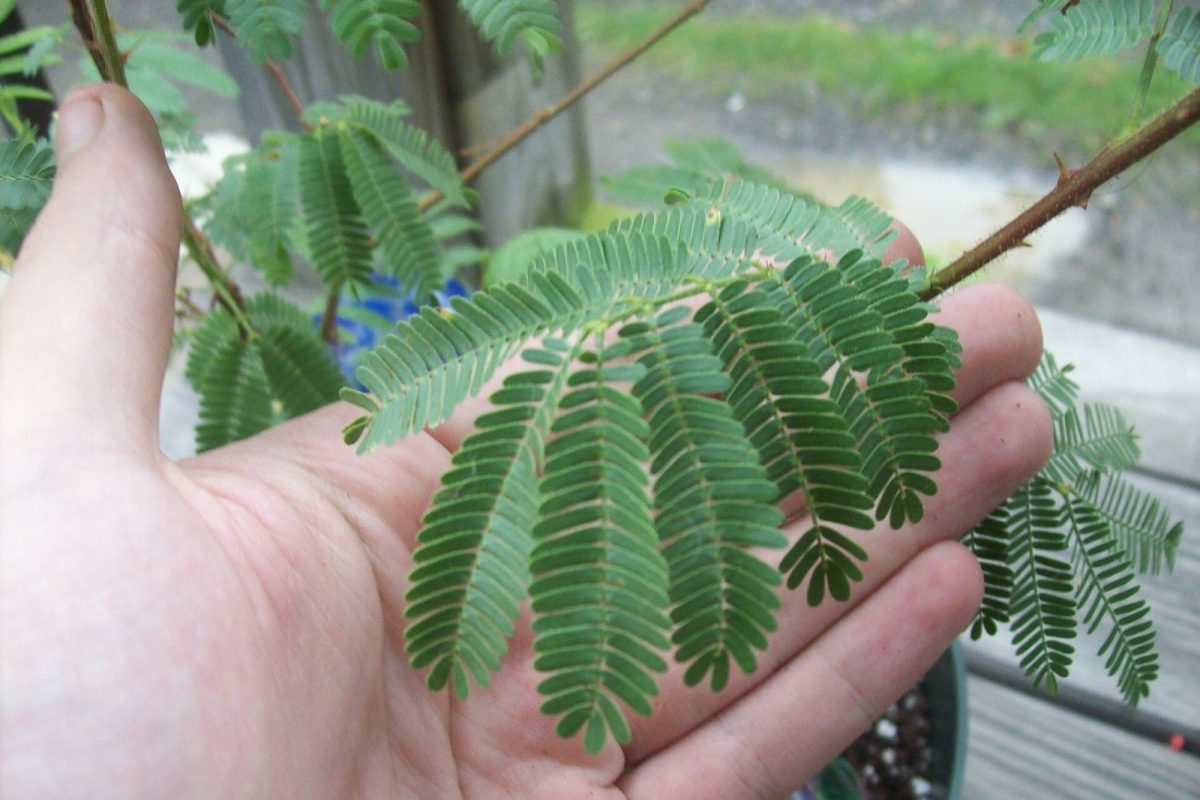
A humble shrub with a grand name
Few plants carry as many names as jurema. In Brazil, it is called jurema preta, black jurema, ajucá, or espineiro; in Mexico, tepescohuite; in other regions, cabrero, carbón, or carbonal. Behind this collection of labels is a single species, now accepted as Mimosa tenuiflora, botanically described in Mexico in 1810 and recognized relatively recently as identical to the Brazilian Mimosa hostilis. It belongs to the Fabaceae family—the bean family—and the Mimosa genus includes some 500 species of tropical and subtropical herbs and shrubs.
It is a thorny, opportunistic scrub. It grows easily in abandoned farmland, tolerates diverse soil types, withstands logging and burning, and is distributed across large areas of Mexico (Baja California, Oaxaca, the Chiapas coast), Central America, the Venezuelan plains, and the arid lowlands of eastern Brazil (Pernambuco, Minas Gerais, Bahia). It is deciduous: it loses its leaves from December to May and flowers and fruits precisely during the driest season. The Aztecs already knew it, which accounts for one of its Mexican names, tepus-cuahuitl or “metallic tree,” due to the hardness of its wood.
From medicinal bark to “vinho da jurema”
It is important to distinguish between two traditional uses that do not overlap. In Mexican markets, the trunk bark—tepescohuite—is sold for its long-standing reputation in folk medicine: as a tonic, a treatment for healing burns, an anti-inflammatory, or for skincare. This is a topical, cutaneous use, unrelated to any psychoactive effect.
The second use is different. Various peoples of northeastern Brazil used the root bark—not the trunk bark—to prepare the so-called “vinho da jurema,” a ritual brew present in magical-religious ceremonies, used before intertribal warfare, and as a symbolic resource against the colonial dispossession of their lands. The practice was once thought to be nearly extinct, but it has resurged strongly in urban and syncretic contexts. Richard Evans Schultes collected Indigenous testimonies describing nights “navigating through the depths of stupor” and “glorious visions of the spirit land.”
The enigma: Oral DMT without an MAOI
This is what makes jurema a fascinating case for ethnopharmacology. Dimethyltryptamine (DMT) is, under normal conditions, inactive when taken orally: the body degrades it before it reaches the brain. This is why Amazonian potions like ayahuasca or yajé combine the tryptamine with plants rich in monoamine oxidase inhibitors (MAOIs), such as Banisteriopsis caapi, which block that degradation.
The problem is that phytochemical analyses of the Brazilian black jurema root bark have not found these inhibitors. And yet, ethnographic testimonies describe a brew drunk “without any additives” that produced visionary effects. Jonathan Ott, who dedicated a good part of his work to ayahuasca analogs, documented an experience in 1998 after ingesting the preparation. The remaining hypothesis is that jurema contains some orally active tryptamine that has not yet been characterized. The Entheogen Review even spoke of “mysterious alkaloids in the root bark.” To this day, that mechanism remains unresolved, which is a good reminder of how much we still do not know about relatively well-studied plants.
The first chemists to analyze it believed they had isolated a new substance, which they called “nigerine,” until it was proven to be DMT. The root bark can contain between 0.5% and 1% DMT, and strikingly high figures have been described in Mexican material, reaching extreme values in roots from Chiapas according to Ott’s counts. The trunk bark and leaves, by contrast, contain much less. The plant also includes tannins, saponins, phytosterols, lupeol, and other compounds. A relevant detail regarding safety: both the leaves and the trunk could contain mimosine, a toxic amino acid.
The seeds of discord
The popularity of jurema among ethnobotany enthusiasts brought with it a murky market. Mimosa tenuiflora has white flowers; Mimosa verrucosa has pink ones. Various seed shops have sold material as M. hostilis that turned out to be M. verrucosa, M. pudica, or M. scabrella, and photographs of supposed “pink-flowered” plants have circulated that simply do not correspond to the species. The confusion is compounded because different peoples call different species “white jurema” and “black jurema,” and even invert the correspondence between common names and scientific names. Gonçalves de Lima maintained that M. verrucosa was also used for “vinho da jurema,” but—as botanist Keeper Trout emphasizes—there are no published chemical analyses to support this. It is an ideal environment for fraud and misinformation.
Critical reading and harm reduction
The original article from which this text is derived included detailed homemade recipes for making “juremahuasca” and for extracting harmala alkaloids. We have chosen not to reproduce them. This is not censorship, but editorial judgment: instructions for preparation, extraction, and dosage provide a false sense of control over processes that are far from safe or predictable.
- Chemistry does not forgive imprecision. The concentration of DMT in jurema is high and highly variable depending on the origin, the part of the plant, and the batch. “Fixed recipe, variable plant” is the formula for an overdose.
- Combining with MAOIs is the most delicate part. Monoamine oxidase inhibitors (such as those from harmala) interact with numerous drugs—SSRI antidepressants, certain painkillers, some decongestants—and with foods rich in tyramine, carrying a risk of serotonin syndrome or hypertensive crisis. This is not a minor detail: it is the primary danger of any ayahuasca analog.
- Vomiting and diarrhea are not “purification.” They are a physiological response to the brew and, taken to the extreme, a route to dehydration. Reframing them as spiritual cleansing can lead to ignoring real warning signs.
- Uncertain identification = added risk. Amid the confusion of species, the possible presence of mimosine, and the absence of controls, what one believes they are handling rarely matches what is actually in their hand.
Beyond pharmacology, jurema is also the ceremonial heritage of specific communities in northeastern Brazil. Its circulation as a commodity for recreational or “psychonautic” consumption raises questions of cultural appropriation that deserve, at the very least, to be acknowledged.
The bottom line
Jurema encapsulates many of the tensions that run through psychoactive culture: a humble plant with extraordinary chemistry, an Indigenous tradition reinterpreted by urban culture, an unresolved pharmacological enigma, and a market where misinformation abounds. It is worth knowing about it for all these reasons. And it is worth remembering that understanding a plant is not the same as manipulating it safely.


