

In brief
- The weekly purity bulletin, which compiles results from drug checking services in seven European countries, including Spain, lists three designer benzodiazepines among the week’s ten most searched substances: etilbromazolam, bromonordiazepam, and flubrotizolam.
- In Austria, a pill sold as alprazolam was found to contain flualprazolam, and the bulletin table also lists methoxyqualone, whose original report was not independently reviewed here.
- The message from drug checking services is simple: with pressed benzodiazepines, the name should be treated as a mere assumption until verified.
The Drug Purity Report, published weekly by PRO Test—a European distributor of testing kits—compiles results from official drug checking services across several countries. The report for the last week of August highlights a phenomenon that has been brewing for months: the proliferation of synthetic designer benzodiazepines whose contents and dosing cannot be established from an illicit sales label.
Designer benzodiazepines and unverified sales labels
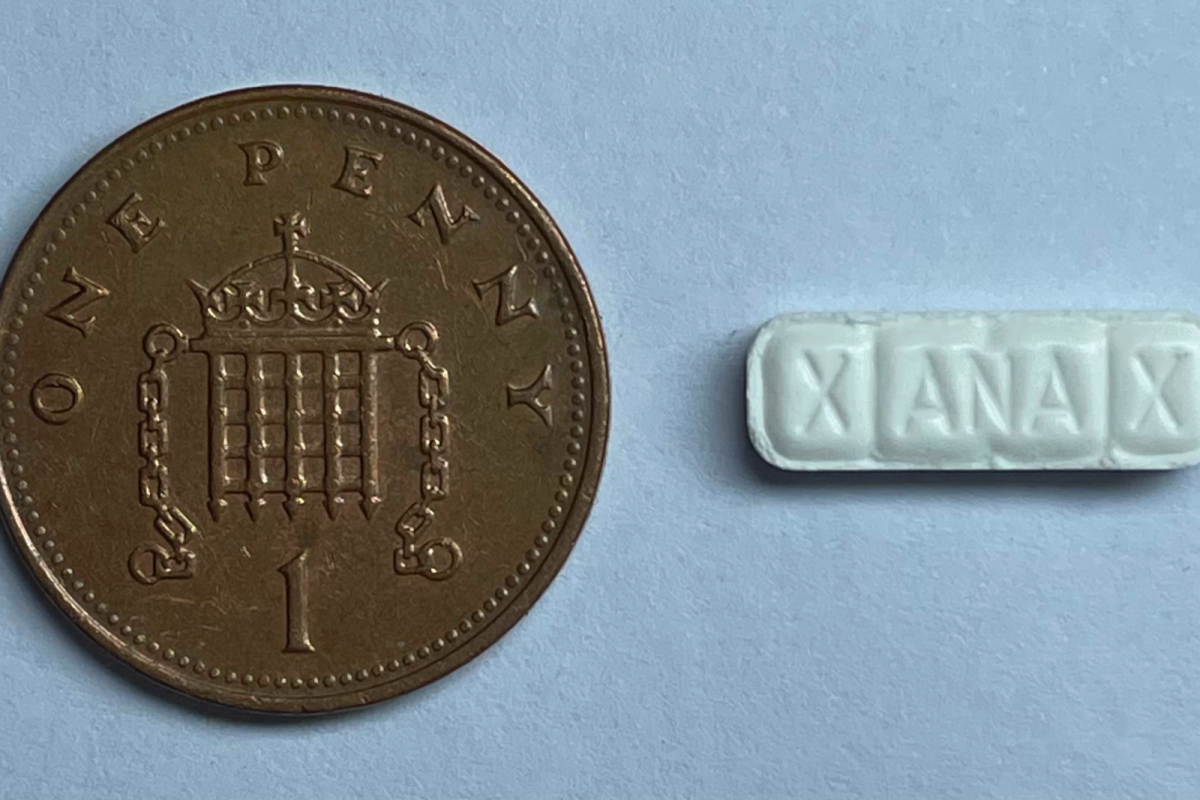
In addition to laboratory analyses, the report tracks searches leading from Google to the DrugsPRO application, an indirect way to detect interest in a compound before it appears in significant quantities in analyzed samples. This week, three of the ten most searched substances were designer benzodiazepines that barely registered any interest twelve months ago: etilbromazolam, bromonordiazepam, and flubrotizolam. The bulletin is not a worldwide register of medicinal authorizations. These are variants synthesized outside the pharmaceutical industry that mimic the sedative effects of drugs like alprazolam or diazepam, but without the dosage controls or safety studies that accompany a legitimate medicine.
What the label says versus what is inside
This week’s analyses illustrate the problem. In Austria, a sample sold as alprazolam was found to contain flualprazolam, a designer benzodiazepine with a potency and duration distinct from the original drug. The table also lists 2-methoxyqualone; that sample’s sales label was not verified here against its original report. The alprazolam/flualprazolam case illustrates a sales label that did not match the contents; that unverified label is not also attributed to the 2-methoxyqualone sample. The same bulletin includes a red alert issued by the Trimbos Institute on August 28 in the Netherlands regarding pills featuring Trump’s face that contained PMMA, as well as data on amphetamine with a median purity of 68% in that week’s samples versus 61% over the preceding twelve months, without representing the entire market, with significant regional variations.
What this implies
This phenomenon is not exclusive to one substance or one country; it reflects a broader dynamic where, as soon as a benzodiazepine is regulated or disappears from the illicit market, a slightly different chemical cousin appears to take its place without passing through any health screening. It is the same logic seen with other families of substances, and the reason why harm reduction increasingly relies on chemical analysis rather than trusting the packaging. It is advisable to read these data with a caution that the report itself acknowledges: they only describe samples analyzed by services in Austria, France, Germany, the Netherlands, Slovenia, Spain, and Switzerland. They do not portray the entire market, but rather a partial, real-time snapshot of what is circulating, and general prevalence cannot be deduced from a handful of weekly samples.
Source
- PRO Test. Drug Purity Report: Week 35, 2026. PRO Test, September 7, 2026.
Educational content written from a harm reduction perspective and with respect for individual freedom. It is not a substitute for advice from a healthcare professional and is not intended to encourage or condemn any drug use.