

In brief
- A Japanese team has synthesized authentic 1D-LSD for the first time, an LSD analog that has been circulating on blotters since late 2022.
- Analysis confirms that an examined product sold under this name contained 1T-LSD, a different molecule with the same nominal mass.
- The two can be distinguished using appropriate analytical techniques, but not with basic testing methods.
Researchers from Japan’s National Research Institute of Police Science and the University of Tokyo have synthesized and characterized 1D-LSD for the first time—one of several LSD analogs that have been circulating online since late 2022. The study, published August 27 in Drug Testing and Analysis, confirms a long-held suspicion: the previously examined product under that label contained 1T-LSD, without measuring the fraction of the market mislabeled.
A chain of analogs with the same logic
Since the mid-2010s, the LSD market has seen a succession of analogs designed to remain outside the scope of controlled substance lists without losing their effects. 1P-LSD paved the way, followed by 1cP-LSD and 1V-LSD; when the latter fell under legal control in some countries, 1D-LSD filled the void. This analytical study does not establish conversion of all these analogues to LSD in humans, although pharmacological work exists on other derivatives, a mechanism we covered a few days ago based on a pharmacological study. The analytical study establishes no subjective, duration or human-dose equivalence between the characterized compounds and LSD.
Same mass, different molecule
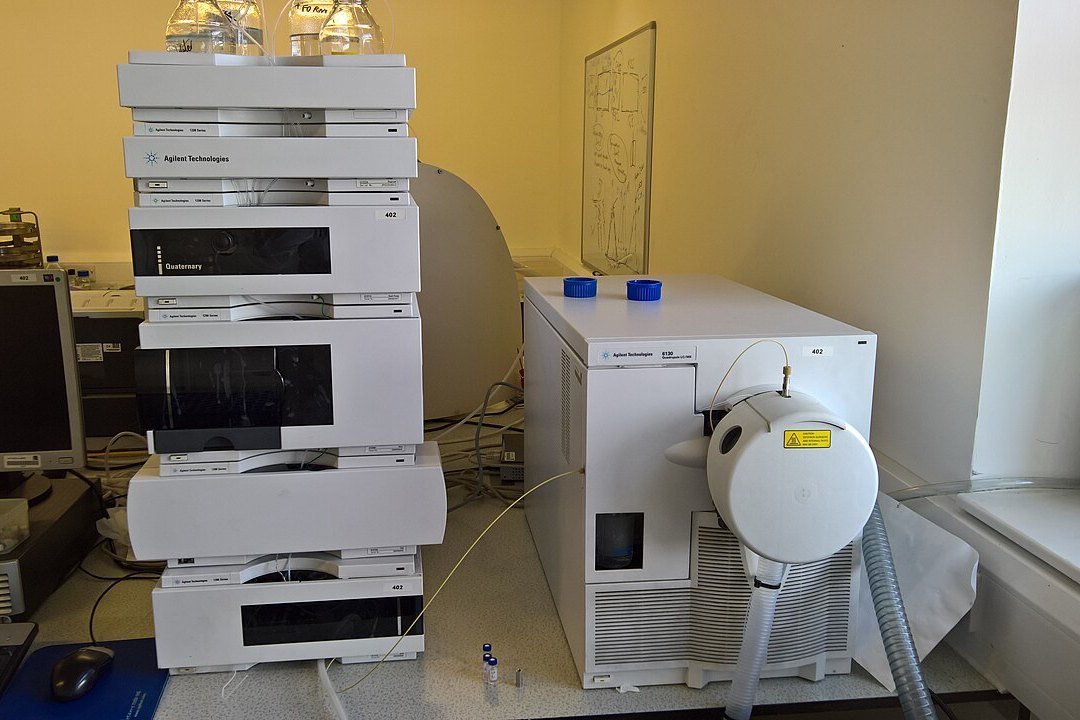
The problem is that real 1D-LSD—formally 1-(1,2-dimethylcyclobutane-1-carbonyl)-LSD—requires a starting carboxylic acid that is expensive and difficult to obtain, manufactured by only a few custom synthesis firms. The Japanese researchers had previously detected that samples labeled as 1D-LSD actually contained 1T-LSD, a variant with a thiophene ring that shares the same nominal mass and can therefore go unnoticed in low-resolution mass spectrometers. To settle the confusion, they synthesized authentic 1D-LSD as a mixture of its four diastereomers, separated them into two groups of two diastereomers via preparative liquid chromatography and established their structural correspondence using nuclear magnetic resonance supported by quantum calculations, as well as gas chromatography and infrared spectroscopy. With that reference profile in hand, they verified that the two molecules have clearly distinct analytical properties: confusing them is avoidable, but only with the right techniques.
What this implies
For those purchasing blotters labeled as 1D-LSD, the finding serves as a practical reminder: the name printed on the packaging does not guarantee what molecule is inside, and with such recent analogs, information regarding dosage and duration remains largely anecdotal. The analytical study does not measure clinical potency or establish dose equivalence with LSD. A home reagent test also cannot distinguish between the two molecules, so the only reliable way to know what has been purchased is through a laboratory with sufficient resolution chromatography and mass spectrometry. This is exactly the type of testing that should be prioritized within any harm reduction practice when new molecules appear on the market.
Source
- Okada Y, Yamamuro T, Kuwayama K et al. Synthesis and Analytical Characterization of 1-(1,2-Dimethylcyclobutane-1-Carbonyl)-Lysergic Acid Diethylamide (1D-LSD) and Differentiation From 1-(Thiophene-2-Carbonyl)-LSD (1T-LSD). Drug Testing and Analysis, August 27, 2026.
Educational content written from a harm reduction perspective and with respect for individual freedom. It is not a substitute for advice from a healthcare professional and is not intended to encourage or condemn any drug use.