

Wide-Open Eyes on Temple Walls: Artistic Symbolism or Pharmacology?
Anyone touring ancient Egyptian tombs and temples eventually notices a curious detail: numerous figures display unnaturally wide, staring eyes, whose vacant gaze contrasts sharply with the serenity of their facial contours. Clinically, this extreme pupillary dilation is termed mydriasis—a classic physiological sign of tropane alkaloid activity typical of the nightshade family. On this basis, several scholars—including Egyptologist Begoña del Casal Aretxabaleta—have suggested that New Kingdom artisans (circa 1550–1070 BCE) utilized this visual feature to denote transcendent visionary states, potentially linked to the sacramental consumption of mandrake.
This remains an intriguing hypothesis, but must be recognized as an interpretation. Ancient Egyptian art adhered to rigid canonical conventions of formal representation; an exaggerated eye could easily reflect stylistic aesthetic dogma rather than clinical naturalism. Let us preserve that critical caution as we survey the botanical candidates.
Mandrake: The Quintessential Funerary Plant
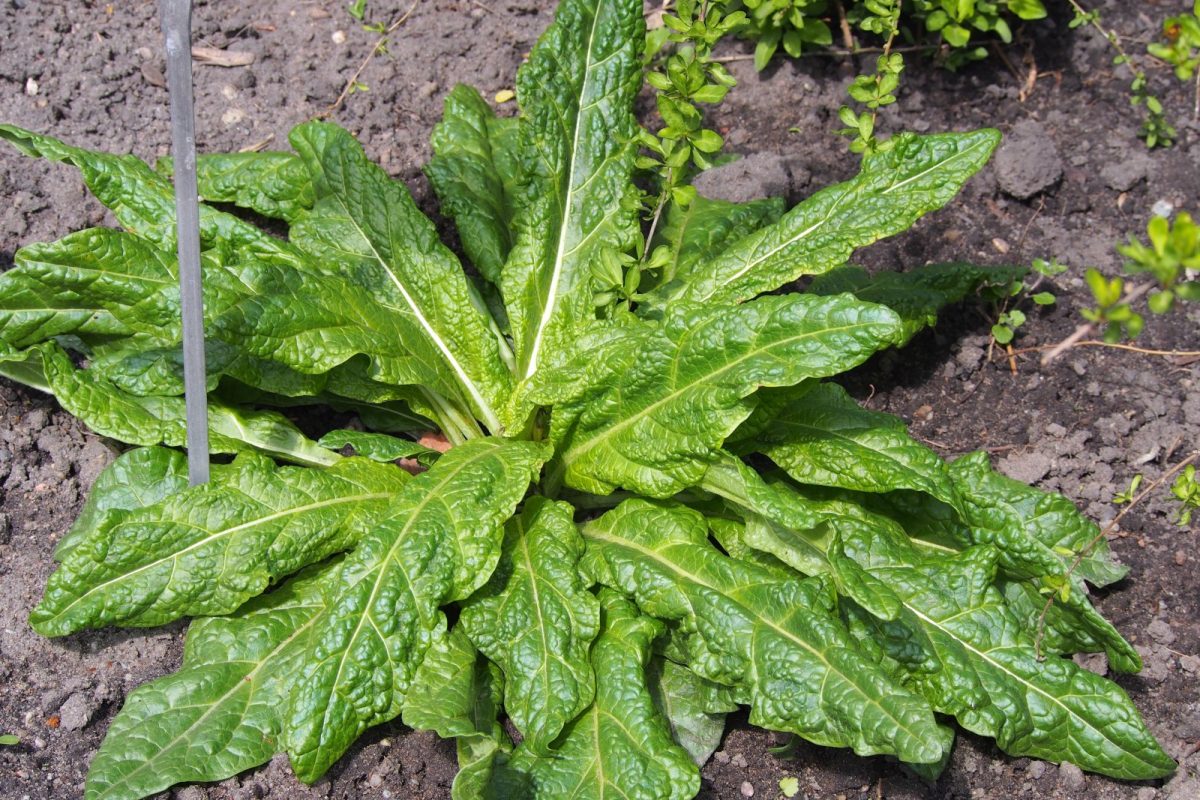
Mandrake belongs to the Solanaceae family, which also includes henbane and belladonna. It is a stemless perennial featuring large, crinkled leaves, a thick, often bifurcated taproot, and fragrant red berries. These distinctive berries reappear continuously across the Theban necropolis.
The iconographic evidence is extensive: Mayor Sennefer holds a bouquet of lotus blossoms adorned with three mandrake fruits within the tombs of Sheikh Abd el-Qurna; identical motifs appear in the tombs of Menna, Nebamun, and Ramose; in the tomb of Nakht, two wide-eyed women tenderly offer mandrake berries to one another with enigmatic smiles. At Saqqara, in the tomb of Meryre, Prince Saaton is depicted holding a mandrake in his hand. The motif migrates effortlessly from funerary tombs to sacred temple architecture: Amenhotep III offers it alongside blue lotus at Karnak, and Seti I presents its fruits directly to the gods.
Chronologically, the botanical introduction of mandrake into Egypt is typically dated to the reign of Thutmose III, whose military campaigns through Syria and the Levant brought exotic flora and fauna documented in the Annals of the Temple of Amun at Karnak. Indigenous to the Mediterranean Levant, the plant acclimatized within the Nile Valley. Initially restricted to royal and noble courts, by the reigns of Thutmose IV and Amenhotep III the sacred motif expanded to provincial nobility, as evidenced by Mayor Sennefer’s tomb and the faience collar of priest Amenemhat.
A Color Code for the Afterlife
Within the tomb of Sennedjem, mandrake fruits appear intertwined with cornflowers (Centaurea depressa) and opium poppies (Papaver somniferum), utilizing pigments imbued with theological symbolism:
- Yellow: the golden mandrake fruits, symbolizing the incorruptible gold of divine flesh.
- Green: foliage and stems, representing natural resurrection and the regenerative skin of Osiris.
- Blue: cornflower petals, embodying the primordial celestial waters of Nun.
- Red: poppy blossoms, evoking the vital energy of the desert and Ra’s solar disk.
The frieze is read from bottom to top: at the base, botanicals opening the threshold to the afterlife; above, Ra’s solar disk flanked by sacred baboons; in the center, Osiris and primordial deities; and below, mortals harvesting fields. In this setting, botany serves as visual theology.
The “Lightbulbs” of Dendera and the Hazard of Overinterpretation
Within a subterranean crypt of the Temple of Hathor at Dendera, bas-reliefs display elongated ovoid forms that modern sensationalists labeled the “Dendera lightbulbs.” Fringe theorists claimed they depicted electrical discharge tubes; other writers interpreted them as oversized mandrake berries enveloped by a sacred serpent—an emblem of regenerative wisdom indicating entheogenic trance.
Mainstream Egyptology offers a much simpler, thoroughly documented explanation: the reliefs illustrate an orthodox mythological scene portraying the primordial birth of the lotus-born serpent deity Harsomtous within temple cosmology. This serves as an instructive reminder of how ambiguous ancient iconography can support sound botanical hypotheses alongside baseless pseudoscientific myths. Unambiguous material artifacts of mandrake are thoroughly documented: amphorae from the palace of Malkata, woven baskets atop wine jars in Tutankhamun’s tomb, and a fresh botanical garland adorning the young pharaoh’s third coffin.
Modes of Administration: Hypotheses, Not Certainties
Here the historical ground becomes especially speculative. Precise historical dosages and modes of administration remain unconfirmed. Several hypotheses have been proposed: inhaling volatile scents from ripe fruits (depicted in the tombs of Nakht and Nebamun), solid culinary consumption, liquid infusions, and transdermal absorption via botanical unguents—explaining the aromatic cosmetic cones worn atop wigs, given that the scalp facilitates rapid alkaloid absorption.
A recurring visual detail sustains debate: in Eighteenth Dynasty banquet scenes, servants pour liquids into tiny chalices or over the outstretched hands of guests (such as in the tomb of Djehuti). Because these cups are far too delicate for water, and wine and beer were served from massive amphorae, some researchers suggest they contained concentrated mandrake cordials. The ampulla-shaped flasks closely mimic ceramic vessels painted with mandrake fruits. While an ingenious inference, without modern biochemical residue analysis it remains speculative conjecture.
An essential harm-reduction note must be stated: Solanaceae family plants like mandrake possess razor-thin safety margins between psychoactive delirium and fatal anticholinergic poisoning. It is not a gentle botanical, and romanticizing its ancient use ignores the fact that tropane alkaloids rank among the most toxic compounds in the ethnobotanical record.
Wine and Beer: Sustenance, Ritual, and Solvent
Alcoholic beverages have been documented along the Nile since the predynastic era. Traditional beer (heneket) was an everyday dietary staple: brewed from fermented, unhopped loaves of emmer wheat and barley, enriched with dates, figs, lupines, or coriander; a luxury version sweetened with crushed dates was termed seremet. Malted brewing techniques were introduced during the New Kingdom, producing thick nourishing beverages vastly different from modern lagers.
Vintage wine was always a prestige luxury. Imported initially from Canaan and Syria, domestic viticulture flourished across the Delta from the Old Kingdom onward. Amphora labels distinguished vintage styles—from sweet nedjem to robust paour and mulled shedeh—with celebrated vintages cellared between five and thirty years. Beyond dietary consumption, alcohol served critical technical functions: palm wine washed embalmed viscera, and ethanol likely acted as an organic solvent to extract botanical alkaloids.
The Lotus: Beauty, Sedation, and Botanical Confusion
Both white lotus (Nymphaea lotus) and blue water lily (Nymphaea caerulea) adorn Egyptian murals across every dynasty. They functioned as ornamental wreaths, dietary food sources, and renowned aphrodisiacs. Their plant tissues contain active isoquinoline alkaloids—principally nuciferine and apomorphine, alongside compounds historically labeled nymphaeine—displaying mild sedative, antispasmodic, and potentially psychoactive properties, as documented in ethnobotanical works by Richard Evans Schultes and Albert Hofmann.
Here a vital botanical distinction must be made that popular folklore routinely obscures: much popular literature conflates the genus Nymphaea (indigenous Egyptian water lilies) with Asian Nelumbo (sacred lotus), which represent entirely different botanical families. Greek physician Dioscorides recorded that water lily leaf juice applied to temples induced soothing sleep, while ground rhizomes steeped in wine relieved dysentery; valuable classical insights, but far removed from contemporary neuropharmacology. Contemporary claims portraying Egyptian blue lotus as a powerful visionary hallucinogen remain scientifically unproven.
Lettuce: Between Fertility Deities and Pharmacopeia
Varieties of cultivated and wild lettuce (Lactuca sativa and L. virosa) were consecrated to Min, the ithyphallic deity of fertility and harvest. The plant’s milky latex was compared to semen, establishing its reputation as a potent aphrodisiac. The distinctive spade-shaped stalks of Lactuca accompany water lilies, beer, and wine in Old Kingdom funerary reliefs, celebrated both as food and medicinal remedy.
Curiously, later historical traditions attributed the exact opposite effect to lettuce. During early Christian centuries, desert hermits in the Thebaid consumed wild lettuce specifically to extinguish carnal lust, while Isidore of Seville recorded in his Etymologies that it suppresses sexual libido while stimulating lactation. Modern biochemistry resolves this paradox: the bitter milky sap of wild lettuce (L. virosa)—known pharmacologically as lactucarium—contains mild sedative sesquiterpene lactones that ancient physicians compared, with dramatic exaggeration, to the effects of raw opium.
Critical Appraisal
The collective archaeological evidence is authentic and captivating: mandrake, water lilies, and wild lettuce appear persistently across Egyptian ritual contexts, and all possess documented bioactive pharmacology. This provides substantial ground for taking seriously the hypothesis of sacramental botanical use along the Nile.
Nevertheless, critical discernment demands separating three levels of evidence. What is documented is the physical presence and iconography of these plants alongside fermented beverages. What is plausible is that several served meaningful medicinal or ritual roles beyond passive decoration. What remains speculative is the broader leap: that artistic mydriasis proves universal intoxication, that banquet servants were dispensing mandrake elixirs, or that blue water lily acted as an intense entheogen. Without chemical residue analysis, explicit papyrological recipes, and overcoming inherited botanical confusions (Nymphaea versus Nelumbo), many popular assertions are attractive conjectures.
Scholarly references supporting these accounts—from pharmaceutical histories like Esteva de Sagrera’s History of Pharmacy to classical ethnobotanical treatises by Schultes, Hofmann, and Rudgley—must be approached with critical rigor: as fertile avenues for inquiry rather than closed verdicts. Ancient Egyptians undeniably engaged with these potent botanicals; deciphering their true practices demands historical prudence and scientific humility.


