

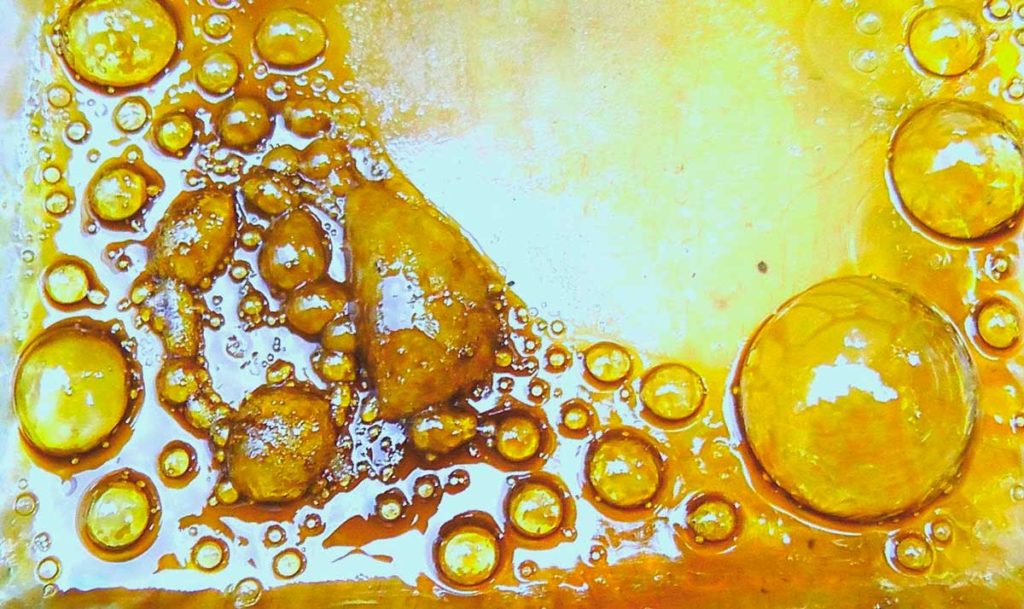
Cannabis oil extraction with butane: a step-by-step home method
This method uses affordable ingredients: butane gas (a standard camping-gas canister works, for example) is the primary solvent and does not require any suspicious or hard-to-find products. (It is said that CO2 also works, but I have not tested it. Since that is safer, it would be a good idea to use it once this has been done with butane and proven successful.) The only other thing needed is a PVC pipe 0.5 meters (about 20 inches) long and 4.5 cm (1.8 inches) in external diameter, along with two end caps. For some reason unknown to those of us who investigate these things “unofficially,” butane and CO2 (and perhaps other gases with similarly low boiling points) selectively dissolve the desirable components of cannabis oil, extracting only a beautiful, amber “honey oil” while leaving behind unwanted vegetable oils, waxes, chlorophyll, and other plant residues. Even from large leaves, which are otherwise unsmokable, one can obtain a wonderful, clean, and potent oil. I have reason to suspect this would work wonders for extracting a super-potent oil even from the most mediocre black-market herb, and of course, the better the quality of the cannabis used, the better the resulting oil.
Extraction method
1) In one of the caps, drill a single small hole in the center. This hole must be sized correctly so that the outlet valve of the butane canister fits snugly.
2) In the other cap, drill 5 or 6 small holes grouped in the center (like a salt shaker).
3) Place this latter cap on one end of the pipe. Screw it on tightly. This will be the bottom.
4) Fill the pipe with slightly pulverized marijuana (the pipe is sized for about 30 grams, but the measurement is done by eye).
5) Place the top cap on the pipe. Screw it on as tightly as possible.
6) Find a well-ventilated outdoor area. The goal is for the butane gases to dissipate as quickly as possible. Be very careful.
6a) Mount the pipe (the single hole facing up) over a vessel that can hold 300 ml (about 10 fl oz) or more. A plastic cup is perfect. Use a clamp to keep the pipe suspended over the cup. Position the bottom end of the pipe just above the cup to prevent splashing.
7) Invert the butane canister and introduce the gas into the pipe through the top hole. A small canister can take up to 10–12 seconds to empty. You must be firm, fast, and careful. A spark at this moment would cause a disaster, as we have essentially created a leaking explosive and incendiary device.
8) When the canister empties into the pipe, move a safe distance away and let the process continue on its own. The butane travels down the pipe, extracting the cannabis as it passes. When it reaches the bottom (about 30 seconds), it begins to drip into the receiving cup. Note the pale, brilliant tone, between yellow-green and gold, of the extract. It is evident that no chlorophyll from the herb has been pulled through. Five to 8 minutes later, the butane extract will finish dripping into the cup. But still be careful with the pipe, as it still contains a lot of evaporating butane (you can see a thin wisp of vapor coming out the top). When it drips no more than once every several seconds, you can cover the top hole with a finger to help push out the last remnants of liquid butane (or you can carefully blow through the hole, but NEVER INHALE!). Being highly volatile and having a low boiling point, the deposited butane will likely evaporate at room temperature. The receiving cup will gradually freeze, cooled by the butane, slowing the evaporation rate, but you can accelerate it simply by holding it between your hands. Another better way is to place it in a dish with a little warm water. The butane will begin to bubble like crazy with the increase in temperature. It is important to remember that all of this must be done outdoors with good ventilation.
When most of the butane has evaporated, but before the oil begins to harden, you have the opportunity to move the liquid into a vial or leave it in the cup. If you choose the vial, it is important to leave plenty of space—up to several times the volume of the liquid—to ensure that if it reacts to an increase in temperature (simply by holding it in your hands), it does not overflow. The final product is a top-quality, incredibly pure, and potent yellow-amber oil.
Note also that this oil has a slightly higher melting/vaporization point than traditional hash oils; the typical method of administration (dipping a needle or a strip of paper into the oil, picking up a little bit with the tip, and heating it with a flame to vaporize it inside a pipe) can still be used with this product, but it seems one must be more careful, as it does not heat to a melt as quickly or in the same way, and it can burn more easily on the needle. So be careful.
For those who prefer to prepare a tincture, you can, of course, dilute the product in a little slightly warmed high-proof alcohol, such as Everclear or 90% isopropanol, and then dip a bud in it or let a joint absorb it, then allow the alcohol to evaporate. With this product, it is important to heat the alcohol slightly first so that it dissolves without issues.


