

A Genealogy Few Cite
We are accustomed to viewing the literature on psychoactive substances through contemporary references: Antonio Escohotado’s General History of Drugs and, in a complementary vein, Jonathan Ott’s Pharmacotheon. These are mature works, written when pharmacology, botany, and anthropology already possessed a solid conceptual apparatus. But every synthesis has a tradition behind it, and this one is no exception.
For a long time, Louis Lewin, a German pharmacologist, has been pointed to as the founder of this genre thanks to his Phantastika (1924). Escohotado even calls him the creator of modern psychopharmacology and describes his book as a “great book” written by an “indisputable eminence of his time.” The praise is deserved, but the chronology does not support those who take him as the starting point. Lewin arrived late to a conversation that had already been underway for decades.
The Names Before Lewin
If we trace the history backward, at least four decisive figures emerge, all from the first half of the 19th century:
- Justus von Liebig (1803–1873). In the 1840s, he published his treatises on organic chemistry applied to agriculture, physiology, and pathology. He did not write about drugs, but he laid the chemical foundations that would make studying them possible. Von Bibra himself acknowledges that “Liebig provided the first impulse with his works.”
- Friedrich Tiedemann (1781–1861), physiologist and anatomist. In 1854, he published a History of Tobacco and Other Similar Products, an exhaustive work but one focused almost entirely on tobacco.
- James F. W. Johnston (1796–1855), a Scottish agricultural chemist. His Chemistry of Common Life appeared in installments; the second volume—where he addresses “the substances with which we indulge ourselves”—was published in 1855, a few months before von Bibra’s book. By strict chronology, it is the first modern general treatise on the subject.
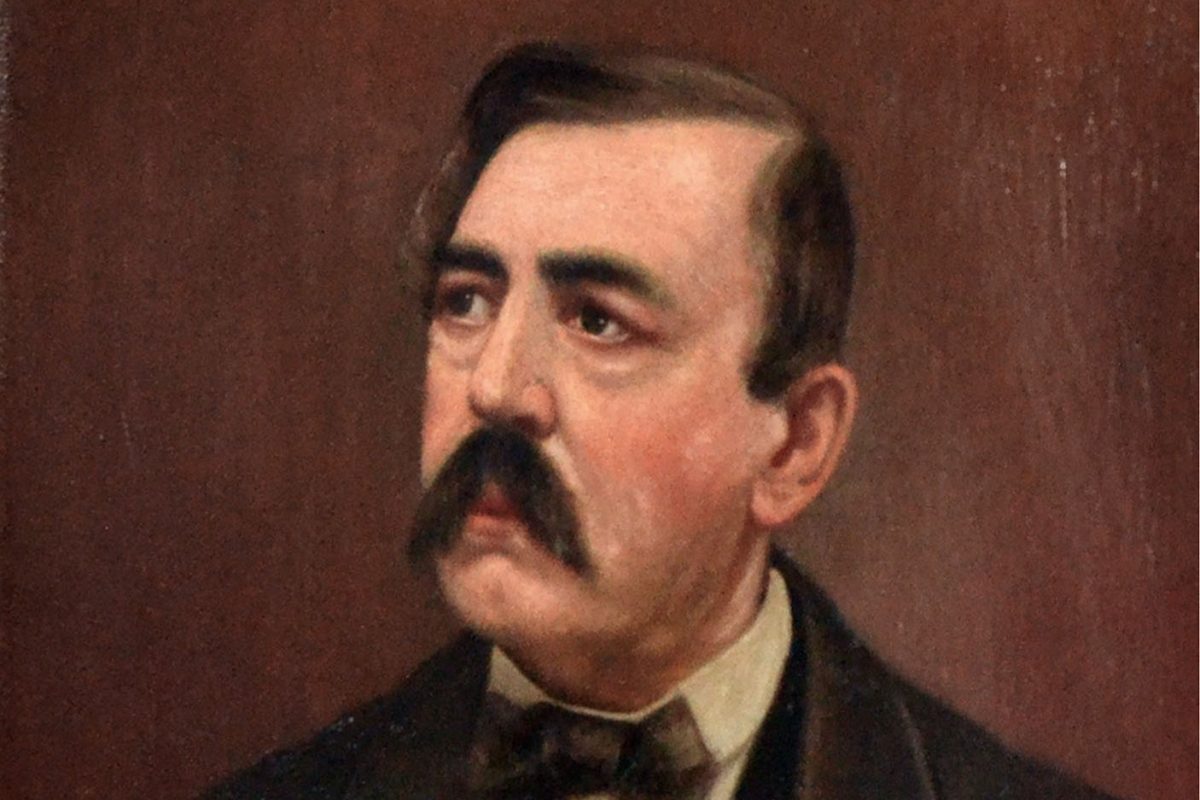
- Ernst von Bibra (1806–1878). His Die narkotischen Genussmittel und der Mensch (something like Narcotic Stimulants and Man), from 1855, is the second in time, but the first in depth.
Why von Bibra Matters More Than the Date
The detail of the dates has its scholarly charm, but the interesting question is another: who truly established the method? And there, the consensus of specialists leans toward the Baron. Jonathan Ott, in his annotations to the English edition, stresses that von Bibra’s work “was much deeper than Johnston’s regarding the scientific aspects of the substances studied, especially in the phytochemical details of the plants’ active principles.” Martin Haseneier, a scholar of his life and work, places him at the same turning point: before von Bibra, only Liebig and Johnston had touched upon the physiology and chemistry of stimulants, and “in a very rudimentary way.”
It is worth noting the context. When von Bibra wrote, chemistry as an autonomous discipline was barely fifty years old. He points this out himself in the conclusion of his book: the chemical section “had to be treated with less exhaustiveness,” not out of laziness, but because the available science could not provide more. Studying the active content of a plant in 1855 was a very different undertaking than doing so in 1924.
The Credit Lewin Did Not Return
Here is the episode that makes this story more than just a list of precedents. According to Haseneier, comparing both books clearly shows that Lewin knew von Bibra’s work, had read it, and made use of his information. And yet, he does not cite him: the only visible trace of the Baron in Phantastika would be the word Genussmittel in the subtitle. Escohotado, who distinguishes Lewin as the creator of modern psychopharmacology and von Bibra as the founder of ethnobotany, summarizes it bluntly: Phantastika “owes more to von Bibra than it acknowledges.”
We do not know the reasons. The fact that seventy years had passed and the book was practically forgotten explains the fading of collective memory, but it does not justify the lack of a citation by someone who had clearly consulted it. The contrast is provided by an intermediate link: Karl Hartwich, whose 1911 work on humanity’s stimulants is thirteen years older than Lewin’s, did openly acknowledge his debt to von Bibra.
A Lineage That Reaches Today
With the pieces in order, a fairly clean genealogy emerges: Johnston opens the path, von Bibra gives it scientific depth, Mordecai Cooke continues with The Seven Sisters of Sleep (1860), Hartwich systematizes in 1911, Lewin culminates and classifies in 1924—something neither Johnston nor von Bibra attempted—and the line leads, for now, to Ott and Escohotado. Recognizing the priority of the pioneers does not diminish the moderns; on the contrary, it explains them.
Critical Reading
It is worth reading these 19th-century works with some caution. Many categories of the time—that “Genussmittel” which has been translated as “beneficial products” or “pleasure substances”—mix tobacco, coffee, tea, opium, cannabis, or coca under labels that we find impractical today, and they carry the prejudices and errors of their time. Their value is historical and documentary, not clinical: they describe what was believed and observed then, not what we know now.
For the same reason, nothing these authors recount should be read as a user guide. The interesting thing about von Bibra and his contemporaries is not what they recommend, but the intellectual gesture of studying psychoactive substances as a legitimate object of science, without demonizing or idealizing them. That sober gaze—curious but critical—is probably their best legacy.
(To be continued.)


