

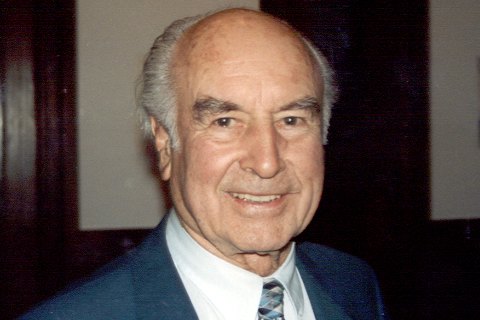
Who was Albert Hofmann
Few names from the 20th century encapsulate as many tensions as that of Albert Hofmann (1906–2008). A Swiss chemist with a modest career and a very long life—he died after turning one hundred—his work at Sandoz laboratories ended up intersecting with psychiatry, pharmacology, spirituality, and drug policy across half the world. It is difficult to imagine much of contemporary psychoactive culture without the substance associated with his name: lysergic acid diethylamide, or LSD.
It is important, however, to separate the person from the myth. Hofmann was not a guru or a prophet, but a methodical researcher who found himself overwhelmed by the social consequences of a laboratory discovery. That distance between the chemist and the legend is precisely what makes reviewing his trajectory so interesting.
From ergot to an unexpected molecule
The origin of LSD is not found in psychedelia, but in a fungus: ergot (Claviceps purpurea), a cereal parasite with a medical and toxic history spanning centuries. From its alkaloids, a whole family of compounds was derived, which Sandoz investigated for therapeutic purposes. LSD was born in that context, as just another derivative among many, seeking applications that had little to do with what followed.
The canonical account emphasizes the role of chance—the famous serendipity—in recognizing its effects on the mind. Beyond the anecdote, what is relevant is that a perfectly orthodox pharmaceutical chemistry program ended up producing one of the most potent psychoactive molecules known, which was tested for years as a clinical tool before becoming a cultural symbol.
From psychiatry to the streets
Before its popularization, LSD circulated primarily through hospitals and research centers. It was tested as an experimental model of psychosis, as an adjunct in psychotherapy, and, in some programs, as support for terminally ill patients. It was a period of high expectations and methodologies that, viewed today, were highly uneven.
From Switzerland, the substance spread to North America, other European countries, Spain, and Latin America. That leap from the laboratory to the public sphere would determine its fate: the further it moved from clinical control, the more both enthusiasm and social alarm grew.
Spies, counterculture, and prohibition
The history of LSD also has a dark and well-documented side: its use by intelligence agencies. CIA experiments within the framework of the MKUltra program, along with military trials in various countries, explored the molecule as a potential instrument for manipulation, interrogation, or warfare, often without the consent of the individuals involved. This is a chapter that refutes any naive or purely luminous reading of that era.
In parallel, LSD became an emblem of the 1960s counterculture and a magnet for artists, musicians, and figures who turned it into a generational banner. The reaction was swift: the social climate, medical alarms, and political pressure led to its prohibition and a restrictive legal framework that generally remains in place today. Hofmann himself lamented that his “problem child” was reduced to a prohibited substance instead of continuing to be explored with rigor.
The other Hofmann: mushrooms, plants, and mysticism
Reducing Hofmann to LSD would be unfair. His curiosity also led him to entheogens of indigenous tradition: he participated in the isolation of psilocybin from Mexican mushrooms and worked on ololiuhqui and Salvia divinorum, the “seer’s sage.” Added to this is his interest in the hypothesis regarding the role of ergot alkaloids in the Eleusinian Mysteries of Ancient Greece, a suggestive and debated idea that he helped popularize.
On a personal level, his friendship with writer Ernst Jünger and his own philosophical reflections—nature as a vast system of transmission and reception, his ideas about the sacred—show a scientist committed to thinking about the place of these substances in human experience, beyond the laboratory.
A biography in Spanish
Much of this journey is captured in the book LSD, la medicina del doctor Albert Hofmann, an extensive biography in Spanish that reconstructs his childhood, his formative years, his time at Sandoz, the discovery and expansion of LSD, its prohibition, and his final years. The work also includes interviews with those around him—his son Andreas, his editor and friend Dieter Hagenbach—and texts by Hofmann himself, along with supplementary materials.
The book is part of a tradition critical of prohibitionist policy, which in Spain is represented above all by Antonio Escohotado, author of Historia de las drogas, who spoke of “pharmacological barbarism” to describe the legal regime born from the prohibitionist experiment of the 20th century. We mention the work as a documentary reference: we do not link to its commercial promotion nor do we reproduce its index, but rather recover the facts to place them in context.
Critical reading
The figure of Hofmann lends itself as much to hagiography as to demonization, and it is advisable to avoid both. Some ideas he popularized—the role of ergot in Eleusis, for example—are interesting hypotheses but not historical consensus; other assertions from that first wave of clinical research were based on methods that would not meet current standards today.
Remember also that LSD remains a controlled substance in most countries and that its use outside of clinical settings is not without psychological risks, especially for people with prior vulnerability or in unsafe contexts. The renewed scientific interest in psychedelics is developing precisely in supervised trials, not in self-experimentation. Reading Hofmann as history and as a public health debate—and not as an invitation to consume—is the most honest way to approach his legacy.


