

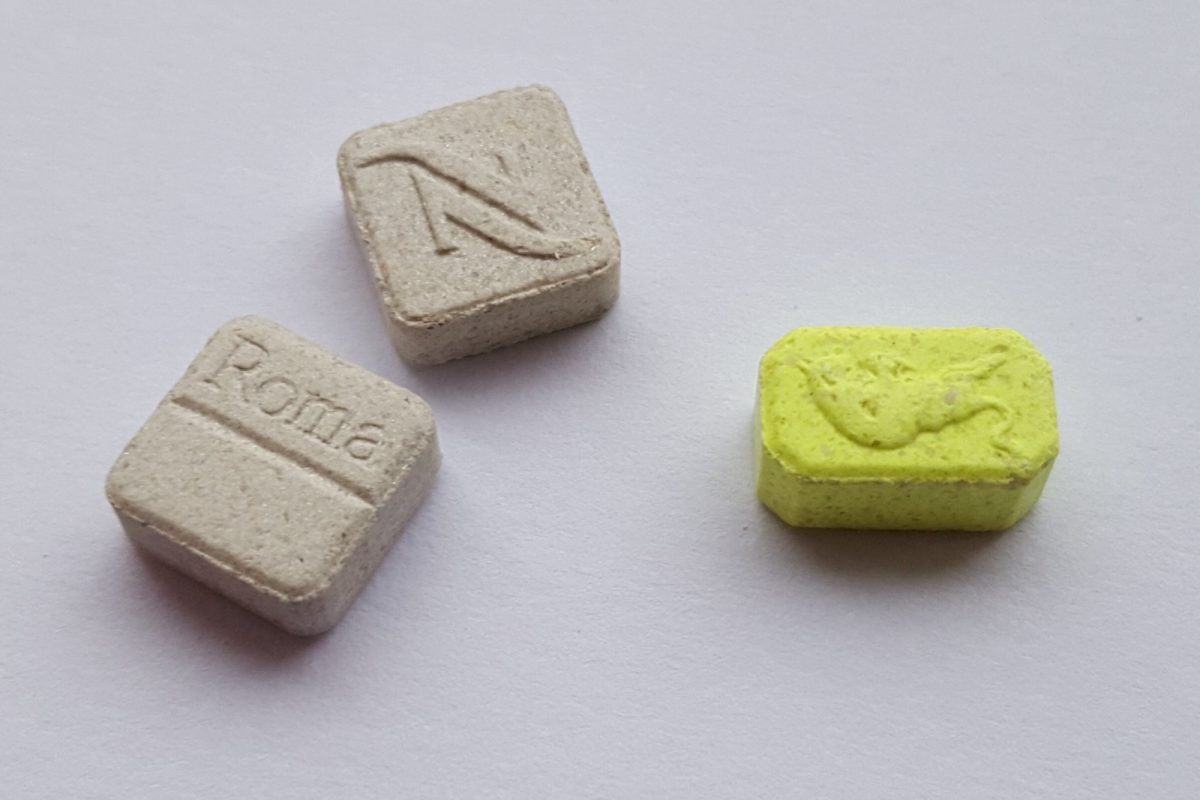
Public perception regarding pills sold as “ecstasy” has historically oscillated between two extremes: a naive belief in absolute purity and paralyzing fear of lethal adulterants. However, the scientific reality of the mid-20th century offers a crucial nuance that is vital for any informed consumer or public health professional. Far from being simple “pills” or “bricks,” these substances represent a dynamic and shifting market where forensic chemistry has unveiled a complexity that the untrained eye cannot discern.
In brief
- MDA Dominance: In the early years of use (1985–1987), the predominant amphetamine derivative was MDA, not MDMA.
- Chemical Evolution: MDMA only appeared en masse in seizures starting in 1990, progressively displacing its predecessors.
- Frequent Adulterants: Beyond the active substance, it is common to find caffeine, amphetamines, or even pharmaceuticals like acetaminophen and phenobarbital.
- Variable Doses: The active ingredient content fluctuates drastically between 20 mg and over 150 mg per tablet, depending on the batch and region.
The gap between perception and analytical reality
It is fundamental to distinguish what the user believes they are consuming from what they are actually ingesting. For decades, a social dichotomy has persisted: on one hand, the romantic idea of pure crystal; on the other, the catastrophic narrative of pills filled with poison or brick dust. Both extremes are dangerous simplifications.
The Spanish forensic reality, documented through police seizures and analyses by official laboratories—such as the Delegation in Catalonia of the Narcotic Restriction Service (Ministry of Health and Consumer Affairs) or the National Institute of Toxicology—offers a much more accurate reflection. These studies demonstrate that placing trust in street rumors is unsustainable; the only way to know the actual composition is through rigorous chemical analysis.
From the mid-eighties to the present day, these analyses have allowed us to draw a clear timeline of how the Spanish black market has changed. It is not just about listing substances, but about understanding the evolution of a sociocultural and pharmacological phenomenon that requires constant critical reading.
The initial landscape: 1985–1992
The first systematic studies conducted in Catalonia between 1985 and 1992 established an important precedent. Laboratories from the Ministry of Health and Consumer Affairs confirmed the presence of ecstasy-type amphetamine derivatives, although they were initially limited to detecting their existence without precisely quantifying the degree of adulteration.
A key finding from this period is that the predominant substance was not MDMA (3,4-methylenedioxymethamphetamine), but its structural analog, MDA (3,4-methylenedioxyamphetamine). In fact, until well into 1990, seizures contained almost exclusively MDA. This data is crucial for contextualizing the effects users experienced at that time: MDA possesses a more pronounced psychedelic profile and a different duration of action than MDMA.
Subsequently, between 1992 and 1994, the analysis became more detailed. The chemical profiles of the most frequent tablets in police seizures were examined. The results showed a diversification of the market: MDEA (alpha-methyl-dioxyamphetamine) appeared in a third of the samples analyzed, followed by MDMA and MDA. Additionally, the presence of common excipients like lactose and cellulose was detected, as well as unwanted pharmaceuticals.
Adulterants and fraud: the 1994–1995 case
The analysis of seizures carried out by the General Commissariat of the Scientific Police between January 1994 and March 1995 provides alarming data regarding product safety. Out of a total of 270,000 pills analyzed across ten provinces, it was found that many contained complex mixtures.
In one specific batch of over 150,000 tablets sold as ecstasy, the analysis revealed that they contained no MDMA, but rather a mixture of 26 mg of caffeine and 14 mg of pure amphetamine. This underscores the absolute necessity of harm reduction: assuming a pill is safe because of its appearance or price is a fatal error.
Complementary ethnographic studies conducted in the same period (1994–1995) delved into this aspect, analyzing 89 samples from 46 points of sale. The results confirmed that more than a third contained MDMA, but a quarter contained MDEA, and nearly 20% contained no MD derivatives at all, but rather other substances.
The list of adulterants is extensive and varies according to the origin and the seller’s intent. The following have been commonly detected:
- Caffeine: Present in high doses to enhance effects or reduce costs.
- Amphetamines: Substances with a different risk profile, more prone to hypertensive crises and severe agitation.
- Psychotropic drugs: Occasionally, tablets have been found containing acetylsalicylic acid (aspirin), acetaminophen, phenobarbital, or even anxiety medications like alprazolam or diazepam instead of ecstasy.
It is also important to highlight the variations in dosage. While some MDMA samples contained average doses of about 75–100 mg, others presented extreme concentrations, such as the 231 mg found in a batch seized in Valladolid. These massive doses represent a significant toxicological risk for the inexperienced user.
Harm reduction and critical reading
Faced with the uncertainty inherent in the consumption of illicit substances, the only viable strategy is evidence-based harm reduction. Historical data demonstrates that:
- There is no guaranteed pure product: The absence of visible adulterants does not guarantee chemical purity.
- The identity of the substance is uncertain: A pill labeled as MDMA could contain MDA, amphetamine, or an unknown mixture.
- Doses are unpredictable: The variability in active ingredient content demands extreme caution when consuming for the first time after a period of abstinence.
The presence of adulterants like pure amphetamine or phenobarbital can drastically alter the subjective experience and increase physiological risks. Therefore, it is imperative to approach consumption with a critical mindset, avoiding myths about “pure pills” and recognizing that the black market operates under supply and demand dynamics that often prioritize economic profit over consumer safety.
Editorial closing
The chemical history of ecstasy in Spain between 1985 and 1995 teaches us that awareness is not an act of faith, but an informed practice. Knowing the real data on purity and adulteration allows users to make safer and more responsible decisions.
At Psiconáutica, we understand that mental and physical health depend largely on our ability to navigate the chemical environment with prudence. The evolution of the market is neither linear nor static; it requires constant vigilance. We invite readers to stay informed about forensic developments and to share this information as a prevention tool.
The next installment will continue to explore how these patterns have evolved to the present day, analyzing new emerging substances and the current challenges of the market. Science remains our best ally in understanding what we consume.