

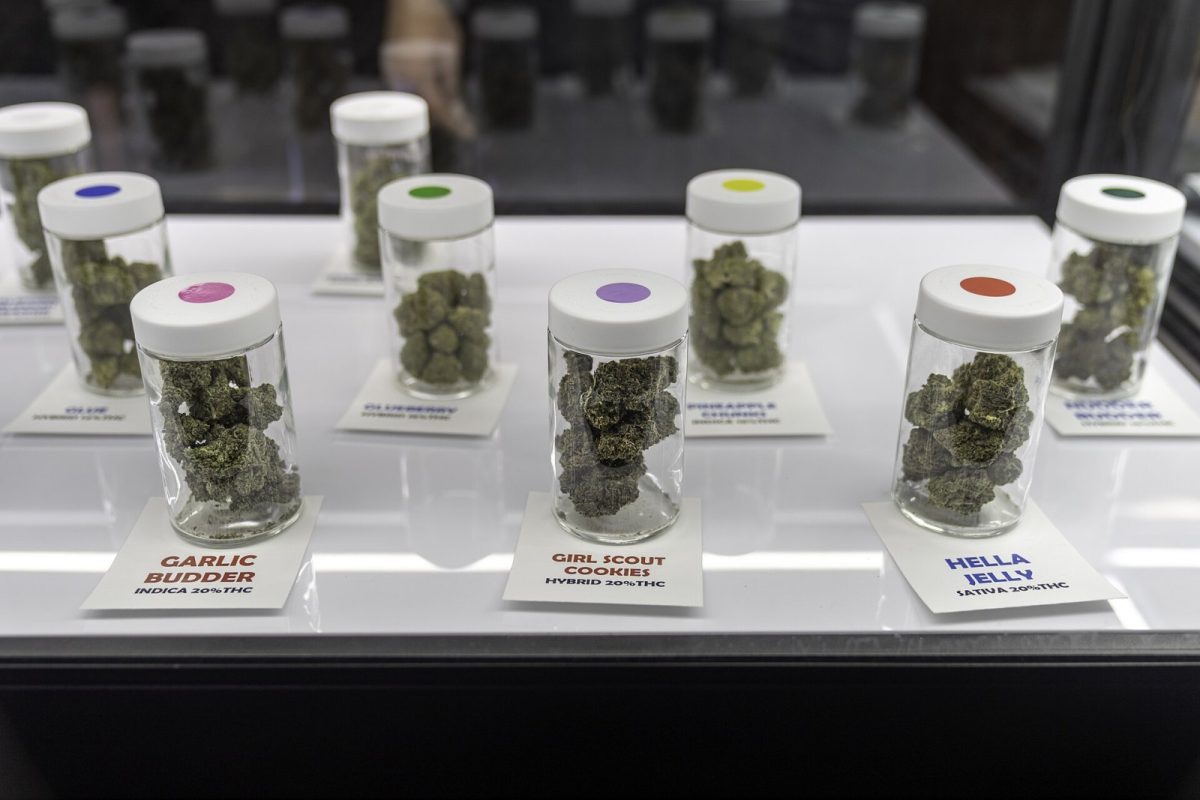
What we mean when we talk about “selling” drugs legally
We continue to break down a hypothetical model for the regulation of psychoactive substances. In the previous installment, we left off at the point of sale, so we pick up right there. It is worth remembering from the start that this is an exercise in political imagination and not a guide: it neither describes how to obtain anything nor encourages the consumption of anything.
The model contemplates different types of establishments. On one hand, home delivery services. On the other, specialized venues that would not be limited to carry-out sales but would also offer space for supervised consumption. The key is that each license would be tied to a specific substance and regulation: a space oriented toward cannabis—which could function similarly to Dutch coffee shops—is not the same as a venue handling opioids or stimulants, which would require on-site medical attention and much more demanding safety protocols.
Legal age: 16, 18, or 21?
Purchase would be open to anyone who could prove they have reached the legal age. The model proposes a possibility: 18 years old for substances with higher potential for harm, and 16 for those considered less toxic. The argument given for those 16 years is not capricious: it is the age at which, in Spain, a person can make certain healthcare decisions for themselves, and institutional discourse repeats that drug use is primarily a health issue. Ultimately, it is using official logic to carry it to its logical conclusion.
Here, a first critical reading is necessary: setting age thresholds is where any proposal of this type creaks the most, because adolescence is precisely the stage of greatest neurological vulnerability and peer pressure. It is not a minor detail that can be settled with a number.
Prices: The alcohol and tobacco paradox
Regarding price, the proposal defends “reasonable” rates, like those of any other consumer good. It also takes the opportunity to point out a real paradox: alcohol and tobacco, taxed with increasingly higher levies intended to deter use, have ended up with exorbitant prices without that clearly curbing their consumption. The result, according to this reasoning, is that people continue to drink and smoke as usual, but with less purchasing power for everything else.
Wouldn’t this be “total chaos”?
The obvious objection is: if almost anyone could buy almost anywhere, wouldn’t consumption, the number of consumers, and the problems increase? Wouldn’t drug trafficking continue to exist to supply minors?
The model’s response flips the argument. It maintains that the real disorder is the current one: under absolute prohibition, any act linked to consumption can be sanctioned, so that, in practice, everything happens in the same undifferentiated terrain of the street, without age control, without quality control, and with no interlocutor other than the dealer of the moment. Regulation, by contrast, would separate where one can consume and where not, who can buy and who cannot, and by whom it is dispensed.
Regarding minors, the reasoning is that a legal market with age verification would make things harder for them, not easier, and that a drug trade whose only niche was adolescents would cease to be economically viable. It is a reasonable hypothesis, though not proven: the black market has an adaptability that should not be underestimated.
The accessibility argument
The text turns to the Dutch case, where legal access to cannabis coexists with lower consumption rates than in much of Europe and North America, to argue that legal availability does not automatically equate to more consumption. The underlying idea is that substances like cannabis, MDMA, or cocaine are already perceived as easily accessible by many young people, so regulating them would not make them substantially more accessible.
It does acknowledge an honest exception: heroin, amphetamines, or methamphetamine, which are currently inaccessible to a large part of the population, would be more so in this scenario. The model responds with two arguments. First, that the vast majority of people have no interest in trying heroin no matter how much it might be sold at the corner store—just as almost no one goes cliff jumping despite it being legal. Second, that even if consumption were to grow, health harms would not necessarily grow in the same proportion if the system incorporates harm reduction measures, just as the number of cars on the road multiplied much faster than traffic accidents.
The final balance
The conclusion of the argument is the most solid and the most debatable at the same time: even in the worst-case scenario, with an increase in health problems, other costs currently borne by prohibition would disappear or be drastically reduced—corruption, violence, runaway public spending, curtailment of freedoms, overcrowded prisons, a collapsed judicial system, and geopolitical tensions. The balance, it argues, would still be more favorable than the current one.
Among the complementary measures, the proposal is firm on one point: an absolute ban on any advertising of psychoactive substances, including those currently legal, and a curb on all aggressive or covert promotion of consumption, with special attention to countries with fewer resources to prevent and address harms.
Critical reading
It is best to read all of this as what it is: a proposal by an author, articulated with provocative intent, not a scientific consensus or a proven policy. Its strengths are real—the enormous cost of prohibition is well-documented and quality control reduces obvious harms—but it also carries serious unknowns: consumer behavior under full legalization is not proven for all substances, age thresholds are fragile, and the comparison with the Netherlands has limits, because there is no legal, free sale of cocaine or heroin there. Any honest debate on regulation should simultaneously uphold the critique of prohibition and caution against easy promises. And, in any case, no policy replaces truthful information and harm reduction: if someone consumes, the safe thing to do is not to do it alone, not to mix substances, and to know the warning signs in advance.


