

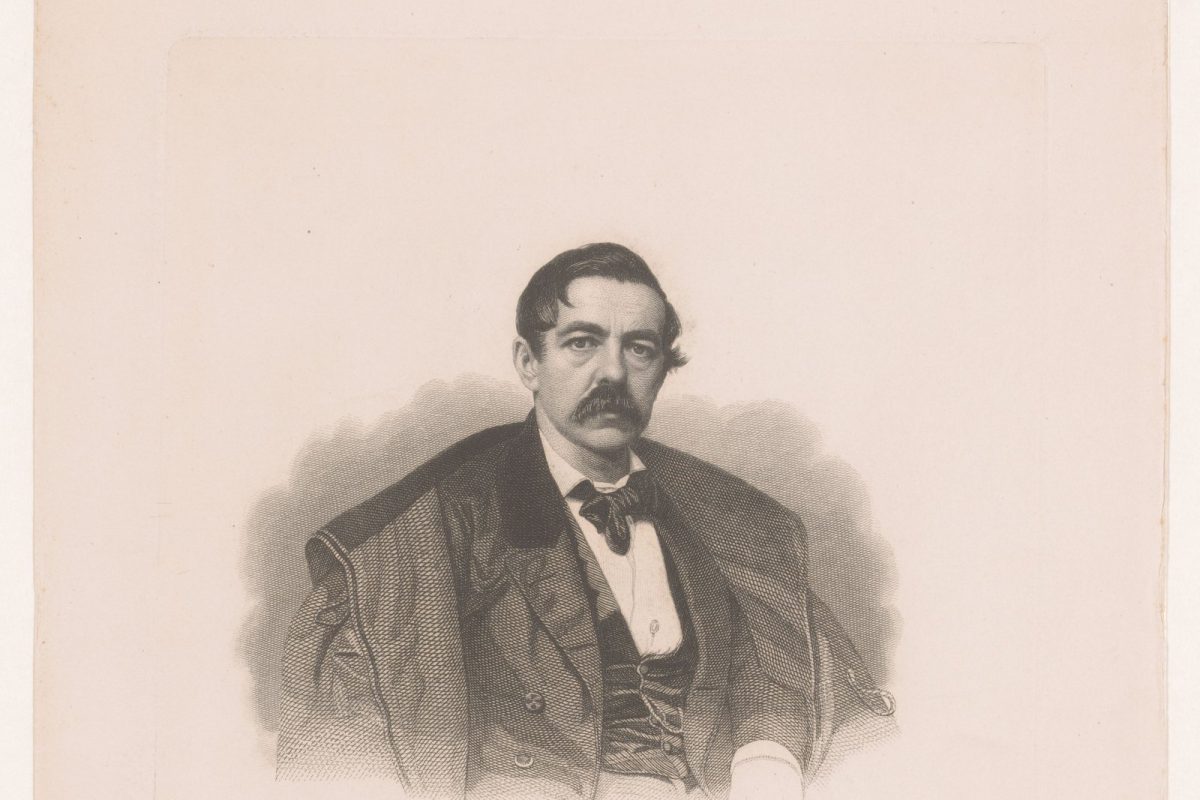
In the first part, we introduced Baron von Bibra as one of the authors who, almost inadvertently, pioneered the systematic study of psychoactive substances. Here, we trace his influence: who championed his work, what he truly meant by his book’s title, and why his stance on drug use still challenges us today.
Who championed his work
Much of von Bibra’s late-blooming prestige comes from two major 20th-century figures. The ethnobotanist Richard Evans Schultes, in his work The Plant Kingdom and Hallucinogens, argued that the 1855 book was “the first of its kind”: it described seventeen narcotic and stimulant plants and encouraged chemists to explore a field “so promising and so full of unsolved problems.” According to Schultes, the Baron’s theses were accepted by the scientific literature of the second half of the 19th century and inaugurated interdisciplinary interest in these substances; it was, in his words, “the spark” for all subsequent bibliography.
Schultes placed the work in context: half a century later, in 1911, Karl Hartwich published a broader and more modern treatise, Die menschlichen Genussmittel, covering thirty plant-based drugs. Hartwich himself acknowledged that von Bibra’s work had become outdated, simply because in 1855 botanical and chemical research into these plants barely existed, whereas by 1911 much progress had been made. This is not a demerit, but proof that he was the first.
Albert Hofmann, for his part, described it as “a pioneering work in drug literature, a primary source, especially in historical terms.” Hofmann was struck by how von Bibra gathered very disparate substances under the same label—opium, datura, coca, Amanita muscaria, and hashish—alongside others we don’t even consider drugs today, such as coffee, tobacco, or khat. He emphasized that many of his observations remained valid a century later.
A detail of almost novelistic transmission: according to Hofmann, the writer Ernst Jünger gifted him a copy of the first edition; years later, Hofmann passed it on to Jonathan Ott, who used it as the basis for the modern English translation, as noted in that edition’s annotations.
“Genussmittel”: The problem is in the title
The core of the work lies, to a large extent, in its title: Die narkotischen Genussmittel und der Mensch. Genussmittel is a compound word that is difficult to translate—Genuss, pleasure or enjoyment; Mittel, means or resource—and has no comfortable equivalent in English. The English edition sidestepped the hurdle by renaming the book Plant Intoxicants and adding a descriptive subtitle: “a classic text on the use of mind-altering plants.”
A possible reading of the original would be something like “substances of enjoyment and the human being.” The significance lies in the gesture: von Bibra groups opium, datura, coca, cannabis, coffee, and tobacco as goods that provide pleasure and relief, not as threats. He went so far as to describe them as gifts to mitigate suffering and bring people together. At no point does he condemn their use; what he defends is rational use, the sobria ebrietas (sober intoxication) of the classical tradition, which throughout history has been much more common than abuse.
It is best to read this defense with perspective. One of the quotes Hofmann rescues summarizes the Baron’s tone well: those who overindulge and go out looking for a fight are isolated cases compared to the majority who, after a moderate dose, spend a few quiet hours; and those who ruined their health through excess are few compared to the many who, according to him, endured great efforts thanks to coca. The argument has the rhetorical force of its time—and also its limits: it idealizes moderation and minimizes harm with a confidence we would qualify today. Taken as historical data, it is invaluable; taken as advice, it is not.
A useful contrast: Lewin vs. von Bibra
The distance is best appreciated when compared to Louis Lewin, the other great early classifier of psychoactives. Lewin defended the therapeutic use of these substances but was wary of recreational use and did not spare moral judgments regarding consumption. Von Bibra, on the other hand, starts from a more serene and less punitive perspective. Between the two, a tension is drawn that runs through the entire history of the subject to this day: medicine versus pleasure, regulation versus prohibition.
There is also a note that reveals the extent to which he was a figure of his time: the philosopher Arthur Schopenhauer, from his vitalist sensibility, criticized in Parerga and Paralipomena the animal vivisection practices von Bibra employed in his pharmacological studies. A reminder that the 19th-century science that opened this field did so with methods that are unacceptable today.
Why it still matters
Von Bibra’s merit was one of timing and perspective. He published when the biological sciences were beginning to take off, at the moment when the romantic vision of the world was giving way to positivism. Five decades later, science already possessed tools he could only intuit. But it was he who pointed the way and asked chemists to follow it.
Recovering his work is not an exercise in nostalgia. His writing helps us understand that the current debate on drugs—what constitutes harm and what is use, where medicine ends and pleasure begins, what role prohibition plays—did not start yesterday. In the next installment, we will address his biography.
Critical reading
Von Bibra writes from an era without modern pharmacology, without epidemiological statistics, and without the categories of addiction we use today; his optimism regarding “moderate use” reflects that context and should not be read as a risk assessment. His claims about coca, in particular, predate everything later learned about the isolation of alkaloids and their associated problems. As a historical document, it is first-rate; as a guide to consumption, it is obsolete. Anyone approaching these substances out of educational interest should separate the work’s historiographical value from any practical recommendation, of which there are none here.
The sources cited in these two installments come from the bibliographic apparatus of the original study and include, among others, Antonio Escohotado’s The General History of Drugs, Louis Lewin’s Phantastika (1924), von Bibra’s own Die narkotischen Genussmittel und der Mensch (1855), Schultes’ article in the Bulletin on Narcotics, and the writings of Albert Hofmann. They are referenced by name, without links, so the reader can locate them in reliable editions.


