

From Environmental Sustainability to “Sustainable Drugophilia”
The 1987 Brundtland Report defined sustainability as the ability to meet the needs of the present without compromising the ability of future generations to meet their own. Eduardo Hidalgo borrows that framework and applies it to an uncomfortable domain: the human relationship with psychoactive substances. His thesis is that the drive to alter consciousness—what he calls “drugophilia”—is a persistent human trait, and that the politically useful question is not how to eradicate it, but how to manage it while minimizing harm.
Hence the term “sustainable drugophilia.” It is not a slogan encouraging drug use, but rather a conceptual framework for approaching drug policy through harm reduction rather than prohibition. It is worth distinguishing between the two: what follows is an overview of a proposal, not an endorsement of drug use.
The Collective Level: A World with Fewer Problems, Not a World Without Drugs
At the macro level, this approach explicitly abandons the goal of a “drug-free world” as unachievable. Instead, it proposes organizing production, access, and consumption to generate the lowest possible frequency and severity of problems, both today and for future generations.
This argument incorporates an environmental dimension often overlooked in public debate: when drug manufacturing is pushed underground, sanitary oversight and waste management vanish with it. Regulated production would allow these processes—at least on paper—to comply with the same environmental standards that govern other chemical industries.
The Individual Level: Informing Rather than Imposing Abstinence
At the micro level, the proposal replaces mandatory abstinence as the sole response with an approach rooted in informed autonomy: allowing each person to decide whether or not to use substances, and ensuring that those who do have access to accurate information and the tools to minimize harm without mortgaging their future health.
This is, in essence, the logic of harm reduction: accepting that drug use exists and working to make it less harmful, rather than denying reality and leaving consumers at the mercy of an unregulated black market. Here, the idea of “sustainability” becomes personal: avoiding habits or excesses that compromise one’s future capacity to make free, healthy choices.
Regulating Rather than Prohibiting: The Core Arguments
The crux of the proposal is repealing the current prohibitionist regime and replacing it with a regulatory framework comparable—according to the author—to those governing tobacco, pharmaceuticals, or industrial chemicals. The benefits he outlines are familiar staples of anti-prohibitionist literature:
Restoring state control over a market currently run by organized crime; guaranteeing quality control and public health standards; enforcing environmental compliance; deciding where and to whom products are sold rather than leaving distribution to drug cartels; stripping cartels of their primary revenue stream; easing backlogs in courts and prisons; reallocating law enforcement resources; and collecting tax revenue while saving billions currently spent on enforcement that Hidalgo considers futile, reinvesting those funds into public education, treatment, and scientific research.
Hidalgo sums it up in a single word: legalization. The rhetorical appeal of the essay lies in presenting this as a straightforward shift—”all it takes is the political will to sign the decree”—yet that very nonchalance warrants a closer, more critical look (discussed below).
“What About International Treaties?”
Addressing the objection that prohibition is locked in by international treaties, Hidalgo argues that a nation can withdraw from these conventions or push for their reform. He points to the Netherlands and its de facto tolerance of personal cannabis sales as proof that charting an independent regulatory path does not trigger the disasters critics predict. His favorite comparison: alcohol is already regulated differently in every country without bringing about the collapse of civilization.
Regarding so-called “drug tourism,” he suggests that if it becomes an issue, sales could be restricted to residents or citizens of countries that have enacted regulation. Again, this remains a tidy solution on paper: the Dutch experience has revealed both benefits and real-world tensions in practice.
A Potential Model: Where, at What Price, and for Whom
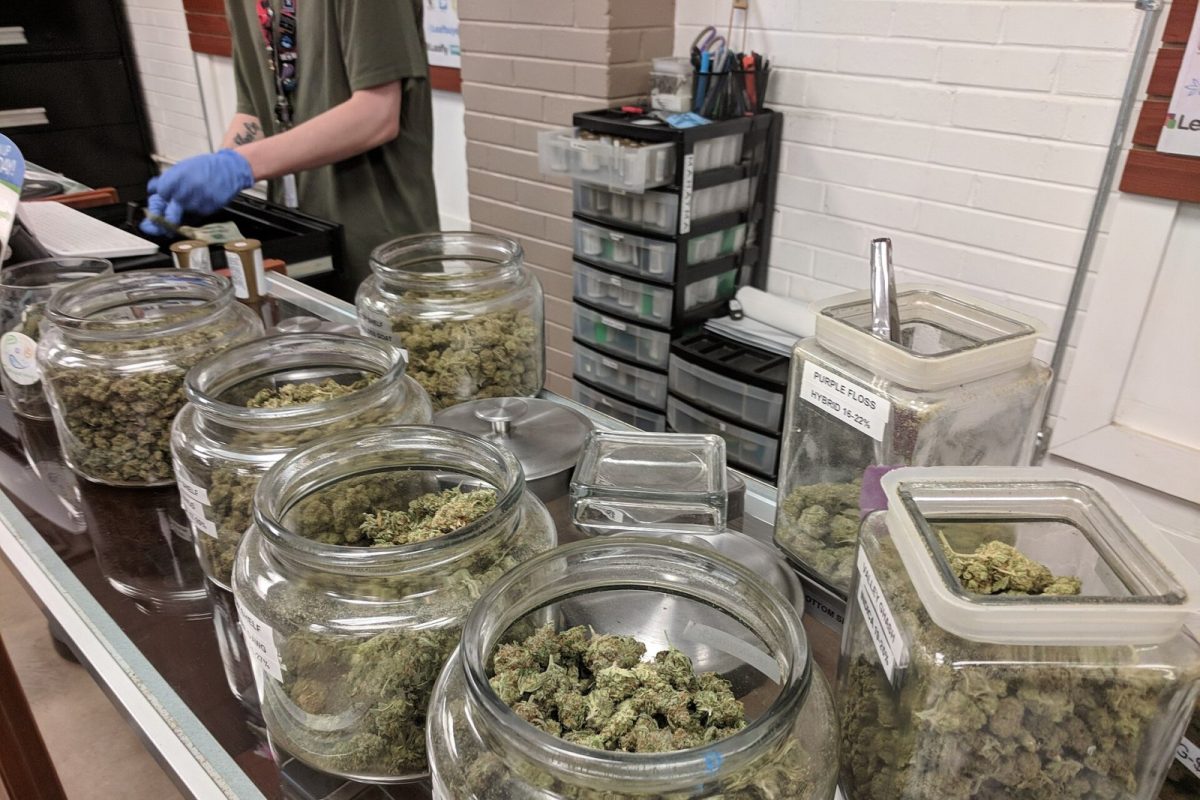
The most imaginative—and deliberately provocative—section of the article outlines a regulated retail market featuring coined concepts: specialized dispensaries marked with discreet signage, 24-hour storefronts, vending machines at events, and large specialized retail outlets. It functions more as a satirical thought experiment than a technical policy blueprint; the author himself concedes that numerous regulatory models exist and that specific choices belong to lawmakers.
Read without the irony, the thought experiment serves a clear purpose: forcing the reader to envision what legal, normalized access would look like and compare it to the status quo. Still, a provocative sketch should not be confused with comprehensive public policy.
Critical Analysis
Hidalgo’s essay is an advocacy piece, not an impartial analysis, and it should be read as such. Three critical nuances are dismissed too quickly in the original:
Regulation is not a hands-off solution. Comparing illicit drugs to tobacco or alcohol cuts both ways: these are precisely the two legal substances responsible for the highest rates of harm and mortality. Regulation mitigates specific issues (adulteration, violence, criminalization), but it does not eliminate health risks, which depend on the substance, the individual, and the setting.
“All it takes is a signature” oversimplifies the issue. Exiting international treaties, designing tax structures, preventing predatory marketing, and protecting minors are intricate technical and political challenges. The Dutch model, often cited as a triumph, also carries lasting contradictions—namely, retail tolerance coexisting with illicit wholesale production, the notorious “backdoor problem.”
Informed autonomy requires reliable information. The very framework the author advocates only works if drug checking services, honest counseling, and realistic education are readily available. Without them, “freedom of choice” remains an empty slogan. From a harm reduction perspective, this is the essay’s most compelling point and the one that demands the greatest focus.
In short: a thought-provoking challenge to the failures of prohibition, commendable for placing harm reduction at the center of the debate, but one that calls for the measured scrutiny its breezy tone sometimes leaves out.


