

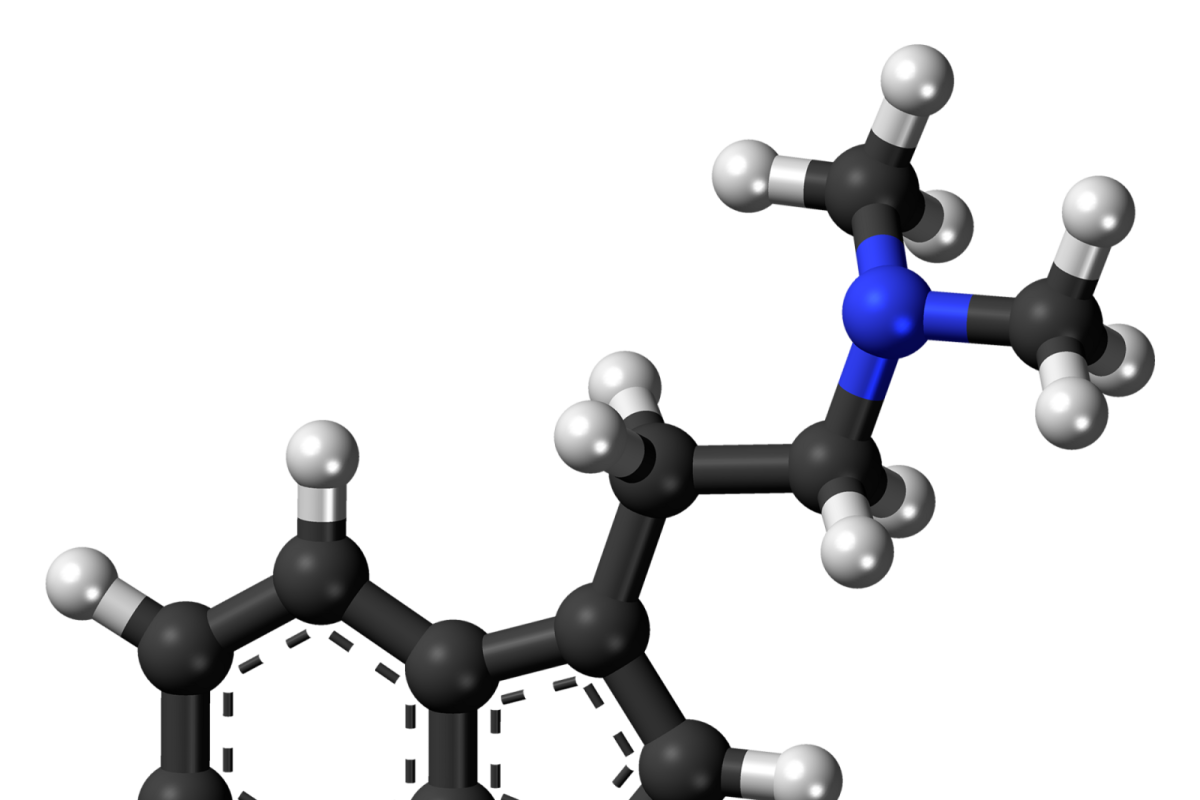
The exploration of serotonergic systems has revealed a molecular complexity that defies reductionist simplifications. Within this vast landscape, ultra-short-acting tryptamines emerge as molecules with distinct therapeutic potential. Compounds such as N,N-dimethyltryptamine (DMT) and its analog 5-methoxy-N,N-dimethyltryptamine (5-MeO-DMT)—found in both natural matrices and synthetic forms—offer a unique window into the interaction between the central nervous system, sigma-1 receptors, and pain modulation. Far from being mere ethnobotanical curiosities or synthetic drugs without clinical value, these compounds possess pharmacological properties that deserve rigorous analysis in the current context of psychedelic medicine.
In brief
- Mechanism of action: Tryptamines act as agonists at serotonin and sigma-1 receptors, influencing neuroplasticity and immunomodulation.
- Key differences: DMT presents complex visual effects (visual synesthesia), while 5-MeO-DMT is characterized by luminous experiences without specific chromatic coloration.
- Clinical applications: Preliminary evidence suggests utility in managing acute inflammatory pain, such as in cases of rheumatoid arthritis, and potential neuroprotection.
- Endogenous physiology: The presence of these molecules in the body raises questions about evolutionary biological functions that have yet to be fully elucidated.
The origin and chemical nature of ultra-short tryptamines
To understand their medical relevance, it is necessary to place these substances in the context of neurochemistry. DMT originated as a compound synthesized in the 1950s, which historically categorized it as a synthetic drug. However, subsequent research demonstrated its natural presence in various plant species and, surprisingly, as an endogenous molecule in the nervous system of several animals, including humans.
Similarly, 5-MeO-DMT is found in the seeds of specific neotropical plants, used traditionally in shamanic rituals. Its pharmacokinetic profile is unique: when inhaled or smoked, it avoids degradation by liver enzymes and reaches the brain rapidly. Here lies its defining characteristic: an extremely brief duration of action. Peak effects are maintained for approximately five minutes, decaying progressively until they disappear about twenty minutes post-inhalation.
It is crucial to distinguish the oral administration mechanism from the inhaled one. In the Amazonian tradition, ayahuasca combines plants rich in beta-carbolines (such as Banisteriopsis caapi) with DMT. Beta-carbolines act as monoamine oxidase inhibitors (MAOIs), enzymes that would normally degrade DMT before it could cross the blood-brain barrier. However, this oral route produces a prolonged experience that differs from direct inhalation.
Subjective profiles: A phenomenological distinction
Although both compounds induce a state of altered consciousness with ego fragmentation and somatic disconnection, their sensory manifestations differ notably. The DMT experience is usually described as an immersion in artificial, complex, and detailed visual landscapes. Conversely, the effects of 5-MeO-DMT are characterized by an intense, white luminosity, lacking the defined visual structures that predominate with DMT.
This phenomenological difference suggests variations in the activation of specific brain circuits or in the interaction with distinct receptors. Future comparative neuroscientific research will be essential to unravel how these subjective differences correlate with functional changes in the brain.
Medical applications and therapeutic potential
The historical stigma surrounding psychedelics has obscured their clinical potential. Nevertheless, recent destigmatization has allowed for the exploration of new avenues of application that transcend the traditional model of psychedelic psychotherapy.
Immunomodulation and pain management
One of the most promising findings lies in the ability of tryptamines to act as agonists of sigma-1 receptors. These receptors play a crucial role in the regulation of inflammatory processes, neuroprotection, and neuronal plasticity.
In the realm of chronic and inflammatory pain, there are clinical observations suggesting notable efficacy. For example, cases have been documented where low doses administered via inhalation managed to completely eliminate the pain and stiffness associated with conditions like rheumatoid arthritis for prolonged periods after administration. It is essential to clarify that this effect is palliative and does not constitute a definitive cure for the underlying disease, but it represents significant symptomatic relief.
Neuroplasticity and neuroprotection
Another front of active research focuses on the ability of these compounds to promote brain plasticity. Recent studies have identified physical modifications in brain structure following the continued use of ayahuasca-based preparations, which supports the hypothesis of neuroprotective effects. In a world where neurodegenerative diseases and psychiatric disorders are prevalent, any agent capable of fostering neuronal regeneration or adaptation deserves to be studied with rigor.
Considerations regarding endogenous molecules
The existence of tryptamines in our own bodies has generated popular speculation, some of it unfounded. The idea that DMT or 5-MeO-DMT act as direct “messengers” of the soul through specific glands lacks current scientific support. It is more prudent to consider them as regulatory components within a complex signaling network, alongside other endocannabinoids and neurotransmitters.
The fascination with searching for “magic molecules” that explain consciousness in its entirety is a cultural phenomenon rooted in historical psychiatry. However, reducing functions as complex as subjectivity to a single substance is naive in the face of evidence for interconnected and redundant physiological systems.
Harm reduction and critical reading
Despite the enthusiasm for their medical applications, it is imperative to maintain a prudent approach. The use of these substances must take place in controlled environments and under qualified professional supervision to ensure physical and psychological safety.
- Contraindications: The presence of endogenous or exogenous MAOIs can interact dangerously with other drugs. It is vital to evaluate the patient’s clinical history before any intervention.
- Psychiatric risk: People with a history of untreated psychosis should avoid their use, as they may precipitate acute psychotic episodes.
- Dosage and context: Therapeutic efficacy depends intrinsically on the setting and the integration following the experience. It is not a magic pill, but an integral therapeutic process.
Research into ultra-short-acting tryptamines is in its infancy. What we consider hypotheses or anecdotal observations today could tomorrow become standard treatment protocols for conditions refractory to conventional medicine. The key lies in the balance between scientific curiosity and clinical prudence.
Editorial closing
At Psiconáutica, we understand that mental health is not a static state, but a dynamic process of adaptation and regulation. Tryptamines remind us that the brain possesses an astonishing plasticity capable of reorganizing itself in the face of potent stimuli. Although promises of a “cure” should be treated with healthy skepticism, the possibility of alleviating suffering such as chronic pain or improving cognitive resilience offers a hopeful horizon.
Science advances not through dogmas, but through the constant revision of data and openness to new perspectives. Ultra-short-acting tryptamines are an example of how what was taboo yesterday can today be the object of serious study in pharmacology and neuroscience. We invite the reader to maintain a critical, informed, and compassionate stance toward these advances, always prioritizing the patient’s integral well-being over passing trends.
Article based on research and perspectives by Jose Carlos Bouso.


