

Juan José García Piñeiro lives in Granada. He is the author of “In Search of the Sacred Plants,” published in 1996 by Gaia Ediciones as part of their Nagual collection.
ME: In your book, you recount your long journey through South America in search of sacred plants. What was the motivation behind your trip?
GP: By 1994, I had read quite a few books about some of South America’s visionary plants, such as ayahuasca, the San Pedro cactus, cannabis, and so on. I was intrigued by what I had discovered about them and their effects, and I was interested in getting to know them firsthand—to have my own experience with them. I’ll give you a very graphic example: it is one thing to read a book about sex, and quite another to make love. Let’s just say I wanted to make love with these plants. So, I traveled to countries where I knew it would be easy to find them. As I say, I knew that reading about something is one thing, but having our own experience is another. When I talk to someone about visionary plants, I immediately perceive whether they are speaking from intimate knowledge or not. The type of conversation we have is very different. Those who have had some experience with them want to share more; those who haven’t try more to argue. If I am interested in visionary plants, it is because they provide you with a direct experience of other realities—I would even say of ultimate reality, of Reality with a capital R: the Great Mystery, the nagual.
ME: And did you find what you were looking for?
GP: Yes. Although it was hard work. The vast majority of the shamans I met were either con artists or people who didn’t know their own tradition. Knowledge about sacred plants is becoming extinct, just like traditional cultures in Europe. For example, it is especially difficult to find someone who knows how to prepare ayahuasca. Ayahuasca is a mixture of several plants, and you have to know the recipe, the preparation method, etc. I must say that, just as it happens here with medicinal plants, this knowledge that was passed down from generation to generation is being preserved by young people who feel it would be a tragedy for humanity if ancient traditions were lost forever amidst the vertigo of capitalist and consumerist culture. On my trip, luckily—and because they wanted it to happen—I found some shamans who performed powerful rituals and ceremonies with these plants. They knew how to prepare them, and through them, I discovered things that, even without knowing it, I was subconsciously looking for.
ME: For example?
GP: I discovered that visionary plants, besides being tools for entering other realities, are living beings with whom it is possible to communicate by integrating them into our metabolism. Why they are on Earth, how they have influenced and how they will influence the evolution of human beings—these are some of the great mysteries that are yet to be solved.
ME: How did you communicate with them?
GP: Well, perhaps it is more correct to ask: how did they communicate with you? At one point during my experiences with these plants, I felt that there was a “voice” inside me that was not my own. I listened to it. And that “voice”—we could call it the ally of each plant—taught me many things: things about myself, things about human beings and the expansion of consciousness, things about the relationship between the evolution of the human species and that of these plant species and the planet Earth, and among many other things, things about a world new to me: the vegetable world or the world of the psilocybin mushroom.
ME: What is the most important thing you learned from these visionary plants?
GP: There were, and are, so many things that it is difficult to highlight just one. It is not for nothing that the indigenous peoples of America call these plants “master plants.” Here, they are mislabeled as drugs or hallucinogens, when they are actually “de-hallucinogens,” as they allow us to perceive reality as it is and escape from cultural and social hallucination. Thanks to shamanic plants, I learned that there are other realities that can be accessed, that we are something more than our bodies. I learned that we are an inseparable part of the Earth and that, thanks to them, we can discover what moment humanity is living through and what we can do from now on. The future is not closed; it is open, and it is in our hands to walk in one direction or another. The latest technological advances, like cloning, are a clear example. We can use that knowledge to evolve or to definitively destroy the hope for a better humanity based on love, the expansion of consciousness, and freedom.
ME: Your book “In Search of the Sacred Plants” concludes at the same time as your journey. What would you say to the people who have read it and were left intrigued by the result of your search? What have you discovered since then?
GP: Well, many things have happened since then. I now have greater clarity on quite a few issues, and my search is not a solitary one. Lately, many warriors who share the same intent have been meeting and recognizing each other, and together we keep it alive. In Mexico, as I explain extensively in my new book, I have discovered that the plant the Peruvian Incas told me about really exists—a plant that would allow us to leave our physical body at will to become pure consciousness, that would allow us to perceive the universe as it really is: pure energy. Lately, I feel that human beings are nothing more than energy conscious of itself. And my suspicion that there are some indigenous people who jealously guard the knowledge of plants that would allow us to free ourselves from the illusion of matter has been confirmed on my trip to Mexico. I have some good leads; I hope that by sharing them soon, someone else can find out more.
ME: You and other travelers have been given quite a bit of information about their most hidden culture; why haven’t they given us that final knowledge yet?
GP: They don’t see us as prepared. It’s that simple. They pass on the knowledge that we are capable of assimilating. I’ll give you an example. There are plants that awaken the capacity for telepathy. Do you think that Western men and women are prepared to know what the people around us are really thinking? We live in a society based on lies and concealment. The descendants of the Inca priests I met in Peru told me that we are not prepared for certain things. I am sure that when Western society is based on the evolution of global consciousness, the awakening of the heart, and respect for the humanity and nature of which we are an inseparable part—instead of on the limitation of perception, consciousness, and freedom, and the unbridled search for power and money—they will give us knowledge that, as of today, we are not even capable of imagining.
ME: What can we do in the meantime?
GP: Continue learning and growing together, sharing all the knowledge and insights we gain—in entheogenic experiences, in dreams, during sex, in nature, in our conversations. Meeting the sacred plants without fear but with respect; taking care of the environment and the setting of the entheogenic experience, preferably in nature; knowing what we are putting into our bodies, their effects, and their dangers; respecting fasting and the necessary precautionary measures for each plant; taking care of the moment we take them, with whom, and above all, for what purpose. Being conscious of our intent at every moment of the experience is fundamental. We can do this even when we smoke hashish, which is very common, at least here in Granada.
ME: What do you think we can learn from indigenous cultures?
GP: A lot. To learn that when we flow with life, the universe takes care of us; to forget the human-centrism of our society; to learn to relate to each other, to other living beings, and to the Earth; to feel that we are part of a whole, and that we can begin to know and live the Great Mystery. In indigenous societies, shamans are those people who travel to other realities, obtain information there, return, and transmit it to their people. Western men and women can do the same, accompanying our entry into the unknown with the correct use of reason. Reason can be an obstacle to entering the mystery, but it can also be a tool to increase our knowledge of reality and eventually transcend it. As with the ego, our problem has been using it for things that are not its function. Repositioning the ego and reason in their proper place is increasingly necessary in our society, even if we are still far from being able to use the ego to transcend it. If we map other realities as we have done with this one, if we learn what death really is, we will be using reason, but it will be useful to us rather than an unbearable limit.
ME: And what do you think is the role of the Western man and woman?
GP: Connecting and developing all the kinds of knowledge that human beings—from different cultures, from all places, and from all times—have been acquiring is one of the tasks that only Western men and women can perform. We have the means of all kinds to do so. It is precisely our privileged economic position in the world that we should use for the good of all humanity, other living species, and the planet, rather than using it to perpetuate injustice and the gradual destruction of life as we have until now. Freedom and justice are human values. I was born in the West, and I do not feel responsible for what my ancestors did or what our governments or multinationals do. I simply try to use our resources to transform a world where we are capable of cloning ourselves or exploring space, while at the same time, the vast majority of humanity lives in misery. But ending misery and injustice is not everything. Once the needs for survival are met, other needs arise—less physical but deeper—needs that, curiously, indigenous peoples had solved much better and earlier than us, as we are still working on it. Recovering the knowledge that some human beings from other cultures had already acquired, and uniting it with what Western men and women have achieved on our part, I believe will be a very important step for humanity as a whole. To put it another way, mystery and science are not incompatible.
ME: What has been your latest trip?
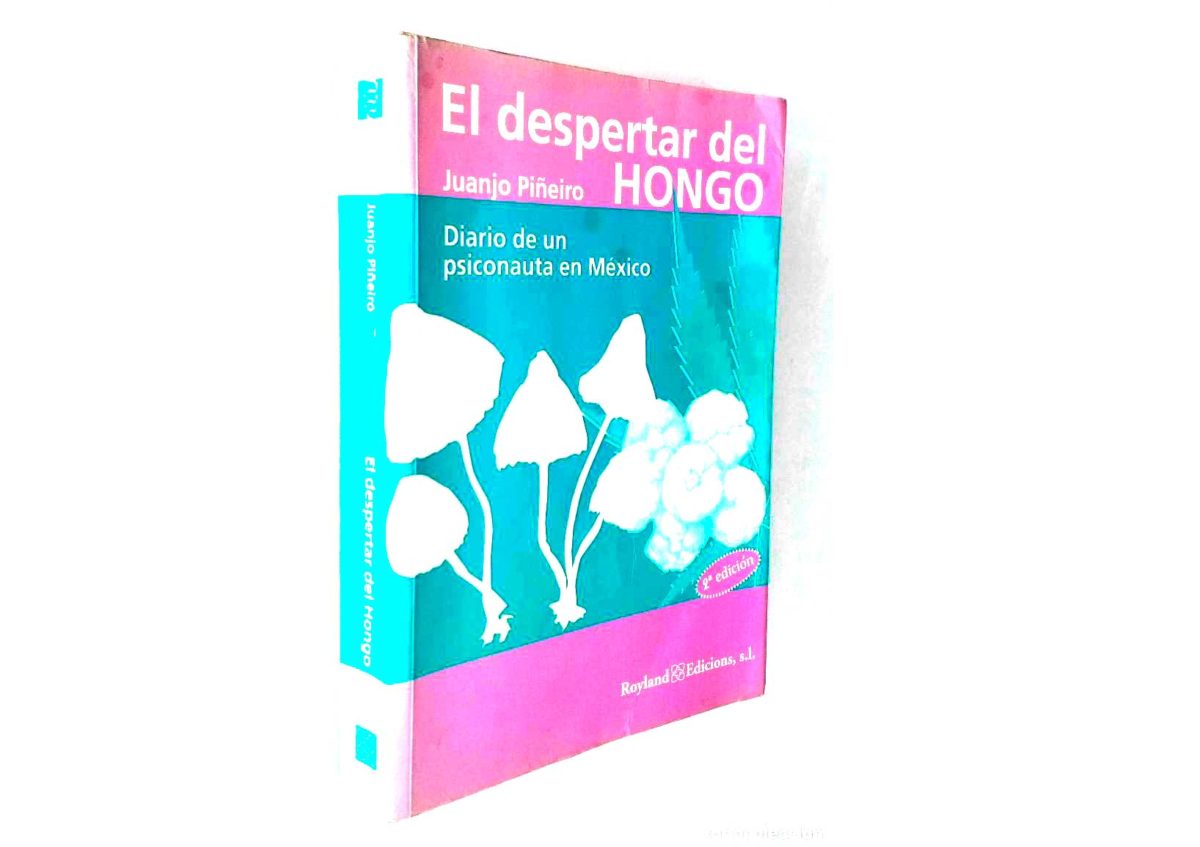
GP: Well, the eight months I spent traveling through Mexico and the United States. In Mexico, I got to know the visionary plants and mushrooms of that country, which is privileged by nature. Mexico has the highest concentration of these plants in the world. There, I made impressive discoveries about those and other issues, which would now be too extensive and complex to describe. I have written an entire book, “The Silent Awakening of the Mushroom,” to try to do so. In the United States, I got to know the native cultures and peoples. It is outrageous to see firsthand how a government that fills its mouth with words like “freedom” and “democracy” has destroyed cultures and peoples who were more evolved in many aspects than they were. These peoples live on reservations, very degraded and exploited. The white government banned peyote, for example, and introduced alcohol to them. Alcoholism is one of the great problems of these peoples, and it affects the younger generations above all. From here, I accuse the United States government of genocide, whether in their own country or in countries like Guatemala. Talking to Guatemalan refugees in Mexico, hearing them recount the atrocities committed by an army paid and trained by the United States government, was one of the hardest moments of my entire life. But despite the intense genocide, the native culture still remains alive. Their societies seemed to me to be healthy and natural societies, where the elders are the wisest because they have more experience and the wisdom that life gives, where women play a fundamental role, where they live to the rhythm of nature, connected to it down to the smallest details. Our society is artificial even in its calendar. The native calendar is lunar, in time with the woman’s cycle, which is a natural rhythm. Western women and men have a lot to learn from these peoples.
ME: What are you working on now?
GP: As I said before, I have finished a new book, based on my experiences in Mexico and the United States. Now I am waiting for its publication. Those interested can read the prologue to “The Silent Awakening of the Mushroom” on several websites. From now on, I am starting to dedicate myself to other tasks…
Before finishing, I would like to praise and give all my support to the impressive work you are doing by creating and maintaining this entheogenic page.


