

When the easy hypothesis doesn’t fit: Serotonin and LSD
The LSD molecule allows for numerous chemical modifications that result in related derivatives, such as 2-bromo-LSD or 1-acetyl-LSD. Almost all of them share a striking property: they are antagonists of serotonin, a neurotransmitter involved in a multitude of central nervous system functions. When this trait was discovered, the temptation was immediate: if LSD blocks cerebral serotonin, perhaps that is where the explanation for its effects on the mind lies.
Comparing the compounds dismantled that hypothesis. Some derivatives—bromo-LSD and, above all, 1-methyl-2-bromo-LSD or 1-methyl-lysergic acid ethylamide—are much more potent serotonin antagonists than LSD itself, yet they have almost no appreciable psychic effect. If serotonin blockage were the cause, those substances should be more “psychedelic” than LSD, but the exact opposite occurs. Conclusion: serotonergic antagonism does not correlate with psychotomimetic activity.
What did show a correlation was something else. Compounds with the most intense psychic effects—LSD and acetyl-LSD—also caused the most marked sympathetic excitation syndrome; those that lacked psychotomimetic activity did not generate it. Within this family of molecules, there was, therefore, a link between activity on the psyche and central sympathetic stimulation. Hofmann presented this as a useful piece for understanding the pharmacological bases of mental processes, not as a closed explanation.
Teonanácatl: An ancient cult and a long-standing oblivion
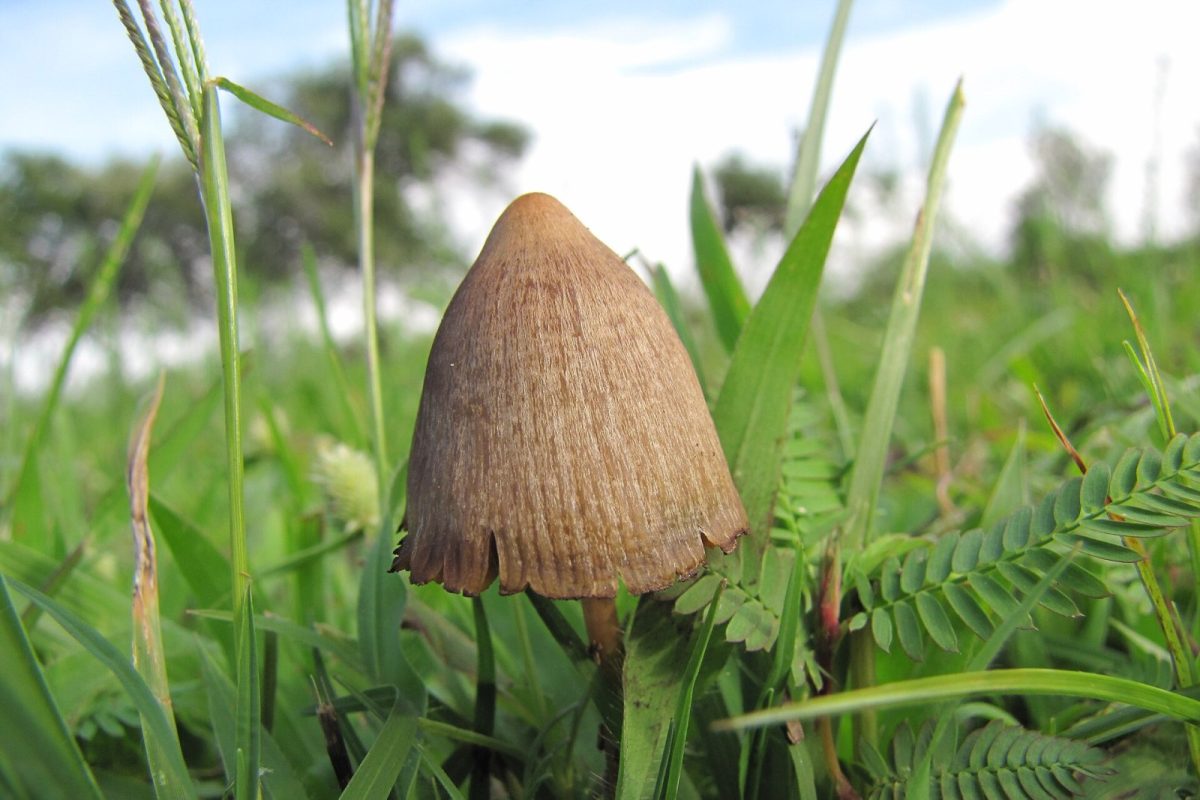
Teonanácatl, the “sacred mushroom,” occupied a central place in the pre-Columbian cultures of Central America. The General History of the Things of New Spain, by the Franciscan Bernardino de Sahagún (written between 1529 and 1590), describes the Aztec world and its destruction by Hernán Cortés in detail, and includes data on the ritual consumption of these mushrooms. They were not only ingested at parties and gatherings: priests and diviners also resorted to them, claiming to be “possessed by the spirit of the mushroom”—the devil, according to the missionaries—and thus obtaining a clairvoyance with which to diagnose illnesses and prescribe remedies. Dating places these practices more than a thousand years before our era.
Despite their antiquity, Western knowledge of the cult is recent. For centuries, the chronicles were read as oddities of a superstitious era. Only between 1936 and 1938 did several researchers—Robert J. Weitlaner, Blas Pablo Reko, Jean Bassett Johnson, and Richard Evans Schultes—confirm that mushrooms were still being consumed for magical purposes in parts of southern Mexico. Shortly after, between 1953 and 1955, Gordon Wasson and Valentina Pavlovna undertook systematic expeditions to the most isolated mountain ranges. In the summer of 1956, they were accompanied by the French mycologist Roger Heim, who classified the species involved: little-known gilled mushrooms (Agaricales), mostly of the genus Psilocybe.
From Paris to Basel: The problem of searching blindly
Some of these species could be cultivated in the laboratory, which provided abundant material, especially of Psilocybe mexicana Heim. Collaboration between the Cryptogamy Laboratory of the National Museum of Natural History in Paris and the Sandoz Laboratories in Basel allowed for enough quantity to be gathered for chemical study.
Here, a methodological obstacle arises that is worth highlighting. When the chemical nature of the substance being sought is unknown, the isolation of the active principle depends on pharmacological tests that serve as a guide. The team tested extracts on animals—pupillary reaction and piloerection in mice, general behavior in dogs—and the results were confusing and debated. After consuming a good portion of the material without clear conclusions, they began to suspect that the mushrooms cultivated and dried in Paris were simply inactive.
Hofmann decided to test it on himself. His self-experiment confirmed that the mushrooms were indeed active and that the problem lay in the animal model: humans are much more sensitive than rodents to substances with psychic action, so animal tests can yield misleading negatives. That episode (recounted in a previous installment of this series) redirected all research toward evaluation in people, carried out by members of the laboratory itself. It is worth reading it as what it was: a practice of its time, without the ethical frameworks or safety protocols that are considered essential today, not as a model to imitate.
Psilocybin and psilocin: The mystery described in a formula
Guided by that human test, the chemists managed to extract the active principle, purify it, and crystallize it. They named the majority substance psilocybin; the extracts also contained small amounts of another indolic compound to which they gave the name psilocin. With this, the “mystery” of the teonanácatl was solved: what led indigenous peoples to intuit a god within the mushroom had a defined chemical structure and could be obtained in the laboratory. The effects of the pure substance matched those described by ancient chronicles and by the accounts of Wasson, Heim, Hofmann himself, and others.
A first characterization of its effects was carried out at the University Psychiatric Clinic in Basel. Broadly speaking: orally, a few milligrams are enough to produce psychic changes after twenty or thirty minutes. With small amounts, alterations in mood and relationship with the environment predominate—relaxation, a certain feeling of isolation, sometimes fatigue and heaviness, other times an almost floating lightness. With larger amounts, distortions of the perception of space and time, changes in self-awareness and body image, and visual hypersensitivity appear, and in that dreamlike state, the surfacing of old memories, even from childhood. We reproduce this description as historical-pharmacological data, not as a consumption guide.
Regarding toxicity, Hofmann noted a contrast that should be read with a cool head: in mice, the LD50 of psilocybin is 280 mg/kg, which makes it 2 to 5 times less toxic than mescaline in that animal, despite being about 50 times more potent as a psychotomimetic in humans. That a substance has a wide margin between active dose and lethal dose in an animal model does not equate to “harmless”: it does not inform about interactions, risk contexts, vulnerable psychological profiles, or the enormous variability between people.
Critical reading
This fragment of Hofmann’s memoirs is valuable for two reasons that go beyond the anecdote. The first is methodological: it shows how an elegant hypothesis—”LSD acts by blocking serotonin”—was held until careful comparison of molecules refuted it. It is a good reminder that correlation is not mechanism, something that continues to slip into neuroscience headlines today.
The second is historical and cultural. The story of the “solved mystery” has a less celebrated side: the extraction of indigenous ritual knowledge, its transfer to a European pharmaceutical patent, and the idea, expressed by Hofmann himself, that the mountain mushrooms were “no longer necessary.” It is advisable to read that sentence with distance, recognizing the community and ceremonial context from which the knowledge came. Finally, the figures and descriptions of effects that appear here are a testament to an era of research; they are not instructions for use. Any current interest in these substances should start with their legal status, professional support, and sound harm reduction information.


