

What We Talk About When We Talk About “Yonki Corazón Rosa”
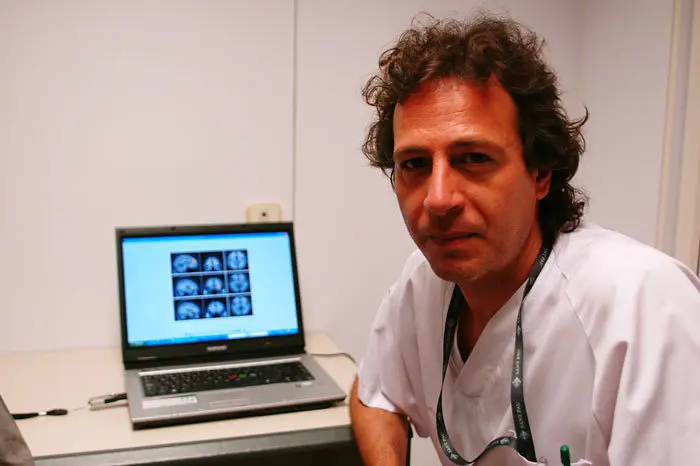
The column “Yonki Corazón Rosa,” penned by Eduardo Hidalgo, cultivated a rare genre in drug journalism: the deliberately irreverent interview, half provocation and half dark humor. In one installment, his guest was José Carlos Bouso, a clinical psychologist and researcher widely recognized for his work on the pharmacology of psychedelics.
The packaging was caustic—opening with theological jokes and digressions on language and gender—yet underneath the humor lay several substantial arguments worth examining soberly. Looking past the verbal pyrotechnics, three debates remain strikingly relevant today: how we name these substances, what we project onto the figure of the shaman, and what can and cannot be claimed from ayahuasca research.
Entheogen or Hallucinogen: The Dispute Over the Name
Bouso’s core objection is linguistic, but it carries real consequences. For him, “entheogen”—literally, “generating the divine within”—is the most misguided term ever proposed for this family of substances. Its defenders argue that it does not describe a pharmacological class, but rather a context of traditional use. The trouble, according to Bouso, is that this context simply does not match what Indigenous peoples using these plants actually do.
In traditional cultures, he argues, journeys are not “vertical”—ascents toward a divinity located somewhere above—but “horizontal.” They are used to heal, resolve community disputes, hunt, wage war, or simply have fun, as is the case with yopo among the Yanomami. The “spirit world” is not a celestial afterlife, but a parallel, deeply earthly dimension inhabited by entities believed to manipulate ordinary reality.
Bouso traces the idea of the spirit’s “vertical journey” to the influence of Mircea Eliade, which Gordon Wasson likely drew upon when coining “entheogen.” The paradox Bouso points out is elegant: a term was forged for a context of use where the actual practice is entirely different. “Entheogen” fits someone seeking an encounter with God—that is, within a Western religious framework—the exact preconception its proponents claimed they wanted to avoid.
Against this, he defends “hallucinogen.” He notes that Wasson himself, recounting his experience with María Sabina, spoke of “hallucinations” to describe what he saw. Drawing on an etymology cited by Ralph Metzner, alucinare can be understood as “wandering in one’s mind.” Bouso also points to neuroscientific findings: functional MRI data suggest that, under these effects, the brain processes visions as if they were real. For Bouso, “hallucinating” is neither derogatory nor dismissive of the experience; it simply grounds it.
The Myth of the Evolved Shaman
Bouso’s second target is the romanticization of the shaman. The West has long clung to the naive notion that these ritual practitioners are spiritually superior beings—nearly demigods—elevated by an appealing countercultural aura. That uncritical devotion, he warns, clashes with a far more mundane reality: a shaman is, first and foremost, a human being, driven by the same appetites for money, power, and sex as anyone else.
This dynamic fuels the abuses he calls out without naming names: figures touring Europe charging steep fees for ceremonies and leaving behind far more than memories, networks of followers willing to take legal falls on their behalf, or retreat centers in South America that stopped admitting women to dodge allegations. Bouso describes this as a universal phenomenon, hardly unique to the psychedelic scene—comparing it to dynamics found in other power structures, including academia. The takeaway is clear: blind reverence for a “master” is precisely what creates fertile ground for abuse.
Ayahuasca: What His Research Says (and Doesn’t Say)
When discussing his doctoral research, Bouso remains cautious. His study participants were very long-term consumers: they had taken ayahuasca several times a month for at least fifteen years. For people who tolerate it well, he concedes, the overall outcome may be favorable. Yet he quickly qualifies this by noting documented cases of psychiatric crises, even in individuals with no prior history of mental illness.
On a biological level, he outlines several plausible mechanisms: an increased rate of information processing associated with higher neuronal firing rates, and elevated expression of neurotrophins and other biomarkers tied to neuroplasticity and learning. His conclusion avoids triumphalism, landing squarely on the honest scientific verdict: both outcomes—benefit and harm—are consistent with the evidence, and further research is necessary.
A Critical Perspective
It is worth disentangling three threads that the informal tone of the interview tends to blend together. First, Bouso’s linguistic arguments and his critique of Eliade and Wasson represent reasoned, debatable interpretations within the field rather than settled consensus; other scholars defend “entheogen” on different grounds. The etymology cited for “hallucinogen” is also one specific reading rather than an undisputed fact.
Second, regarding the brain: neuroimaging and neuroplasticity findings are real, but they largely stem from small sample sizes, specific settings, and study designs that cannot be generalized to everyone or every pattern of use. A study involving subjects with fifteen years of continuous experience says very little about someone trying the brew for the first time.
Finally, regarding risks: ayahuasca and related substances can precipitate acute crises in people predisposed to psychotic or mood disorders, and they interact dangerously with several medications—most notably SSRI antidepressants and MAOIs—as well as underlying medical conditions. Furthermore, Bouso’s account of power dynamics serves as a vital reminder that setting and leadership matter just as much as pharmacology. None of this is encouragement to use; it is an invitation to approach these altered states with curiosity and clear-eyed discernment.