

Salvia divinorum is no placebo: it is like a magic carpet that can take you to realities you cannot even conceive.
Perhaps a friend gave you a cutting of Salvia divinorum, or maybe you bought dried leaves or a live plant. If you suddenly found a magic carpet, you would probably wish it came with an instruction manual. Suppose it did. Because you are adventurous but not stupid, you would read the instructions carefully before trying to fly. You are now reading a user’s guide for the magic carpet known as Salvia.
DO NOT use Salvia until you have read this guide in its entirety. If Salvia is used recklessly, it can turn against you. By learning what is written here, you can avoid dangers.
This guide was written both to provide the information you need to use Salvia safely and to teach you how to grow your own Salvia plants.
SIMPLY A START
This guide is only a start. After reading it, you may wish to learn more. An excellent way to do so is to check out Daniel Siebert’s English-language pages on the World Wide Web. The URL is: http://salvia.lycaeum.org. There is a wealth of information there, including:
· Frequently Asked Questions (FAQ) about Salvia
· A list of Salvia suppliers
· Images of Salvia plants and the chemical structure of salvinorin
· Trip reports
· References to scientific publications
· Links to many other Salvia sites
· Information on joining the very active Salvia mailing list
BASICS OF SALVIA DIVINORUM
Salvia divinorum is a plant that belongs to the sage genus. True sages are members of the mint family. Therefore, Salvia divinorum is in the mint family. It is a beautiful houseplant (and can be grown simply for that reason), but most people who grow this plant are interested in its fascinating psychoactive effects.
The name Salvia divinorum means “Sage of the Diviners.” Under the right conditions, taken in the right way, Salvia produces a unique state of “divine trance.” For hundreds of years, it has been used in religious and healing ceremonies by the Mazatec indigenous people, who live in the state of Oaxaca, Mexico.
As of the original publication date (May 14, 1999), neither Salvia nor the substance salvinorin-A it contains was regulated in the United States. It was legal to grow, buy, and sell Salvia plants or their leaves.
The effects of Salvia are very different from those of alcohol; but like alcohol, it limits your ability to drive and reduces your coordination. Driving under the influence of Salvia is extremely dangerous.
Salvia divinorum is both similar to and different from other substances that affect the mind. In many ways, Salvia is in a class by itself. No other herb, no other drug, is really very similar to Salvia. Salvia is not “legal marijuana.” It is not “legal acid.” Salvia is Salvia. It is a unique “visionary herb.”
Salvia contains a chemical substance called salvinorin. Salvinorin causes mind-altering effects. It is not chemically related to LSD, DMT, Ecstasy, THC, or any other drug. It is not an alkaloid.
Although it is not habit-forming, pure salvinorin is extremely potent. Doses of only a few hundred micrograms (millionths of a gram) will have an effect, and doses above 1 milligram (1/1000 of a gram) are too much for most people to handle. Fortunately, the Salvia leaf is hundreds of times weaker than pure salvinorin, which makes it much easier to use Salvia leaves safely than to use pure salvinorin.
The use of Salvia leaves is physically quite safe. No one has ever died from a Salvia overdose. Salvia is not a stimulant, a sedative, a narcotic, or a tranquilizer. Like psychedelics, it can induce visions. But it differs from so-called “classic psychedelics” (LSD, psilocybin, and mescaline) in many ways. No one knows how salvinorin acts on the brain. We know it works differently than any other known substance.
SALVIA IS NOT A PARTY DRUG
This is important to understand. Most people do not find Salvia to be fun in the way that alcohol or marijuana can be. If you try to party with Salvia, you will probably not have a good time.
Salvia is a consciousness-altering herb that can be used for a visionary journey or a healing ritual. In the right place, Salvia makes it possible to have visions. It is an herb with a tradition of sacred use; an herb for deep meditation. It is best taken in a quiet, dimly lit room, either alone (if a sitter is not necessary; see below) or with one or two good friends present. It is taken in silence or, sometimes, with the sound of soft, pleasant music.
SALVIA TRIPS: WHAT TO EXPECT?
Salvia trips can be strong or weak. This applies to both chewed leaves and smoked leaves. The strength of the trip will depend on how much is taken, how it is taken, and the individual body chemistry.
Salvia trips differ from those produced by any other drug or herb.
Salvia has many advantages over other visionary herbs:
· You cannot take a fatal overdose of Salvia leaves
· Salvia is not habit-forming
· Salvia is legal
· You return quickly to a normal state
· Salvia rarely causes a hangover
Noise and distractions will interfere with the trip. When on Salvia, watching television is not at all pleasant; conversely, sitting around a campfire in the woods at night is wonderful.
You should not be in public when using Salvia. You will really not be able to handle it.
Especially if you are not used to Salvia, or are taking a potent preparation like an extract, you should have a sober sitter with you to ensure you do not do anything dangerous, such as knocking over lit candles or going out a window.
If Salvia is smoked, the effects arrive very quickly, in less than a minute. If it is chewed, the first effects arrive in about 15 minutes, and full effects in about 30 minutes. Usually, a Salvia trip lasts from 15 minutes to an hour. Occasionally, trips can last up to 2 hours. It is important not to drive or operate machinery for several hours after the trip seems to have ended.
Most people do not suffer a hangover from Salvia, although some occasionally report a mild headache. If Salvia is smoked, the smoke can irritate the lungs.
Salvia trips seem to occur in levels. The so-called S-A-L-V-I-A scale has been created to rate the trips. Each letter of the word SALVIA represents a trip level. Some trips only reach level 1; others reach higher levels.
Level 1 — Smiles: mild effects, somewhat similar to a low dose of marijuana; interest in visual textures, laughter.
Level 2 — Alteration of thought processes.
Level 3 — LSD: similar psychedelic effects, such as visions of colored patterns with eyes closed and changes in perception of one’s own body. Sounds may be “seen” as colors.
Level 4 — Voyager: “shamanic” dream-like journeys to other places and times. This is the “magic carpet” stage.
Level 5 — Identity loss: mystical experiences. Merging with other things or with the universe. Loss of personal identity.
Level 6 — Anesthesia: this only occurs when a dose that is too high has been taken. Consciousness is lost for several minutes. The individual may or may not fall. Sleepwalking may occur. Afterward, there is no memory of what was done. You do not want to reach this level! It has nothing to recommend it.
METHODS OF USE
Salvia is never taken by injection. There are many different methods of use. The most important are discussed below.
TRADITIONAL MAZATEC METHODS
The two traditional Mazatec methods are somewhat inefficient because they require many more leaves than other methods, but they are very safe. Traditionally, the leaves are taken in a semi-dark room as part of a healing or religious ceremony. At least one sober person is present to look after the people who have taken Salvia.
· A water-based drink, made from fresh crushed leaves, is one of the traditional Mazatec ways of using this herb. It requires a large quantity of fresh leaves, and its taste is not pleasant, so this method is rarely used by non-Mazatecs. Salvinorin is poorly absorbed by the stomach, so enormous amounts of leaves are required for the drink to be effective. But it really works, and the trips last longer than with any other method.
· Chewing and swallowing a large number of fresh leaves is the other Mazatec method. When this is done, the leaves are ground in the mouth slowly for about half an hour. Although the chewed leaves are swallowed, the greatest effect is obtained from the salvinorin that is absorbed through the thin tissue of the mouth during chewing. This is a less efficient way of chewing Salvia than the quid method (see below). Most people find chewing fresh leaves unpleasantly bitter and even nauseating.
MODERN METHODS
· QUID METHOD:
A ball of rolled-up leaves is made. This is called a quid. It is meant to be chewed. The leaves are chewed slowly, about one chew every 10 seconds. The quid is kept under the tongue between each chew. Keep the quid being chewed and the juice that forms in your mouth for half an hour. If possible, keep it without spitting or swallowing. Then, at the end of the half-hour of chewing, spit it all out. Keep a container handy to spit into, as well as a towel. Salvia saliva stains carpets, so you must ensure the container does not spill.
Although quids can be made from dried or fresh leaves, those made with dried leaves are less bitter. To make a quid of dried leaves, weigh out 2 to 4 grams. Scales with the appropriate precision cost between 20 and 50 dollars. If you do not have a scale, count 8 to 16 large whole leaves.
Place the leaves in a small container with cold water for 10 minutes. Once the leaves are damp, take them out of the water, drain the excess, and roll them into a quid. Some people do not perform this soaking process when they are in a hurry, but chewing dried leaves can be unpleasant. If you wish, you can sweeten the quid with sugar, honey, Stevia extract, or “Equal.” This will make it less bitter and more pleasant.
If fresh leaves are used instead of dried, you will need 8 to 16 large leaves.
The effect of Salvia quids can be significantly increased by pre-treating your mouth in a special way to increase its ability to absorb salvinorin. For this, you will need a toothbrush and a mouthwash containing menthol and alcohol, such as Listerine Cool Mint (or any other brand that contains alcohol and menthol). Brush the entire inside of your mouth, including the thin tissue under your tongue and the top surface of your tongue. This removes layers of dead cells normally present. Do not brush so hard as to cause bleeding. Then rinse with the mouthwash for at least 30 seconds. Make sure to apply the mouthwash to your entire mouth, including under the tongue. Afterward, spit out the mouthwash and rinse once with water.
You will experience very little effect during the first 12 to 15 minutes of chewing. Do not be discouraged by this. The full effects are usually felt at 30 minutes (at the time you spit out the quid), which remain at that level for about 20 minutes more, then begin to diminish. The complete trip rarely lasts much longer than an hour and a quarter, although this varies.
· SMOKING:
— Dried leaves can be smoked in a manner similar to how marijuana is smoked. You need high heat and to inhale deeply and quickly to optimize the effect, as salvinorin requires high temperatures to vaporize. The leaves can be smoked in a short tobacco pipe, a water pipe, or a vapor pipe. Fill a regular-sized pipe with leaves. Use a manual butane lighter that turns off once you stop pressing it, not a match. Have a large ashtray or heat-resistant container where you can put the pipe when you feel you have had enough. Remember that, when traveling, you may forget that you are holding a lit pipe. You could drop it, causing a fire.
Although many people ignore the advice, it is better to have a sitter present when smoking. The first effects will be noticed within the minute following inhalation. Full effects occur around 3 minutes. The total duration of the trip can be less than half an hour or as long as an hour.
— Smoking 5x extract is another method of smoking Salvia. “5x extract” consists of Salvia leaves to which an extract containing salvinorin has been added. This increases the salvinorin content of the leaves. 5x extract is about five times stronger than untreated leaves. This is quite strong. It should not be smoked without a sitter present. The required dose can be very small: less than 100 mg of 5x extract may be all that is needed.
— It is possible to vaporize leaves or extract in a special vaporizer that heats the material without burning it. Vaporization is extremely potent and can easily lead to serious problems. Anyone using vaporization MUST absolutely have a sitter present. Many commercial vaporizers made for tobacco or marijuana will not work with Salvia. Special vaporizers for Salvia can be built with ease, but vaporization is not for Salvia novices.
— Vaporization of pure salvinorin is also possible. This is extremely dangerous, as it is very easy to vaporize too much salvinorin and overdose. For the safe vaporization of salvinorin, it is required to weigh the dose on a very precise chemical scale, capable of weighing salvinorin in micrograms (millionths of a gram). Such analytical scales cost more than 1000 dollars. Vaporization of salvinorin is definitely not for beginners!
WHICH METHOD IS BEST?
There are pros and cons to each method. Some people report that the quid gives a stronger, deeper, and more visionary trip than smoking. Others report that chewing leaves does not work for them, but smoking does. For those who get very little effect from either method, both can be combined. First chew a quid and then, after spitting, light a pipe.
If you currently smoke tobacco or marijuana, you will probably prefer smoking.
If you are a non-smoker, you will probably prefer the quid method; smoking anything, even Salvia, cannot be good for your lungs. Unlike smoking, a quid does not damage the lungs.
A larger quantity of leaves is required for a quid trip than for a smoking trip. If you have very little material, smoking can be a way to achieve a trip with the small amount you possess.
Quid trips come on more slowly but last longer. Therefore, they are better for exploring the world of Salvia and for deep meditation.
Until you know how sensitive you are to Salvia, do not experiment with extracts, vaporizers, or salvinorin. Chewing the quid or smoking leaves will be enough to take many people to level 5. There is no need for those people to experiment with stronger and more dangerous ways of taking Salvia.
There are some people who, even after many attempts, find that they remain “hard-headed” to Salvia. They never experience much more than a slight effect from smoking leaves or chewing a quid. Some of those “hard-headed” individuals will achieve satisfactory results if they chew a quid and then smoke immediately after spitting it out.
Others will find even this ineffective. For them, a 5x extract or the use of a vaporizer might be worth exploring. Such “hard-headed” people are a minority.
See how sensitive you are before risking those stronger methods. If you have a normal sensitivity to Salvia, those extreme methods should be avoided. With a little practice, chewing the quid, smoking, or combining both methods works well enough for most. Many people find that it takes several encounters with Salvia before a significant experience occurs. So do not label yourself as “hard-headed” too soon.
SITTERS AND SAFETY
When do you need a sitter?
A sitter is absolutely essential if you are taking doses in which you might get scared, confused, hurt yourself, fall, set your house on fire, or do anything that could harm others. Have a sitter present if you are new to Salvia, when you are experimenting with a stronger form than you have used previously, or are using a more powerful way of taking it.
An experienced Salvia user who is chewing a quid can frequently choose to do so alone, which can be safe enough. But having a pleasant, sensitive, and sober sitter is an absolute requirement if you are using vaporization, smoking leaves enhanced with extract, or using pure salvinorin. Smoking the leaves usually falls in the middle range of risk. Use your good judgment. Many people have done it without a sitter, but it is not a bad idea.
What should a sitter know and do?
The sitter must remember that, no matter how crazy the traveler acts, Salvia trips are short-lived. You should not take the traveler to the emergency room. You must keep the traveler safe and wait for their odyssey to end. If you cannot keep the traveler safe, you must get help. Otherwise, you should keep the matter private. Within about an hour (usually much less), the traveler will return to normal. It is very valuable to keep this in mind when things get difficult. It helps to have tried Salvia before being a sitter for someone else. Experience with other psychedelics may not be as useful. The sitter should know that Salvia is different from them. Touching to “ground” the traveler works for some LSD trips, but it can be very threatening to someone on a Salvia trip. If you plan to touch the traveler, it should be clarified with them BEFORE the trip begins.
The sitter’s jobs
The sitter has three jobs.
The main job is to keep the traveler safe and keep those around them safe. This comes before everything else. The main dangers are physical, not emotional. Your job is that of a guardian, not a psychotherapist. You should not use physical force unless nothing else works. The use of physical force could result in the traveler or the sitter being hurt. It could be misinterpreted as an attack.
Salvia should never be allowed to be used if firearms, knives, or any dangerous objects are present. You must take the traveler’s car keys for safekeeping before the trip begins. Keep the traveler safe from falls, head injuries, sharp objects, going out windows, wandering into streets, flames, hot surfaces, and breakable objects. But the traveler should be allowed to move on their own in a safe area. Do not try to physically restrain them unless absolutely necessary. Redirect them. Speak softly. Gently remove dangerous objects. Use the least physical contact possible (the confused traveler may think the contact is an attack or violation and react to the imagined danger). The sitter might have to handle unexpected intrusions from strangers or other awkward social situations.
The second job of the sitter is to reassure. Almost always, the repetition of simple explanations can help a scared traveler, for example: “You are safe, I won’t let anything hurt you,” “You are just having a bad trip, you will feel better in a few minutes,” “Your name is…,” “I am your friend….” If it is not necessary to speak, remain silent. Silence is almost always less threatening to the confused traveler than trying to decipher what the sitter is saying.
The third job of the sitter is to help the traveler remember the trip afterward. There are many ways. Use a notebook and record everything the traveler says and does. Later you can ask them about what was recorded. This can refresh the traveler’s memory regarding what they have experienced. Another technique, in case the traveler is not so far gone as to be unable to speak during the trip, is to ask them repeatedly, “What are you experiencing now?” A notebook or a recorder can be used to record the answers. Because some travelers will prefer that the sitter remain silent and not record anything, what will be done should be clarified beforehand.
Common sense guidelines
· NEVER USE SALVIA IF FIREARMS ARE PRESENT. Never use Salvia when knives are within reach.
· NEVER DRIVE WHEN TAKING SALVIA.
· Choose the time and place for the trip carefully. Privacy and safety are indispensable. Be very careful with heights and open flames like those of candles. Do not take Salvia when you might be interrupted by phone calls, visitors, pets, children, etc. Turn off your phone and set the answering machine to record calls silently. You will be able to answer the calls in a couple of hours, once you are sober.
· Think carefully about what quantity you will take and how you will take it.
· After all smoking material is safely extinguished, lie down on a bed, a mattress, or some carpet. You are much safer lying down than wandering around. Remain calm for the rest of the trip. You can travel better with your eyes closed.
· Have a sitter (this is especially important if you are new to Salvia, are taking a high dose, are smoking extract, or are using a very potent ingestion system, such as vaporization).
· Offer to sit for others in turn.
· If you have mental health problems, do not take Salvia without first consulting your therapist or doctor.
· Practice and promote the responsible use of Salvia. Do not give it to minors or to violent or unstable people. Do not share it with strangers. Know well who you are giving it to and why they want to use it.
· Never take Salvia while working or in public. Keep it private. It is not for concerts. It is not for large parties.
· Do not mix Salvia with alcohol. Avoid mixing it with other drugs. While experienced users have tried combinations, they are not for beginners and are certainly riskier than simply using Salvia alone.
· Be extremely careful with fires — candles, lighters, campfires, etc. — when using Salvia.
· Be very careful when using vaporized extracts, vaporized leaves, or when smoking leaves reinforced with extract. Those activities require the presence of a sitter. Chewing quids or smoking leaves is much less prone to producing uncontrolled behavior.
· Never use pure salvinorin unless you have the extremely precise scales that are needed to weigh doses measured in micrograms and you know exactly the amount you can take safely. Even in that case, you must have a sitter present.
THE PLANT AND ITS CARE
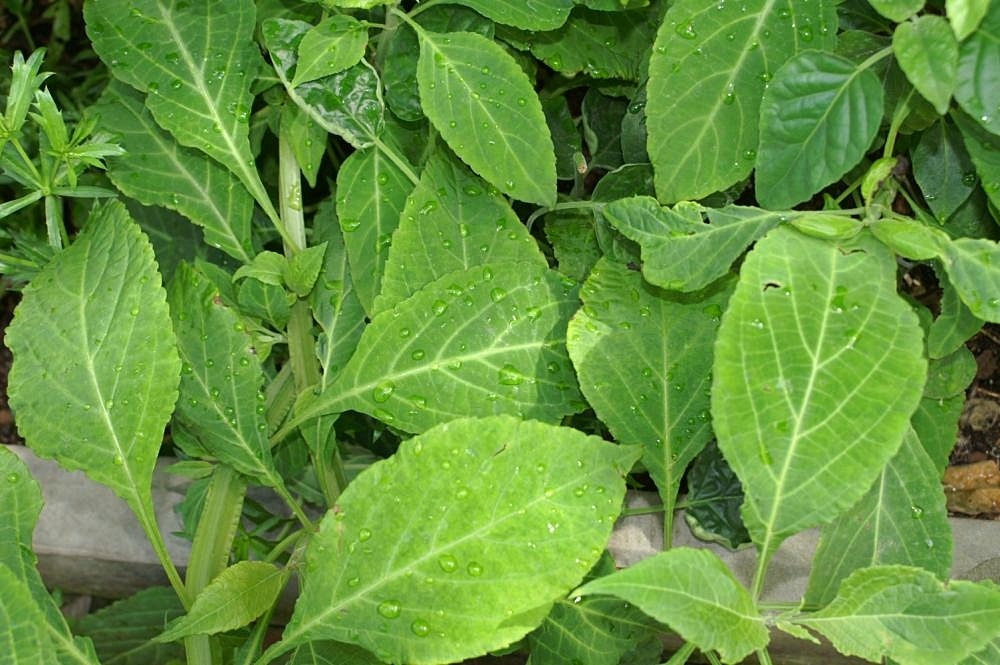
If you are going to grow your own Salvia, you must read this. If you prefer to buy dried leaves, you can skip this section. Salvia divinorum is a semi-tropical perennial plant. This means it can grow year after year, but only if it is not exposed to freezing temperatures. It is a green plant with large leaves and a distinctive thick, fleshy, square green stem. It can grow many meters high if conditions are favorable. When it grows enough, the branches will bend or break and can produce roots if they come into contact with damp soil. Although Salvia divinorum can flower under natural light conditions, it almost never produces seeds that germinate. Therefore, the plant is spread by cuttings. The leaves are oval, slightly serrated, and can be quite large (up to 22 cm long). They are generally emerald green, but can be yellowish-green and even yellow. They are frequently covered with a fine layer of very short hairs (pubescence), which give the leaves an appearance similar to satin under certain light sources.
The plants are water-lovers, but grow best in partial shade, in well-moistened but well-drained soil. The roots must not remain flooded or they could rot, killing the plant.
Salvia divinorum can be grown indoors in any climate. It is a beautiful houseplant.
You can grow Salvia divinorum outdoors year-round if you live in a humid semi-tropical climate, with well-drained but very moist soil, with a high content of organic matter. If you live in a colder or drier climate, you can still grow Salvia outdoors, but you will have to do so with some care, ensuring it is protected from freezing, being watered frequently, and humidified when the ambient humidity is low. Salvia will not survive freezing. It can be grown outdoors in containers that can be brought in when it gets too cold (below 4 degrees Celsius). That way it can be grown outdoors in summer and indoors in winter.
Salvia will tell you when it is getting too dry: its leaves will fall off. Make sure to moisten it at the first sign of slight leaf loss; do not let the plant lose many leaves. The soil should drain well but remain moist.
If you plant Salvia in containers, MAKE SURE THE CONTAINER IS LARGE, THE BIGGER THE BETTER. By doubling the diameter of the container, you can increase the leaf production field by more than four times. Although space availability may limit the possible size of the container, use the largest one possible. It must have holes for drainage. Placing small stones (or bits of expanded polystyrene) at the bottom of the container will help promote drainage, thus avoiding root rot. Commercial potting soil will work well. Adding vermiculite or perlite to the soil used is beneficial, although not indispensable.
Salvia will need fertilizer. There is none that is clearly better. Satisfactory results can be obtained with different products. Some of them are:
· Scotts All-Purpose Plant Food (18-13-13), lightly scattered on the soil around the plant once every six weeks.
· MirAcid added to the water once a week (1/4 teaspoon per gallon).
· Peters Professional Soluble Plant Food (15-30-15), added to the water once a week (1/4 teaspoon per gallon).
Less recommended are:
· Fish emulsion (it is useful only for outdoor use, as it has a very bad smell).
· Bone meal (pets may dig up your Salvia if you use it!).
If you grow Salvia inside your house, take the plants out when it is warm enough and allow rain to fall on them. This will prevent salt deposits from forming in the soil that could damage the plant.
Salvia divinorum can be fine in a different variety of light conditions. It is best with a few hours of partial sunlight a day. It can grow well indoors near a window. It can withstand a greater amount of sunlight if it is kept well-moistened. It can also withstand moderate deep shade. When varying the amount of light or humidity, it should be done gradually. Given enough time, Salvia is very adaptable, but it can take weeks for it to get used to a new environment.
Many pests can attack Salvia. Whitefly is a big problem for plants grown in greenhouses. Aphids, slugs, caterpillars, mites, and larger insects can also damage your plants. Root and stem rot can be a problem. Fungal spots can appear on the leaves. It is not known what plant viruses can attack Salvia divinorum, but some probably do, as many attack other sages.
Aphids and larger insects can be eliminated with a cotton swab dipped in isopropyl alcohol (rubbing alcohol).
Slug damage can be reduced by growing Salvia in containers raised on a shelf. Some can still reach and attack your plants. Keep a watch on those slippery pests. A single slug can eat a tremendous amount of Salvia! Beer can be used to attract and drown slugs. Place a deep dish with beer in a depression in the ground; the edge of the dish should be at the same level as the ground, so the slugs will be able to enter it, get drunk, and drown.
Mites can be controlled by dissolving detergent in water to be sprayed on the leaves, including the underside of these. Repeat 3 times at intervals of two weeks. Caution: there have been some reports of soap damaging the leaves. Do not use too much.
The use of a garden hose outdoors, or a spray bottle indoors to apply water under pressure to both the top and bottom of the leaves, can be more effective for controlling mites. Your garden hose is your best ally when fighting most outdoor pests. Spray the leaves hard enough to eliminate the pests, but not so hard as to damage the leaves. Do not forget to spray the underside of the leaves as well.
Salvia divinorum is propagated by cuttings, not by seeds. Cuttings can be rooted both in water and directly in the soil. Here is how:
ROOTING IN WATER: Cut a branch (10 to 20 cm long) that has some leaves. Immediately afterward, place it in about 3-4 cm of water in a small glass. Only one cutting should be placed in each glass, so that the roots that develop on one cutting do not extend to another.
It is best if the branch is cut just below a node, as nodes are the places with the greatest tendency to develop roots. Although it is not necessary to make the cut there, doing so has the advantage that there will be no stem material submerged in the water below the node, which is important, as the stem is more susceptible to rotting than the node.
Make sure the cut is made with clean scissors or a clean knife, so that the wound is not attacked by germs and fungi that can cause the cutting to rot. Remove all large leaves, but leave some small ones. Place an inverted clear glass jar or glass (or clear plastic bag) over the plant, to serve as a humidity tent. Place it where it receives some sunlight. Change the water daily. It may be a good idea to use boiled, cooled water. If the water you have is chlorinated, boiling can eliminate the chlorine. Unchlorinated water may be contaminated with plant disease germs, but boiling should kill them. Rooting in water is successful in 3 out of 4 attempts (the rest of the time the cutting rots and dies).
In two weeks, roots will start to develop. When they are 1 to 2 cm long, transplant them to soil in a container with good drainage. Continue covering the container with a clear glass jar or glass (or clear plastic bag) to serve as a humidity tent, until the plant looks vigorous. Then, gradually eliminate the dependence on the humidity tent.
ROOTING IN SOIL: Salvia can be rooted directly in soil.
Materials needed:
· Potting soil.
· Two disposable plastic cups.
· Rooting powder (it is a rooting hormone that also contains a fungicide), which can be found anywhere plants are sold.
· A thin, clear plastic 1-gallon bag.
· A rubber band.
· Water.
Method: make some small holes in one of the cups for drainage. Fill the cup 2/3 full with potting soil. Using a pencil or a finger, make a hole in the soil about 5 cm deep. The soil is now ready for the cutting. With clean scissors or a clean knife, cut a piece of stem (10 to 20 cm long) from a healthy plant. Leave some small leaves at the top. Remove the large leaves from the cutting. Immediately after cutting the piece of stem, place it in clean water. Make the cut just below a node, as the roots will develop from this. Keep the surface of the cut wet. Insert the cutting about 2.5 cm above the wound into the rooting powder. Shake to remove the excess. Rooting powder is somewhat toxic, so you must wash your hands after handling it. Place the powder-covered cutting into the hole made in the soil. Gently press the soil around the cutting, keeping it in place while the hole is filled. Add water to the planted cutting until some drains out through the holes made in the cup for drainage. Put the cup with the cutting inside the second plastic cup (which is there to catch the excess water). You will want to put a small piece of plastic or wood at the bottom of the outer cup, which will act as a spacer. This allows enough space for the excess water to be drained. Place the clear plastic bag over the cutting, using the rubber band to keep it in place. The rubber band should be on the outside of the bag and the bag should be outside both cups. The rubber band keeps the bag against the cups. Since the plastic bag acts to conserve humidity, frequent moistening is not necessary. After several weeks, you will be able to transplant the now-rooted plant to a larger container.
PROCESSING PLANT MATERIAL
Dried Salvia divinorum leaves can be kept in closed jars protected from light. In this way, the leaves can probably maintain their potency for many years, perhaps indefinitely (no one knows how long). If you are growing your own Salvia, you will probably want to dry the leaves for future use. There are many ways to do this:
Method 1) Nature’s Gift. Wait until the leaves die or fall and collect them. Place them on a plate inside a room with low humidity. Turn them frequently. Wait until they are dry and then store them. It is not known if leaves that fall naturally are stronger or weaker than leaves plucked from the plant.
Advantage: you will not deprive your plants of leaves they need.
Disadvantage: you will have to wait until the plant is ready. The leaves may not be in optimal condition.
Method 2) Salvia Tobacco. Take some large recently collected leaves and place them one on top of the other (like stacking sheets of paper). Then make a cut through the stack of leaves, leaving strips of about 6 mm. Stack them on a plate in a pile. Turn them twice a day until they are dry, but not crispy.
Advantage: the resulting “tobacco” is said to produce a smoother smoke than totally dried leaves.
Disadvantage: it is possible that this slow, partial drying results in weaker leaves, which may not keep as well stored as totally dried leaves would.
Method 3) Food Dehydrator. Dry the leaves in a food dehydrator, which can be obtained where kitchen appliances are sold. Drying is very fast and effective. Dry until all the leaves, including the stem, are crispy. Touch the leaves with your fingers to ensure they are totally dry. The stems should break when pressure is applied to them.
Advantages: speed, total drying, and convenience.
Disadvantage: cost of buying a dehydrator.
Method 4) Oven-Dried Salvia. Place the leaves on a heat-resistant plate. Bake them until they are dry at no more than 65 degrees Celsius.
Advantages: speed, total drying, and convenience.
Disadvantages: somewhat less convenient than using a food dehydrator. It can be difficult to maintain the oven temperature in an optimal range.
Method 5) Drying with Calcium Chloride. Calcium chloride is available at many hardware stores. Put a sufficient amount of calcium chloride at the bottom of a plastic container. Place a piece of aluminum foil over the CaCl₂ and place the leaves to be dried on it. Fold the edges of the aluminum foil to prevent the leaves from touching the CaCl₂. Then close the container hermetically. The leaves should be dry in 2 days.
Advantage: very complete and total drying.
Disadvantages: less convenient than other methods. Slow.
Whatever method you use to dry the leaves, place them in a closed jar, away from light. A clean glass jar with a screw-on or pressure lid works very well. Storing it in a kitchen cabinet or medicine cabinet will keep it away from light. Stored in this way, the leaves will maintain their potency for many months, even years.
CLOSING
Having read this manual, you now know enough to start the green path of Salvia. May you always find a path with heart. May this outstanding master plant guide you toward great self-knowledge, harmony, wonder, and joy.
The author of this guide, “Sage Student,” wishes to remain anonymous. (Spanish translation by Jeí.) Additional information on Salvia divinorum can be found at: http://salvia.lycaeum.org/


