

The end of a reasoned obsession
After five installments dedicated to tracing what adrenochrome is, where its fame comes from, and why so many people have insisted on turning it into a legendary drug, Eduardo Hidalgo reaches the only chapter that was missing: testing it. The series closes, then, where it had to close: with the tastings. And it is worth noting from the start that the outcome is more comedic than psychedelic.
Let’s recall the context. Adrenochrome is an oxidation product of adrenaline. In the mid-20th century, psychiatrists Abram Hoffer and Humphry Osmond placed it at the center of a hypothesis about schizophrenia, suggesting it could have psychotomimetic effects. From there, it jumped into the countercultural imagination and, much later, into conspiracy mythology. Between one thing and the other, almost no one had bothered to report firsthand what it feels like. Hidalgo, faithful to the old school of those who administered to themselves what they studied, decided to do it.
Three variants, three sympathetic disappointments
The first sample arrived in an old pharmaceutical bottle, manufactured in Spain, with its label from Porriño (Pontevedra) and a handful of expired tablets. Administered sublingually, the effect was, literally, none: at most, a vague sense of domestic order that led the author to pick up a piece of plastic from the floor. Nothing that a good day doesn’t explain better than pharmacology.
The second variant was adrenochrome semicarbazone, the form reviewed by manualist Adam Gottlieb (semicarbazone, known in pharmacy as carbazochrome, has been used as a hemostatic). The account describes teeth stained red, an emergency rinse, and, after a while, a very mild physical stimulation accompanied by a certain mental dullness. The great effect reported, again, was an inexplicable urgency to do laundry. The author’s ironic conclusion—that it seems like an ideal substance for housework, also compatible with a nap—sums up the tone of the entire installment well.
The third was the “real” adrenochrome, the one that in the mythology associated with Osmond supposedly “blows your mind.” It was kept in a freezer at about -20 °C (-4 °F) for almost two weeks to preserve it, and reserved for an intravenous trial.
The intravenous trial (and how the plan went sideways)
The plan was sensible on paper: take it during the day, at his editor’s house, with an external observer to act as a sitter in case the experience became complicated, and with vitamin B3 (niacin) on hand—the supposed antidote that Hoffer and Osmond associated with bad adrenochrome experiences—and even an antipsychotic in reserve. On paper, everything was covered.
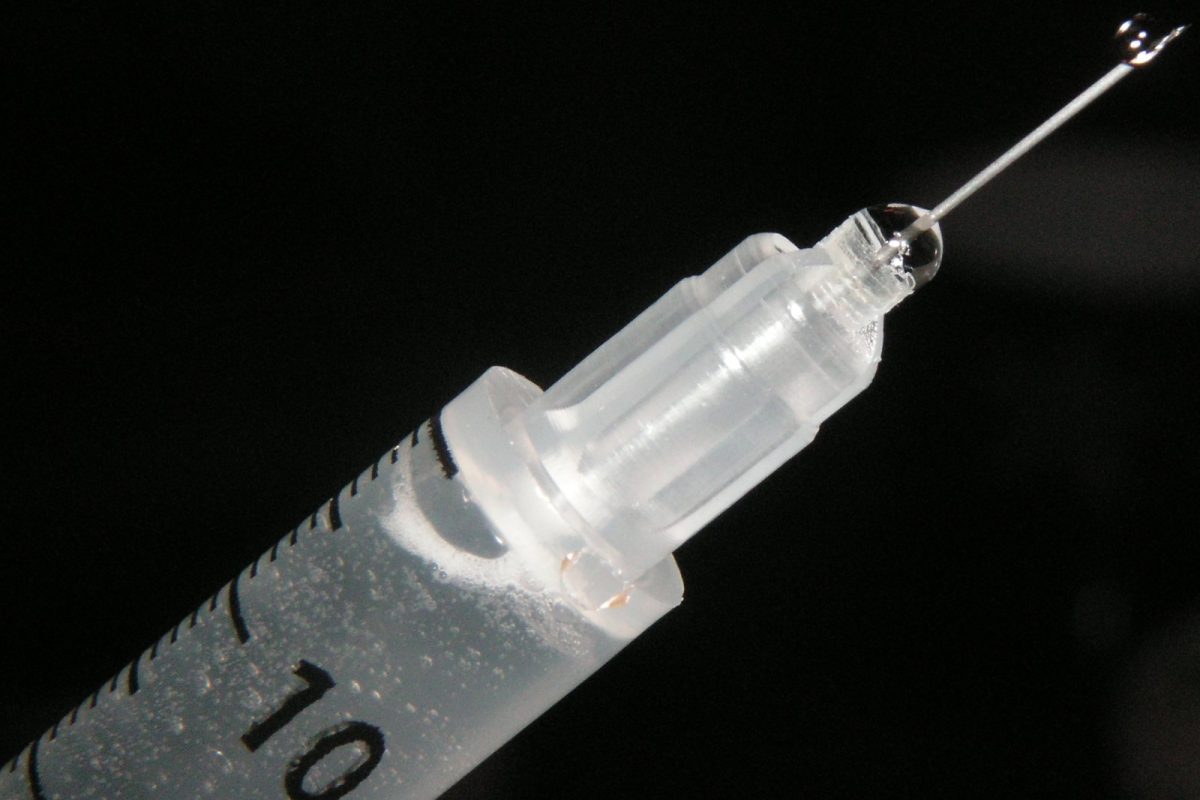
In practice, nothing was covered. The previous evening led to beers, a couple of glasses of wine, and a little over a milligram of alprazolam, and with that “high” on board, the author didn’t wait for the morning: after midnight, he injected himself, alone, without a sitter, with about 25 mg intravenously. The story itself tells it with mockery, comparing himself to John C. Lilly. It is exactly the type of decision that any harm reduction guide would use as an example of what not to do.
The story, read with distance
What follows in the original is a condensed trip report: initial euphoria (“this actually gets you high”), a feeling of acceleration and good humor, and—this is the important part—no perceptual alteration. No visions, no objects coming to life. Everything “normal” except for his own mood. The author himself immediately suspects the cause: it was likely the beers, the satisfaction of having completed a long search, and the mix with the anxiolytic, rather than the injected molecule.
The rest is a hangover, laughter, reddish stains on his fingers that don’t come off with water, and a recurring macabre dream about a hidden corpse that the author turns into humorous material. As a literary document, it works; as data on the pharmacology of adrenochrome, it says almost nothing conclusive. And that, in reality, is the moral of the whole series.
Why this experiment proves almost nothing
Hidalgo himself acknowledges this when speaking of “contaminating variables.” It is worth highlighting, because that is where the true educational interest of the text lies:
Mixing substances. A night of abundant beers, wine, and benzodiazepines is enough to explain the euphoria, disinhibition, and hangover. Alcohol and alprazolam are central nervous system depressants; combining them is already a risky practice, and it also completely clouds any attempt to attribute effects to a third substance.
Expectation and suggestion. Anyone who has invested months and money in obtaining something “legendary” is predisposed to notice something. The set (mental state and expectations) can generate real sensations without the molecule doing much of anything.
No control group or blinding. A single subject, without a placebo, without an observer, and under the influence of other substances does not produce evidence, but an anecdote. Which is exactly how the author presents it.
In fact, all three tastings point in the same direction: subtle, nonspecific effects easily explained by other causes. This is consistent with what the scientific literature eventually concluded about the adrenochrome hypothesis of schizophrenia, which was never supported by solid evidence and is considered abandoned today.
The dark legend of adrenochrome
One cannot speak of this molecule today without mentioning the hoax that has made it sadly famous: the conspiracy theory that claims certain elites “harvest” adrenochrome from minors to get high or rejuvenate. The original text already played with that imagery in a parodic way. It is worth making it clear and without irony: it is an invention without any real basis, a modern update of old libels. Adrenochrome is obtained by oxidizing adrenaline in a laboratory or purchased from reagent suppliers; there is nothing in its chemistry that supports the horror story. That a substance with such questionable psychoactive effects has ended up at the center of a global conspiracy says much more about the manufacture of myths than about the molecule itself.
Critical reading and harm reduction
Beyond its literary value, this installment leaves several useful takeaways:
Self-experimentation alone, in the middle of the night, and intravenously concentrates several of the worst possible risk factors: injecting without proper equipment or technique exposes one to infections, venous damage, and embolisms, and doing so without anyone nearby eliminates any possibility of help if something goes wrong. Combining alcohol with benzodiazepines adds the risk of respiratory depression. None of these decisions, regardless of the “old school” epic that surrounds them, is recommended.
In terms of knowledge, the episode reminds us that a first-person account, however honest and entertaining it may be, is not equivalent to evidence. The charm of Hidalgo’s text is precisely that he does not deceive himself: he recounts what he felt and, immediately after, lists all the reasons why it was likely not the adrenochrome that caused it. That methodological honesty is the most valuable part of the piece, and a good antidote to the mythology that surrounds so many substances.


