

In brief
- The effects of Salvia divinorum depend on salvinorin A, a highly potent, selective kappa-opioid receptor agonist—a different target than those used by psilocybin or LSD.
- When smoked, the experience begins in seconds, peaks around two minutes, and subsides in about 20–30 minutes; when chewed, it is slower, less intense, and somewhat longer-lasting.
- Its markedly dissociative nature means that the context—where, with whom, and how—is just as important as the dosage when approaching it with care.
Salvia divinorum is one of the psychoactive plants that most baffles those who approach it: its effects are described as extraordinarily intense and, at the same time, so fleeting that they barely last a few minutes. This combination is not accidental, but the direct consequence of its chemistry and how it acts on the brain. Below, we explain this calmly, based on what science knows today, so that everyone can form their own judgment.
One plant, one exceptional molecule
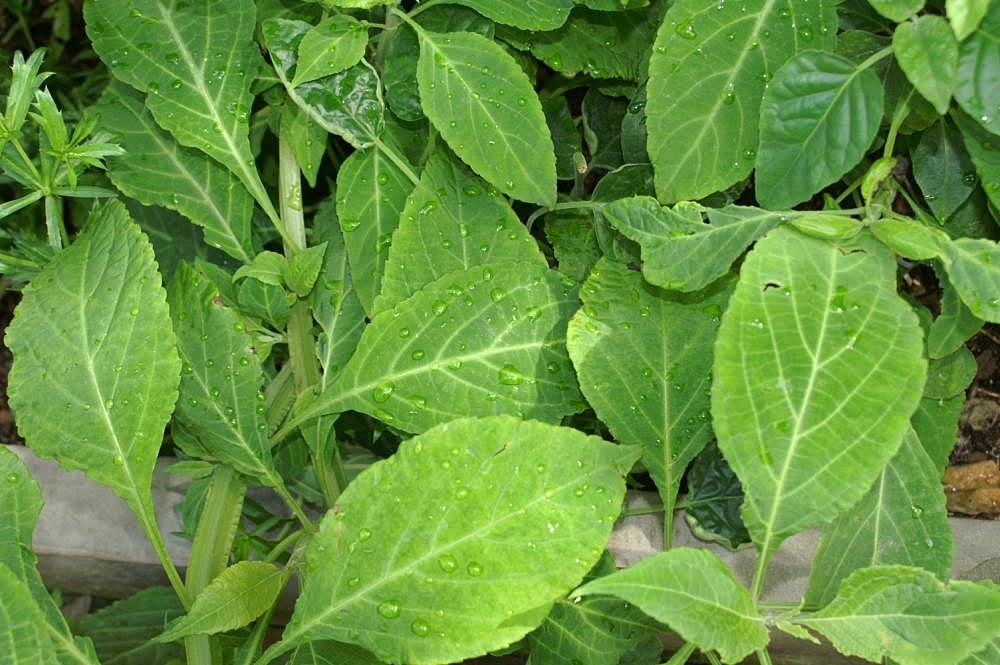
Native to the mountains of Oaxaca, Mexico, where the Mazatec people have used it for generations in ritual contexts, Salvia divinorum belongs to the mint family (Lamiaceae). Its active principle, salvinorin A, is notable for two reasons. First, it is the most potent naturally occurring hallucinogen known: it acts at doses in the microgram range. Second, it is a non-nitrogenous diterpene; that is, it lacks the nitrogen atom present in almost all other classic psychedelics and opioids. This structural rarity makes it a unique object of study for pharmacology, because it does not resemble any other substance that acts on these receptors.
Why the experience is so intense
The key lies in its target. Most classic psychedelics—LSD, psilocybin, mescaline—act on the 5-HT2A serotonin receptor, and opioids like morphine act on the mu receptor. Salvinorin A, on the other hand, is a selective and high-efficacy agonist of the kappa-opioid receptor (KOR). The intense activation of this system, naturally linked to dynorphins, produces markedly dissociative effects: depersonalization, derealization, distortions of the body and space, and a disconnection from the environment that can arrive abruptly. In controlled studies with experienced volunteers, robust hallucinatory effects have been described, along with alterations in perception and memory. It is not a “mellow” state: the potency of the molecule and the kappa pathway explain why the experience can be all-encompassing and, for some people, uncomfortable or difficult to sustain. Knowing this in advance helps one decide with what expectations and in what situation to approach it.
Why it lasts so little time
The other side of the coin is its brevity. When smoked, salvinorin A reaches the brain in seconds, peaks around two minutes, and declines toward 30; the most marked effects are usually concentrated in the first 1 to 5 minutes, with an approximate half-life of one hour. Why does it wear off so quickly? Research points to very rapid pharmacokinetics: the molecule enters and distributes quickly, is eliminated soon, and, furthermore, a blood-brain barrier transporter—P-glycoprotein—appears to actively pump it out of the brain, shortening its stay. The route of administration also counts: when chewed or taken sublingually, absorption is slower and incomplete (its oral bioavailability is low), so the onset is delayed and the experience is less intense, although somewhat longer. That is why the same substance can produce a lightning-fast episode when smoked and a faint effect when taken orally.
It is worth noting that much of the above belongs to the experimental realm. Scientific interest today is focused on semi-synthetic analogs of salvinorin A as potential tools to study the kappa system in mood disorders or addictions, but this is preliminary evidence in laboratory models, not an available treatment.
Harm reduction
If someone decides to try it, a few precautions make the difference. The main risk is not well-documented organic toxicity, but the momentary loss of control and awareness of the environment during the minutes of peak effect, with the possibility of falls or bumps, and episodes of anxiety or confusion that sometimes linger for a while afterward. Since each organism responds differently and there is no predictable response, starting low and slow provides room to understand one’s own reaction. It helps a great deal to reserve the experience for a quiet place, away from water, heights, or traffic, and to have a trusted, sober person present to watch over physical safety during those minutes: it is the simplest and, at the same time, most effective measure. Taking care of the set and setting—the state of mind with which one arrives and the environment that is prepared—conditions much of how it is experienced. Combining it with alcohol or other substances adds unpredictability, and anyone with a psychiatric history would do well to consider this with special attention. In Spain, it is not a controlled substance—Order SCO/190/2004, which restricted its sale, was annulled by the courts in 2005—and it has no approved therapeutic indications. In the event of any intense reaction or one that does not subside, seeking medical attention is always a sensible decision.
Sources
- NIH/PMC. Salvinorin A, a kappa-opioid receptor agonist hallucinogen: pharmacology and potential template for novel pharmacotherapeutic agents in neuropsychiatric disorders. Frontiers in Pharmacology, 2015.
- Frontiers in Pharmacology. Open access full text (doi:10.3389/fphar.2015.00190). 2015.
- Release. Salvia: pharmacology. Release (United Kingdom).
Educational content written from a harm reduction perspective and with respect for individual freedom. It is not a substitute for advice from a healthcare professional and is not intended to encourage or condemn any drug use.


