

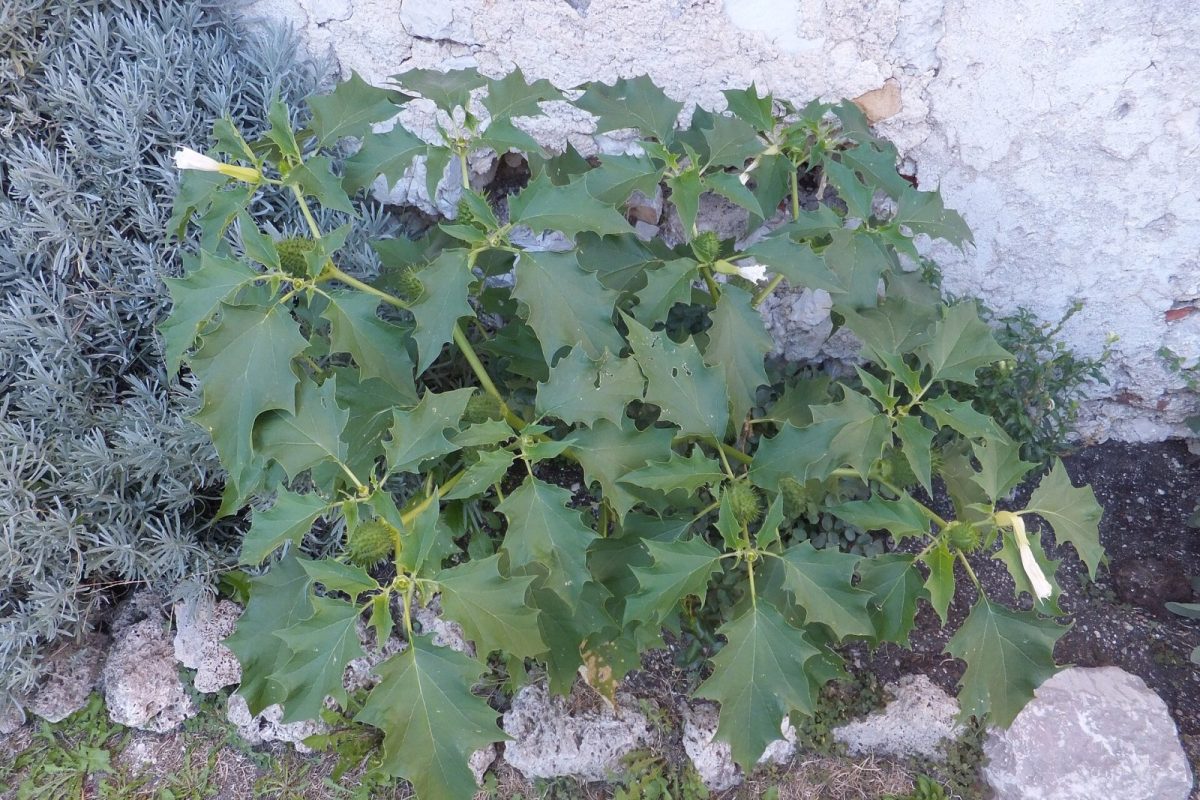
Plants that heal and plants that intoxicate: a blurred line
Popular culture tends to classify psychoactive plants as “drugs,” often overlooking the fact that many have been used for centuries as medicines. The distinction between what alters the mind and what relieves pain is rarely clear-cut; it frequently depends on the dose, the context, and the intent. Here, we review five classic examples of this ambivalence, including their documented historical uses and a critical look at what we know—and what we don’t—about their safety.
It is worth noting from the start: this text is educational and historical. It contains no instructions for dosage, preparation, or self-treatment. Several of these plants are toxic, interact with medications, or have restricted legal status, and their use outside of medical supervision can be dangerous.
Mandrake (Mandragora autumnalis): the root of legends
Few plants carry as much folklore as the mandrake, a nightshade that grows wild in the southern Iberian Peninsula and the Algarve on low, damp terrain. Its root, which sometimes takes on a vaguely anthropomorphic shape, fueled centuries of superstitions and magical rituals surrounding fertility and protection.
Beyond the myth, herbal tradition attributed sedative and antispasmodic properties to it. The classic Plantas medicinales by Font Quer records its use as a calmative, and authors like Christian Rätsch or Roman Paskulin have documented historical uses against infertility and as an anesthetic and sleep aid. Like any nightshade rich in tropane alkaloids (the same ones found in henbane and belladonna), the margin between the desired effect and toxicity is narrow: extreme dryness, confusion, tachycardia, and delirium are among the described effects. In short, it is a plant of ethnobotanical interest, not a recommended home remedy.
Kratom (Mitragyna speciosa): stimulant, analgesic, and controversial
The leaves of this Southeast Asian tree have traditionally been chewed in Thailand and Malaysia as a tonic to endure long workdays, suppress appetite, relieve pain, and combat diarrhea or intestinal parasites. They contain alkaloids like mitragynine, which act on opioid receptors, as well as antioxidant compounds like epicatechin, also found in cacao.
Kratom is currently the subject of intense debate. Its proponents highlight its use for pain, anxiety, or even as an alternative to reduce opioid consumption; health agencies, however, warn of adverse effects, cases of dependence, and withdrawal syndromes, especially with continuous use and high doses. It is prohibited or restricted in several countries (Thailand, Malaysia, Australia, and some European nations), though its legal status varies and should be verified. The claim, frequent in certain enthusiastic literature, that it “generates no addiction” is not supported: tolerance and withdrawal are well-documented. As with any substance that acts on the opioid system, prudence and honest information are essential.
Opium (Papaver somniferum): the almost universal remedy
Opium—the dried latex of the opium poppy—is likely the oldest and most widely used medicine in Mediterranean history. The Sumerians called it the “plant of happiness,” and archaeology confirms its early presence on the peninsula: in 1998, traces of opium were found at a Neolithic site in Gavà (Barcelona), as documented by Elisa Guerra Doce in Las drogas en la prehistoria.
Until well into the 20th century, the opium poppy was cultivated in much of Spain, and its preparations were sold in drugstores and pharmacies. Historian Juan Carlos Usó, in Drogas y cultura de masas, describes how laudanum—an opium tincture invented by physician Thomas Sydenham in the 17th century—was for centuries a household remedy for pain, coughs, diarrhea, and insomnia, a sort of aspirin of its time. Codeine, derived from opium and isolated in 1832, is still used today under prescription for coughs and certain types of pain.
Antonio Escohotado pointed out a particularity of opioids compared to other depressants: at low doses, they do not dull reasoning as much as alcohol or hypnotics, but rather dampen the emotional response, favoring introspection. That same quality, however, coexists with one of the most well-known addictive potentials in pharmacology: rapid tolerance, intense physical dependence, and the risk of respiratory depression. The history of opium is that of an extraordinary remedy and, at the same time, one of the substances that has caused the most suffering when it escapes all control.
Yohimbe (Pausinystalia johimbe): the aphrodisiac that went to the lab
The bark of this West African tree is one of the few plant-based aphrodisiacs that interested Western medicine. Its alkaloid, yohimbine, was studied in the 1980s as a treatment for psychogenic erectile dysfunction; clinical trials from that era reported improvements in about 60% of cases, and for decades it was marketed in European pharmacies for that indication. Christian Rätsch also documents its homeopathic and folk use.
Yohimbine is not, however, an innocuous supplement. It acts on the sympathetic nervous system and can cause anxiety, tachycardia, spikes in blood pressure, and other cardiovascular effects; it is especially risky for people with hypertension, heart disease, or those taking certain antidepressants. Its availability as an over-the-counter “natural” supplement, with poorly controlled concentrations, is precisely what worries safety experts most.
Harmel (Peganum harmala): Syrian rue and its beta-carbolines
Harmel, or Syrian rue, has been used in folk medicine from Morocco to China as a vermifuge, antirheumatic, emmenagogue, and, in some traditions, an abortifacient—the latter being a clearly dangerous use associated with severe hemorrhaging. Jonathan Ott, in Pharmacotheon, and Christian Rätsch record many of these uses. In India, the smoke from its seeds has been used as a disinfectant, and it is credited with sedative effects, partially confirmed in animal experiments.
Its pharmacological interest is concentrated in two alkaloids, harmine and harmaline, also present in the Banisteriopsis caapi vine used in ayahuasca. These are monoamine oxidase inhibitors (MAOIs), and therein lies their main risk: MAOIs interact severely with numerous foods (aged cheeses, fermented products) and, above all, with many medications—antidepressants, decongestants, certain analgesics—potentially triggering life-threatening hypertensive crises or serotonin syndrome. Just because a plant has roots in traditional medicine does not make it safe: harmel is a good example of why information about interactions is just as important as a list of virtues.
Critical reading and harm reduction
Several of the sources this review relies on—Font Quer, Escohotado, Usó, Guerra Doce, Ott, or Rätsch—mix solid historical data with period-specific assessments, personal anecdotes, and, at times, an apologetic tone. It is advisable to read them with a critical spirit: traditional use documents what has been done, not necessarily what is safe or effective by current standards.
Three ideas to keep in mind:
- “Natural” does not mean harmless. Mandrake, opium, yohimbe, and harmel can be toxic, addictive, or dangerous when interacting with other substances.
- Interactions matter as much as effects. Plants with MAOI activity (harmel) or opioid activity (opium, kratom) require special caution when combined with medications and other substances.
- Medical judgment is not optional. No plant on this list replaces a diagnosis, and self-treatment outside of professional guidance is the primary path to avoidable harm.


