

Plants that awaken: vegetable stimulants from around the world
- Coca (Erythroxylon coca)
- Khat (Catha edulis)
- Ephedra (Ephedra vulgaris Rich., E. distachya)
- Kola Nut (Cola acuminata)
- Caffeine (Methylxanthine)
- Guarana (Paullinia cupana)
- Strophanthus (Strophantos)
- Foxglove (Digitalis purpurea)
COCA (Erythroxylon coca)
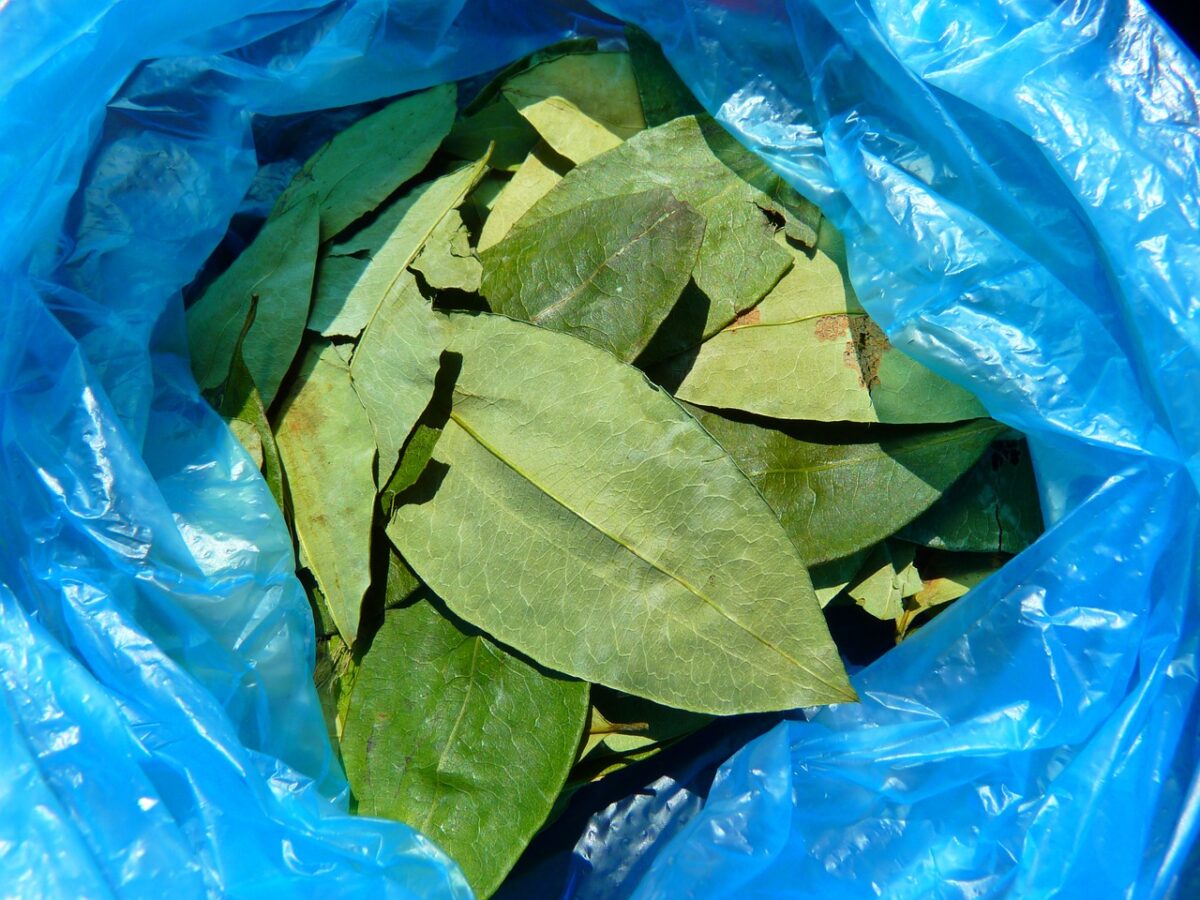
The coca plant is a highly branched shrub or small tree with alternate leaves that are oval, lanceolate, or elliptical, ending in a point. They are hairless and feature a characteristic reticular venation that stands out on the underside. These leaves, measuring 6 to 10 cm (2.4 to 3.9 inches) in length and 2 to 4 cm (0.8 to 1.6 inches) in width, have a bright green upper surface, while the underside is somewhat grayish. The flowers are small and axillary. It grows in the mountains of Peru and Bolivia at altitudes of 1,000–1,200 meters (3,280–3,937 feet). The leaves contain alkaloids, tannins, and essential oils. The alkaloids are divided into two groups: tropinone derivatives (cocaine, truxilline, tropacocaine, cinnamoylcocaine) and pyrrole derivatives (hygrine, cuscohygrine), which are water- and ether-soluble and non-anesthetic. The anesthetic and narcotic properties of the leaves are primarily due to cocaine. Cocaine (benzoylmethylecgonine) has numerous applications in pharmacology and medicine, especially as an anesthetic.
Indigenous people in South America slowly chew the leaves, forming a bolus that they keep in their mouths, adding powder and ash to help resist hunger and fatigue. However, they do not abuse this masticatory. Today, Bolivian miners continue to consume it because the minerals and vitamins contained in the leaves partially compensate for the lack of fresh fruit and vegetables in their diet. Another way indigenous people prepare coca leaves is as an infusion or tea, which has a mild sedative effect. Its ability to alleviate altitude sickness is well-known. Cocaine users typically consume cocaine hydrochloride or pure cocaine in powder form by nasal insufflation.
The production of cocaine hydrochloride involves first obtaining the paste or base, which is achieved by macerating dried coca leaves in a pit with water, kerosene, and sulfuric acid. The liquid is drained, leaving a grayish paste—cocaine sulfate—to which water, acid, gasoline, potassium permanganate, and ammonia or another volatile substance (ether or acetone) are added. This yields cocaine hydrochloride, which, once filtered and dried, is reduced to a white powder.
Depending on the “cooks,” it takes three, five, or even more kilograms of base to make one kilogram of cocaine. It must be noted that ether and acetone are highly explosive substances.
The effects of cocaine differ significantly depending on the duration and quantity consumed. In the initial stage, it exerts a very strong stimulant and euphoric action, providing a sensation of superiority. As consumption intensifies and persists over time, cocaine begins to exert a significant psychic addiction. This causes the user to increase the dose, and they will soon begin to notice negative effects. After consumption, the user may suffer from severe paranoia, and their nervous system deteriorates rapidly. Their physical appearance becomes neglected; states of aggression occur, and, at times, cardiac arrhythmias, nasal septum perforation, and sexual inhibition may arise.
Cocaine hydrochloride often varies in its final finish, depending on the chemicals used in its production. There are several “qualities” that, like their presentation, also differ in their effects:
1. Perhaps the best is the so-called “Yen,” which is very white, flaky, and shiny. Its purity is unmatched, reaching nearly 98%. This cocaine produces highly stimulating effects without crossing the barrier into paranoid euphoria.
2. Among the white varieties, there is the “Chalk” type, with a powdery, dull presentation that lives up to its name. Its effects are highly euphoric.
3. Finally, there are the yellowish varieties, which usually give off a characteristic smell of kerosene or gasoline. Their effects border on tachycardia, and they are perhaps the most euphoric.
It should be noted that, as with other drugs, adulteration is often more harmful than the drug itself.
Other ways of consuming cocaine include smoking the base (crack) or intravenous injection. These methods create a higher level of addiction and greater physical and mental deterioration. Crack, like injected cocaine, produces an instant and powerful flash even at low doses. Crack, or base, was marketed by Colombian cartels as a result of drug prohibition laws. The crackdown on chemicals used to process cocaine and the resulting price increases led to the large-scale commercialization of cocaine base, which is also cheaper.
KHAT (Catha edulis)
This is a shrub with persistent, leathery, glabrous, and serrated leaves. Natives of the countries where this shrub grows (Ethiopia and Arabia) chew the tender shoots, which contain several stimulant alkaloids. This plant or tree, 2 to 10 meters (6.5 to 33 feet) tall, grows spontaneously in Abyssinia, Kenya, Uganda, and Egypt.
An alkaloid in Catha edulis, cathine, possesses chemical characteristics corresponding to dextronor-isoephedrine, with a formula and chemical structure almost identical to amphetamine; its effects on the body resemble those of amphetamines, at least at moderate doses. But because the action of khat leaves—especially when fresh—is more intense than the proportion of cathine they contain (which does not reach 0.1% in the best leaves), it is thought that they also contain small proportions of amphetamine. Two other khat alkaloids are cathinine and cathidine. Cathine is found in a crystalline state, in the form of long, thin needles, with a bitter taste and very low water solubility. It appears that khat leaves possess, on one hand, exciting and stimulating properties similar to those of coca leaves and cocaine; however, at very small doses, symptoms typical of morphine are observed. The most sought-after parts are the green, tender leaves. Dried leaves are ground into a fine powder, mixed with sugar, spices, and water, and prepared into a paste that is chewed. Dried leaves can also be smoked like cannabis.
In the long term, khat can cause cardiac and libido disorders similar to those seen in heavy cocaine users.
EPHEDRA (Ephedra vulgaris Rich., E. distachya, E. sinica Stapf.)
Thanks to their high ephedrine content, varieties of ephedra are found in virtually all temperate and subtropical regions. From a medical perspective, the most interesting ones are those from central China, Japan, and southern Siberia. They usually grow in sandy terrain near the sea. Other medicinal ephedras listed in various European pharmacopeias include E. equisetina Bunge, E. intermedia Schrenk, E. gerardiana Wall, and E. nebrodensis. All these varieties are useful in the production of ephedrine.
Ephedra (E. vulgaris) is a shrub with a habit similar to horsetail, about 0.5 to 2 meters (1.6 to 6.5 feet) tall, with articulated light green branches. The leaves are small, scaly, and joined at the base. The flowers are yellow or green and grouped in catkins. The fruit is an achene with two carpels and a seed inside, with fleshy bracts, similar to a red berry.
Another plant from which we can extract ephedrine is the yew (Taxus baccata), which grows in some parts of Spain. This plant can have fatal consequences for humans, as the entire plant is highly poisonous except for the fleshy fruit surrounding the seed; however, these fleshy parts can be used, and if squeezed, they serve to prepare a stimulant syrup thanks to their ephedrine content.
Due to their chemical composition and psycho-stimulant effects, which are almost identical to those of cathine, both natural plant alkaloids have been aligned with amphetamines in the group of dynamogens, specifically the acopic subgroup, which overcome tiredness and inhibit the sensation of fatigue. This substance acts potently as a stimulant of the sympathetic system and smooth muscle fibers, similar in action to adrenaline, from which its medicinal virtues derive.
The medicinal virtues of ephedrine are numerous. Internally, the alkaloids exert a strong bronchial dilating effect and raise blood pressure, making ephedra an effective remedy in the treatment of asthma, pulmonary emphysema, and spasmodic coughing fits. Furthermore, recent research points to possible anti-inflammatory and antitumor qualities.
Its side effects are numerous, of an adrenolytic type, and include, among others, mydriasis (dilation of the pupils), vomiting, headaches and abdominal pain, sweating, tachycardia, and hypertension. Ephedrine taken in large quantities produces the same degenerative effects as cocaine. In some cases, it resembles amphetamine-induced paranoid psychosis.
The plant can be prepared as an infusion (1 teaspoon per cup, twice a day) or as a tincture (5 g, several times a day).
Ephedrine is a precursor to amphetamines and, in its case, phenylaminopropane. This substance is currently prescribed primarily as an anti-asthmatic medication, as a peripheral circulation tonic, as an anti-allergic, and as a nasal vasoconstrictor for rhinitis. In all these cases, it is not difficult to find it in pharmacies as asthma inhalers or nasal sprays. In the U.S., it is sold normally and completely legally in sports products like Ripped Fuel, by the brand Twinlab (also in Spain), and as an active component of many stimulants, aphrodisiacs, and euphoriants.
It is possible to purchase ephedrine hydrochloride in pharmacies under the brand name Efedrina Level. This medication contains 50 mg of completely pure ephedrine hydrochloride and is sold over the counter.
KOLA NUT (Cola acuminata)
Kola nuts are seeds without endosperm obtained from Cola acuminata and are used for their stimulant properties and to mitigate hunger and fatigue.
It is a tropical tree reaching up to 15 meters (49 feet), with alternate, leathery leaves that move following the light. The fruit is dark yellow and consists of 4 or 5 woody pieces around the floral peduncle. Each of these pieces contains 5 to 9 seeds (kola nut), which are very rich in caffeine (2%), theobromine (2%), tannin, sugar, starch, oil, and potassium oxide.
The fruit has euphoric and exciting properties that, like betel, when mixed with other enhancing and synergistic substances, can have significant effects.
CAFFEINE (Methylxanthine)
Caffeine is normally extracted from Coffea arabica. This substance is one of the most powerful psycho-stimulants. Initially, caffeine stimulates the cerebral cortex, then acts on the medulla oblongata, and finally on the spinal cord. Caffeine creates rapid addiction, even faster than other drugs.
Caffeine is ultimately a potent stimulant, although in high doses it produces the opposite effect. In pharmacies, pure caffeine can be purchased under the name Durbitan.
Another way to acquire caffeine, but on the black market and as a component of a psychoactive substance, is mixed with nicotine in capsules called “Love Hearts,” the effect of which is to create a state of euphoria.
A close relative of caffeine is theophylline, which is extracted from the tea plant. Its effect is more powerful than that of coffee, but the way it is taken—by decoction of dried leaves instead of ground—means those properties do not manifest as clearly.
A cup of coffee has an average of 70 mg of caffeine, and a cup of tea about 100 mg. Excessive use of coffee causes gastric disorders, headaches, insomnia, excitement, depression with muscle tremors, double vision, ringing in the ears, dyspnea, testicular pain, prostatitis, and a psychosis with delusions, vertigo, and convulsions. Professional tea tasters suffer from a syndrome that in the most severe cases includes stomach problems, headaches, hypochondria, memory weakness, vision defects, and, eventually, atrophic cirrhosis.
GUARANA (Paullinia cupana)
Guarana is extracted from this plant, a preparation based on ground seeds mixed with cocoa and tapioca. Guarana has a higher caffeine content than coffee and, in addition to this alkaloid, contains theobromine, another stimulant alkaloid, among other substances.
Guarana is used as a general stimulant, cardiac tonic, aphrodisiac, and, in some cases, as a nutritional stimulant and diuretic.
Over-ingestion can cause anxiety, cerebral excitement, hallucinations, insomnia, tremors, and depression.
STROPHANTHUS (Strophantos)
These are exotic plants from Central Africa, often lianas, whose active principles, rich in strophanthin and coumarin, are widely used as cardiotonics. Strophanthin is a glycoside that crystallizes in white needles soluble in water and alcohol and insoluble in ether.
The main alkaloid of Rauwolfia serpentina (from China and India) is reserpine, which is hypotensive and psychoactive. Reserpine was the first “major” neuroleptic or tranquilizer marketed in the 20th century.
FOXGLOVE (Digitalis purpurea)
Foxglove was already used as a medicinal, emetic, purgative, and vulnerary plant in England and Wales in the 10th century.
Foxglove is widespread throughout Western Europe, the south and west of the Iberian Peninsula, the Balearic Islands, and, specifically, in the Sierra Nevada, the Pyrenees, and Gredos. It can be found in uncultivated soils, among rocks and crags, in clearings of oak, beech, and fir forests, and among thickets. It can be grown in gardens as an ornamental plant.
From a rosette at ground level, a series of large, elliptical, rough, and coarse leaves emerge. The stem, 70 to 150 cm (27 to 59 inches) tall, is hairy, unbranched, and has few leaves of variable shapes and soft texture. At the end of the stem hang large, tubular, and bell-shaped flowers, with a purple or dark reddish color.
Foxglove, a member of the Scrophulariaceae family, is one of the most prescribed and important plant-derived drugs in modern medicine. It owes its activity to cardiac glycosides (digitalin, digitoxin, gitoxin), especially digitoxin, a white microcrystalline powder that increases the tone of the heart muscle and makes the heart empty more effectively. These glycosides are insoluble in water. Foxglove, therefore, promotes neuromuscular activity, is cardiotonic, and improves and normalizes heart action. The active principles are found in the seeds and leaves. These leaves are collected (with gloves) during the flowering season, in summer—May to July—in the late afternoon, on a dry and sunny day. Dry quickly in the shade or sun. Store in hermetically sealed containers, away from light and moisture.
Homemade preparations are dangerous due to their toxicity, the difficulties of dosing—medicinal doses are very close to toxic ones—and the intolerance that some people may have. The cumulative action of its active principles is very negative due to the difficulty of their elimination by the body. Its use must be regulated by a medical specialist. Although, as Paracelsus said: “The dose makes the poison.”