

A molecule that reopened a dormant field
LSD was not just the most potent psychoactive substance ever characterized relative to its dose. Above all, it was a trigger: its emergence returned interest to laboratories for compounds that humans had been using since ancient times. In Hofmann’s account, the personal history of the molecule intertwines with the much older history of Mexican entheogenic plants.
Subsequent experiments following that first planned trial, conducted with volunteer colleagues at Sandoz laboratories, confirmed the extraordinary activity of LSD on the psyche. Qualitatively, its effects resembled those of mescaline, an alkaloid known long before; quantitatively, however, there was no comparison: LSD was thousands of times more active per unit of weight.
This disparity was not merely an anecdote of potency. It had theoretical consequences. If an infinitesimal amount of a substance was enough to alter perception, thought, and mood, it seemed reasonable to suspect that undetectable traces of some compound produced by the body itself might be behind certain mental disorders. What had been considered “purely psychic” began to have a biochemical horizon.
The sacred plants that survived the conquest
LSD was unprecedented in its potency, but not in its entheogenic nature. The Spanish chroniclers and naturalists who arrived in Mexico after the conquest described numerous plants with mind-altering effects, unknown in the Old World and used by indigenous peoples in both medicine and ritual. The Church fought them as “demonic possession” with only partial success: many communities continued to use them in secret, considering them sacred even after their conversion to Christianity.
Three plants occupied a central place in these practices, and they are still used today by healers in the most remote areas:
- Peyote, a cactus.
- Teonanácatl, literally “sacred mushroom.”
- Ololiuqui, the seeds of certain morning glories.
Peyote was the first to pass through the sieve of science, as early as the beginning of the 20th century. The pharmacologist and toxicologist Louis Lewin described it in his classic work Phantastika, where hallucinogens were characterized and classified for the first time as a distinct group within psychoactive drugs. In his honor, the cactus was named Anhalonium lewinii. Lewin and Arthur Heffter isolated mescaline from peyote in 1896, and in 1919 Ernst Späth, in Vienna, clarified its chemical structure and managed to synthesize it. With a pure compound in hand, it was possible for the first time to study hallucinogenic effects from a pharmacological and clinical perspective; that first wave of research crystallized in another reference monograph, Der Meskalinrausch by K. Beringer. Afterward, interest waned for decades until LSD reactivated it in the 1940s.
Teonanácatl arrives in Basel
Precisely because Sandoz had experience with LSD, the second of those Mexican entheogens—teonanácatl—ended up in their laboratory for analysis. The ritual use of mushrooms dates back thousands of years: in Guatemala, the so-called “mushroom stones” are preserved, monuments that some Mesoamerican cultures erected in honor of these fungi. Despite their antiquity, Western knowledge of the subject is recent: chroniclers barely paid attention to it, perhaps considering it a minor superstition.
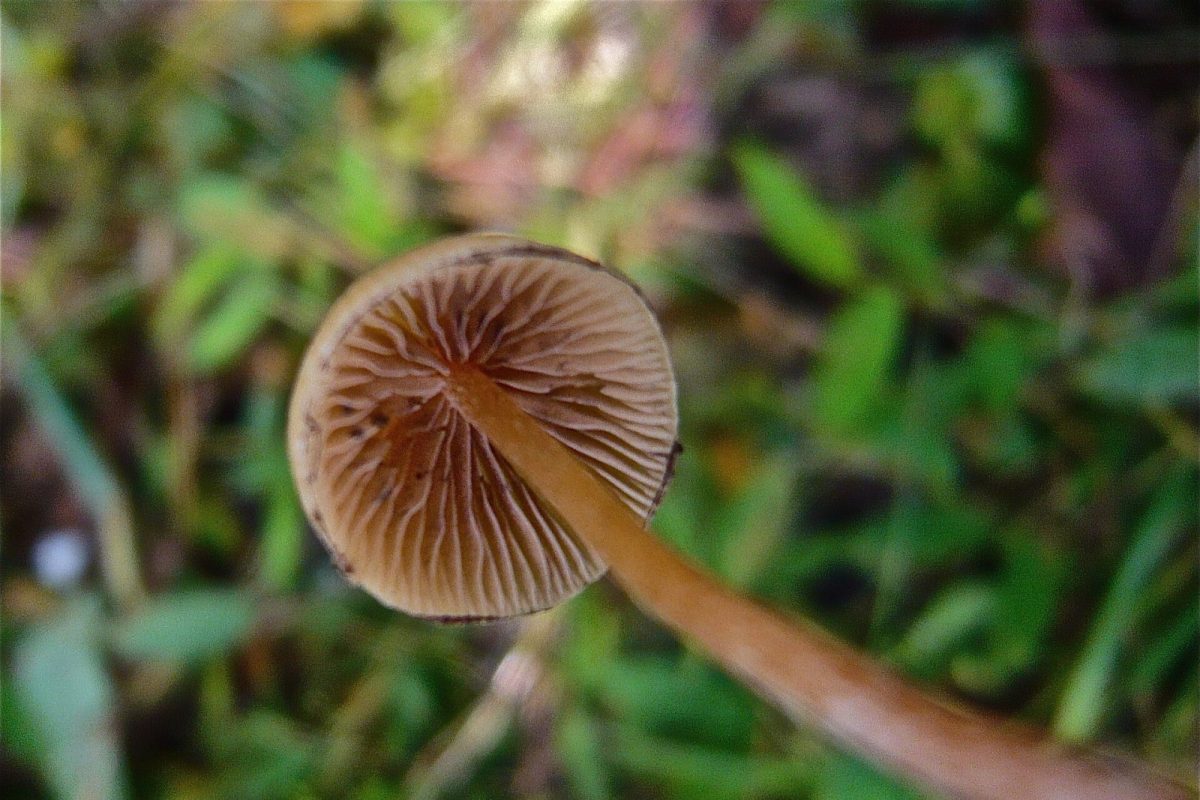
It was not until 1936–1938 that researchers like Weitlander, Reko, Johnson, and Schultes confirmed that mushrooms were still being ingested for magical purposes in remote areas of southern Mexico. The systematic study of the living cult was undertaken by R. Gordon Wasson and his wife: in the summer of 1955, Wasson participated in a nocturnal ceremony in Huautla de Jiménez (Oaxaca) and was, likely, the first Westerner to take the sacred mushrooms in that context. In a subsequent expedition in 1956, he was accompanied by the mycologist Roger Heim, director of the Cryptogamic Laboratory at the National Museum of Natural History in Paris, who identified and botanically classified the mushrooms. They belonged primarily to the genus Psilocybe, with some species from the genera Stropharia and Conocybe. Laboratory cultivation yielded good results with one of them: Psilocybe mexicana Heim.
After attempts to isolate the active principle in Paris failed, Heim sent the mushrooms to Sandoz in Basel. Initial tests on animals—pupillary reaction and piloerection in mice, general behavior in dogs—were inconclusive, and there was doubt as to whether the cultivated and dried material still retained activity. To resolve this doubt, Hofmann decided to test it on himself, ingesting 32 dried specimens of Psilocybe mexicana, an amount equivalent to an average dose according to indigenous usage. From that trial comes the first documented account of a psilocybin experience.
The first psilocybin trip, in his own words
“Thirty minutes after ingesting the mushrooms, the outside world began to undergo a strange transformation. Everything assumed a Mexican aspect. As I was totally certain that my knowledge of the origin of the mushrooms would lead me to imagine a Mexican setting, I tried to look at my surroundings in the way I normally did. But all voluntary efforts to see objects with their usual shapes and colors proved ineffective. Whether my eyes were closed or open, I saw only Mexican motifs and colors. When the doctor supervising the experiment laid me down to check my blood pressure, he transformed into an Aztec priest, and I would not have been surprised if he had pulled out a flint knife.
Despite the seriousness of the situation, I was amused to see how the Germanic features of my colleague’s face had acquired a purely Indian expression. At the peak of the intoxication, an hour and a half after ingesting the mushrooms, the incessant succession of images—mainly abstract motifs that changed rapidly in shape and color—reached such an alarming level that I feared I would become that shape and color myself and dissolve. After about six hours, the dream began to fade. Subjectively, I had no idea how long the experience had lasted. I felt my return to everyday reality as a happy return from a strange and fantastic—but real—world to an old and familiar one.”
The account is doubly valuable: as a testimony to the phenomenology of psilocybin and as a document of a way of researching that would be unthinkable today. It is best read in its context. (To be continued.)
Critical reading
The text belongs to Hofmann’s scientific memoirs and retains the language of his era: he speaks of “intoxication,” “magic drugs,” and “white man” in a sense that we would nuance today. Some statements deserve to be put into perspective:
- Self-experimentation is not a model for anything. That a chemist would administer an unknown substance to “clarify a point” reflects the laboratory culture of the mid-20th century, not a replicable standard. It is not a recommendation or a guide: it is a historical episode.
- Wasson’s account as the “first Westerner” requires caution. It reproduces a Eurocentric gaze that renders centuries of indigenous knowledge invisible. Knowledge of these mushrooms did not begin in 1955; it existed long before and belonged to the communities that guarded it, often at the cost of their privacy and cultural heritage.
- From fascination to respect. Psilocybin is being researched today in controlled clinical contexts, with set and setting, standardized doses, and professional support. None of that resembles the isolated self-experimentation described in the text, nor does it replace it.
As historical dissemination, the document is top-tier. As a model of conduct, it is not: prudence, context, and harm reduction came later, and precisely because accounts like this showed how little was known.


