

One Fungus, Three Opposing Reputations
Few substances illustrate better than ergot the old idea that no drug is inherently good or bad; what matters is the knowledge surrounding it and how it is used. This cereal parasite has been three things at once to humanity—a toxic agent capable of killing, a vehicle for entheogenic experiences, and a raw material for pharmaceuticals—depending on who was handling it and with what level of expertise.
In previous installments of this series on Albert Hofmann, we saw how ergot served as the gateway to the discovery of LSD and an entire family of medications. Here, we shift our focus: we are interested in the fungus itself—its biology, its historical trajectory, and the nebula of claims surrounding it—rather than the life of the Swiss chemist.
What Exactly Is Ergot?
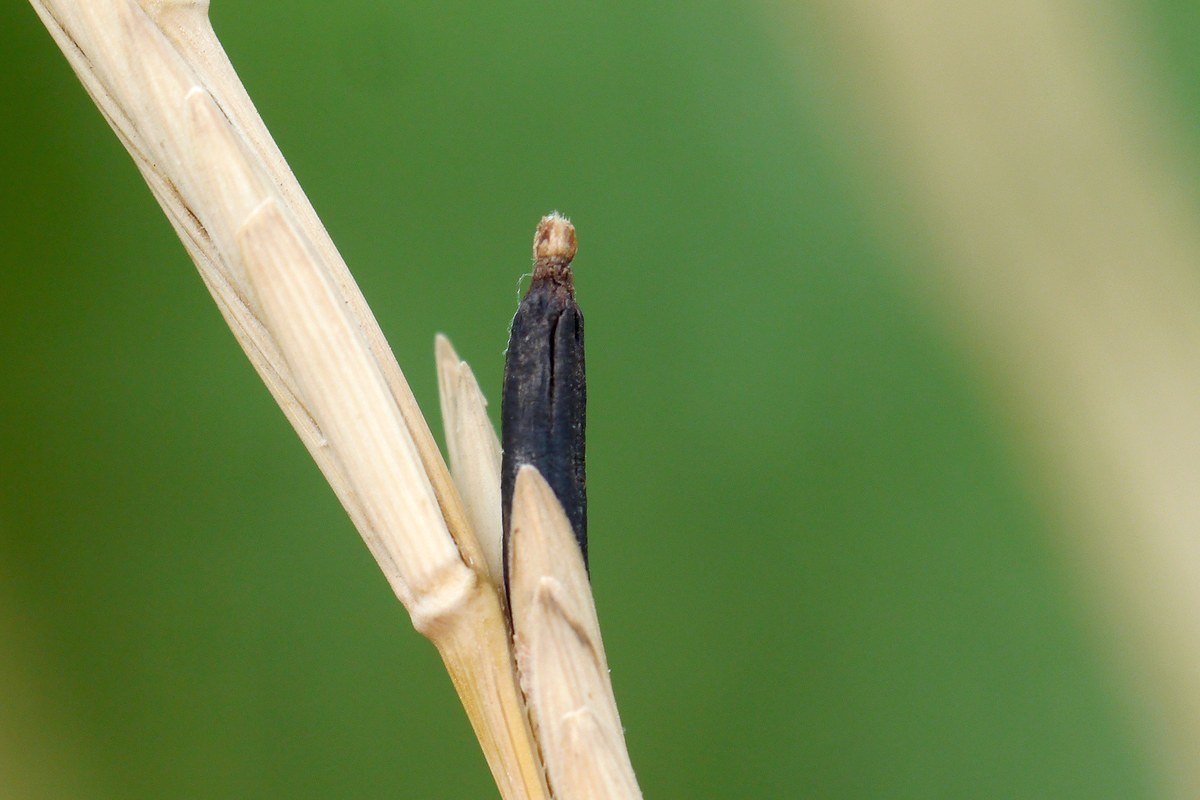
Ergot is an ascomycete, Claviceps purpurea, which infects the grains of rye, wheat, barley, and other cereals, as well as various wild grasses. The name refers to its shape: a dark, purple-to-black outgrowth resembling a small spur. The term “ergot” comes from the French word for a rooster’s spur, first documented in a region near Paris.
The important part is not a “plant” in the strict sense, but the sclerotium: the hardened structure the fungus uses to survive the winter. After infecting the grain head via spores, it forms those purple sclerotia that protrude from the ripening grain; they later fall to the ground, hibernate, and fruit with the spring rains. The public health problem arises when these sclerotia are harvested along with the grain and end up ground into flour, loading it with toxic alkaloids without anyone noticing.
A revealing detail of how elusive it has been to science: the fungus has accumulated dozens of common names—dozens in German and French, several in Dutch, Italian, English, and Scandinavian languages. This terminological tangle has always hindered its identification in ancient texts. It is no coincidence that ergot was described as “the problem child of medical textbooks,” a label reminiscent of the one Hofmann would later give to LSD.
The Dark Side: When Bread Was Poisonous
For centuries, ergot present in poorly screened cereals caused mass poisonings. Its effects—gangrene of the extremities, convulsions, miscarriages, death—were suffered long before the cause was understood. Some authors argue that these episodes were frequent enough to leave a mark on European demographics. This is the side that should not be romanticized: the same compound that opened the door to modern psychopharmacology killed entire populations that were unaware of what they were living with.
Ancient Traces: Assyria, Persia, and the Limits of Knowledge
The most remote accounts are fragmentary and must be approached with caution. An Assyrian tablet from the 7th century BCE seems to mention ergot in cereals, describing it as a “noxious pustule in the ear of grain.” And in 4th-century BCE Persian sacred texts, there is an allusion to a “certain evil herb” that would cause uterine prolapse and death during childbirth in women. These are suggestive clues, not conclusive evidence: identifying the fungus in a dead language is exactly what the confusion of names makes slippery.
Did Ancient China Know It?
In the mid-19th century, French authors claimed that ergot had been used in China for obstetrics and gynecology “since time immemorial,” and later works on the history of Chinese medicine added that rye, corn, and rice ergot were used. The problem is that these claims rarely provide concrete citations from classical texts. For example, Zhang Zhongjing—the “Chinese Hippocrates” of the 2nd century CE—is invoked, whose formulary addressed infertility, pregnancy disorders, and postpartum weakness; however, there is no reliable basis to ensure he used ergot. It is a good reminder of how much “settled history” regarding drugs is actually based on second-hand sources.
Pre-Hispanic Mexico: Ololiuqui and Hofmann’s Circle
The Aztec case is different because here, modern chemistry confirmed the intuition. The Aztecs used visionary plants in their religious and healing ceremonies, and one of them was ololiuqui, a seed that 16th-century Spanish chroniclers described as a concoction that “stunned and confused the senses” and which priests used to “commune with the gods.” Upon analyzing it, Hofmann discovered it contained alkaloids related to those of ergot—including lysergic acid amide, which is chemically close to LSD.
For Hofmann himself, it was a symbolic closure: he had started by investigating ergot alkaloids for pharmacological purposes, which led him to LSD and from there to the synthesis of psilocin and psilocybin from the Central American teonanácatl; and while studying ololiuqui, he found himself once again with ergot alkaloids. The starting point and the destination coincided. It is best to read this as what it is—a narrative by the protagonist himself, elegant and coherent—without turning it into proof of a cosmic plan.
Greece and Eleusis: The Most Famous and Debated Hypothesis
If the Greeks had a specific word for ergot, it has not reached us, and that is enough to make the terrain swampy. It is plausible that they knew both its toxicity and some therapeutic use, but expert opinions are divided: some argue that Greeks and Romans used it medically, while others deny it.
The most famous piece is the thesis by Hofmann, Gordon Wasson, and Carl Ruck, according to which the kykeon, the ritual drink of the Eleusinian Mysteries, contained an ergot preparation capable of inducing a collective entheogenic state in thousands of initiates. It is a fascinating and reasoned hypothesis, but it remains just that: a hypothesis that is difficult to confirm, not an established fact. It is part of the appeal of the subject—and also of the honesty required—to keep both things in mind.
Critical Reading and Harm Reduction
Three cautions for reading any history of ergot, this one included:
- Many claims, few citations. A good portion of “ancestral uses” are repeated from author to author without verifiable references. The identification of the fungus in ancient languages and cultures is, almost always, a conjecture.
- The Eleusis thesis is not settled. It is the most suggestive reading, but also the most debated; it should be presented as a proposal, not as a fact.
- Ergot is not a recreational material. Its alkaloids are potent vasoconstrictors and neurotoxins; historical poisonings (gangrene, convulsions, miscarriages) are not anecdotes of the past, but the reason why its use today remains in regulated pharmaceutical hands. There is nothing to “test” at home here: this article is historical education, not a guide for preparation or consumption.
For those who want to go to the sources with a critical eye, the classic frameworks that any interested person will find cited again and again are Plants of the Gods (Schultes, Hofmann, and Rätsch), Pharmacotheon (Jonathan Ott), the monograph The Story of Ergot (Frank Bove), and Hofmann’s scientific autobiography regarding LSD. It is best to read them by contrasting them with one another, not as revealed truth.