


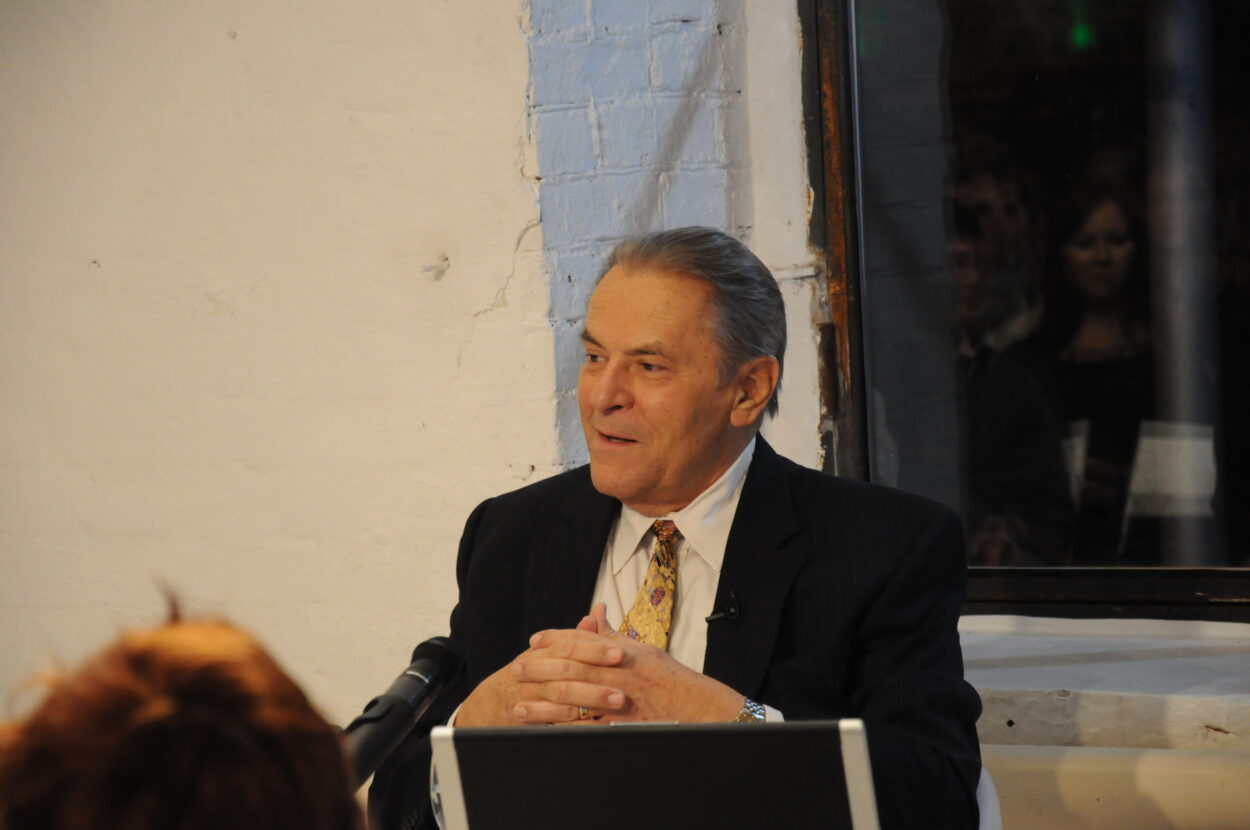
Stanislav Grof, M.D., Ph.D., is a psychiatrist with over thirty years of research experience investigating non-ordinary states of consciousness induced by psychedelic substances and various drug-free techniques.
He was born in Prague, Czechoslovakia, where he also pursued his scientific education—receiving an M.D. from Charles University Faculty of Medicine and a Ph.D. from the Czechoslovak Academy of Sciences. His earliest research into the clinical applications of psychedelic drugs was conducted at the Psychiatric Research Institute in Prague, where he served as principal investigator in a program studying the heuristic and therapeutic potential of LSD and other psychedelic compounds. In 1967, he was invited as a clinical and research fellow to Johns Hopkins University in Baltimore, Maryland. After two years, he decided to remain in the United States, continuing his clinical investigations as Chief of Psychiatric Research at the Maryland Psychiatric Research Center and assistant professor of psychiatry at the Henry Phipps Psychiatric Clinic of Johns Hopkins University. In 1973, he was invited to the Esalen Institute in Big Sur, California, where he lived until 1987 as scholar-in-residence writing, conducting seminars and workshops, and developing Holotropic Breathwork—an innovative form of experiential psychotherapy—with his wife Christina. He also served on Esalen’s Board of Trustees.
He currently resides in Mill Valley, California, leading training workshops for professionals in Holotropic Breathwork and transpersonal psychology (Grof Transpersonal Training) while conducting seminars worldwide. He is one of the founders and chief theoreticians of transpersonal psychology and founding President of the International Transpersonal Association, under which he has organized major international conferences in the United States, India, and Australia.
Eleventh International Transpersonal Conference:
“Spiritual Quest, Attachment, and Addiction,” Eugene (Oregon). September 1990. Part Two.
Spirituality Versus Religion
I would now like to address the relationship between spirituality and religion. I consider it extraordinarily important that the distinction between the two be made crystal clear before we proceed to examine the connections between science and spirituality. Science and dogmatic religion can never truly be reconciled, but reconciling science with genuine spirituality is in fact quite natural and straightforward. We must not make the mistake of thinking that modern consciousness research and transpersonal psychology’s rediscovery of spirituality constitutes an endorsement of conventional organized religion; rather, it represents a rediscovery of authentic spiritual experiences—such as the experience of death and rebirth, past lives, cosmic unity with the universe, or identification with animals. In the holotropic breathwork demonstration preceding this talk, we already witnessed the kinds of experiences participants underwent: deep identification with nature, with animals, and with wider dimensions of existence.
These experiences frequently convey genuinely novel information regarding their subject matter: one can have a transpersonal experience involving a lion, and consequently learn far more about lions than one ever could by watching a documentary film or reading an academic text on zoology. Or one might experience an “out-of-body” state in which consciousness travels to observe what is occurring in another room of this building, or even events unfolding two hundred miles away. In other words, these are valid and legitimate phenomena capable of transmitting a vast body of knowledge about the universe that transcends purely intellectual deduction and, in this sense, demands to be taken seriously.
Now, this kind of transpersonal experience frequently arises within mystical religious contexts or within contemplative monastic orders whose members practice disciplines such as meditation. However, it has absolutely nothing to do with the Vatican, ecclesiastical hierarchies, or institutional priesthoods; these are deeply personal, individual, and authentic experiences that remain thoroughly compatible with genuine scientific inquiry, as I shall demonstrate shortly. They must never be confused with the dogmatism, fundamentalism, and rigid ritualism of conventional churches, which are just as alien to authentic spirituality as they are to science. From the perspective of transpersonal psychology, one can clearly see how this distortion occurs: in the cradle of virtually all major religions lie the transformative spiritual experiences of their original founders, mystics, or prophets. These direct experiences constitute the primordial fountainhead of that faith; yet later, once an institutionalized hierarchy establishes itself, an array of secondary factors intervenes, severing connection with the original source of inspiration.
Brother David Steindl-Rast, whom I mentioned earlier, compares this dynamic to a volcano: the original spiritual illumination is the incandescent, living volcanic magma, churning with raw creative energy, whereas the institutional church that eventually solidifies over it is the cold crust of hardened lava—something that was once alive, but has now become completely ossified. This explains why conventional religious institutions may foster cohesion among their own adherents, yet simultaneously breed violent division throughout the world between their flock and outsiders: Christians against pagans, Hindus against Muslims, culminating in religious wars and sectarian slaughter.
Every established religious tradition possesses its own mystical currents: Christian mystics, Sufis within Islam, Kabbalists and Hasidim within Judaism. Within these lineages, seekers pursue direct personal experience of the divine through transformative practices such as meditation, sacred dance, and breathwork, allowing them to participate directly in divine reality. This experiential dimension is precisely what transpersonal psychology investigates. It does not occupy itself with dogmatic religion or with historical atrocities like the Crusades or the Inquisition, which pertain to political control, manipulation, and temporal power—matters of historical study entirely devoid of spiritual substance. Indeed, one can easily conceive of a religious institution that holds no relationship to authentic spirituality whatsoever, serving instead as an active barrier against it. Carl Gustav Jung astutely observed that the primary sociological function of most established churches is to shield people from a direct, unmediated encounter with God.
A dear friend of mine, Walter Houston Clark—a widely respected professor who authored standard textbooks on the psychology of religion—finally underwent a profound mystical experience after teaching the subject academically for twenty years. Only then did he truly comprehend the living reality he had spent decades writing about purely conceptually.
One might compare conventional churchgoing to an inoculation: one attends service on Sunday and receives a mild social vaccine designed precisely to prevent the onset of the genuine spiritual experience. Parents take their children to church on Sunday, basking in self-righteous piety while looking down in condemnation upon their neighbors who stayed home.
Types of Spiritual Experience and Their Connection to Addiction
Authentic spirituality demands direct, unmediated contact with the transpersonal dimension. There are two primary categories of spiritual experience. The first is immanent spirituality, wherein ordinary reality continues to be perceived normally—trees, people, the sky, flowers, and the chairs around us maintain their physical forms—yet everything appears radically transformed. Boundaries soften, every element shines with intense vitality, unified within a single coherent field of vision and creative cosmic energy. Even the most mundane object reveals itself as divine craftsmanship, an expression of cosmic intelligence; nothing is added externally, yet our entire perception has undergone a luminous shift. A helpful analogy is watching a black-and-white television screen that suddenly bursts into brilliant, full living color.
The second category is transcendent spirituality, where something radically different manifests—such as an awe-inspiring vision of the Virgin Mary, the goddess Kali, earthly paradise, or an overwhelming divine light, as is frequently reported in near-death experiences. These represent the two fundamental modalities of mystical awakening that concern us here.
Spiritual awakenings typically occur in two principal ways. One arises in conditions of extreme despair, clinical depression, and spiritual bankruptcy—a threshold of crisis where every human exit seems blocked and suicide appears imminent. Suddenly, an inner breakthrough occurs, transcending the crisis through a radical ego-death. The second avenue unfolds under harmonious circumstances: for example, floating peacefully on a raft down the Colorado River, beholding the majestic geological formations of the Grand Canyon, when suddenly the distinction between the raft and oneself dissolves; one can no longer separate oneself from the canyon walls or the sky, overwhelmed by an exhilarating sense of cosmic unity. This can happen to performing artists on stage, to someone listening to sublime music, or to travelers visiting sacred architecture such as the Taj Mahal.
These are the phenomena Abraham Maslow termed “peak experiences,” and they hold immense relevance for addiction and recovery. For many individuals battling alcoholism and severe dependence, such breakthroughs happen in the most unexpected circumstances. Bill Wilson, co-founder of Alcoholics Anonymous, was confined to a hospital bed in the depths of total despair when his decisive awakening took place:
“Now he faced nothing but impending insanity or death; this was the absolute end, the ledge from which he must take the final plunge. Threatening darkness enveloped him completely, and in his utter helplessness and desperation he cried out: ‘I’ll do anything, anything at all, if only I can be saved!’ Having reached unconditional surrender, he shouted: ‘If there be a God, let Him show Himself!’ Bill then described what followed: Suddenly my hospital room filled with an extraordinarily intense white light, and I was seized by an indescribable ecstasy. I seemed to be standing upon the summit of a vast mountain where blew a wind not of air, but of pure spirit, blowing through me in great gusts. An incontrovertible realization seized me: ‘You are a free man!’ A deep peace settled over me, and I became intensely aware of the living presence, feeling as though I were immersed in an infinite sea of pure Spirit. I was resting upon the shores of a new world, and for the first time felt that I truly belonged. I knew I was capable of loving and being loved.” From that transformative moment forward, Bill Wilson never drank alcohol again.
This episode exemplifies the vital emphasis that early Alcoholics Anonymous placed on direct spiritual awakening. Later came what William James called the “educational variety” of spiritual transformation, describing the gradual, cumulative shift cultivated through daily spiritual practice and fellowship.
To summarize, the drive toward spiritual transcendence represents a fundamental instinct within the human psyche—comparable in strength to the sexual impulse, yet far deeper and more foundational. In profound ways, chemical addiction represents a distorted, tragic manifestation of this primary yearning. Countless participants in our holotropic breathwork sessions, having undergone genuine spiritual experiences, have noted that this was what they had been seeking all along—not the numbing haze of alcohol or heroin, which offer only an impoverished, toxic caricature that impairs consciousness, but this authentic spiritual communion, bringing deep peace, perceptual lucidity, and serene harmony with the cosmos.
The Convergence of Science and Spirituality
We arrive now at the final portion of my presentation, which will be concise, though it could easily warrant an entire standalone conference, as I recently delivered in Bombay: the profound convergence between science and spirituality. My own book addressing this subject is titled “Beyond the Brain.” Conventional Western science, steeped in mechanistic materialism, persistently fails to distinguish authentic spirituality from dogmatic religion. Great spiritual philosophies such as Yoga, Tibetan Vajrayana, Taoism, and Sufism are routinely dismissed by mainstream academics as collections of folklore or naive superstition, utterly failing to recognize their sophisticated empirical nature. Similarly, within academic psychiatry, orthodox theory fails to differentiate between genuine mysticism and clinical psychosis; direct encounters with spiritual realities are reflexively pathologized as psychotic episodes requiring chemical suppression. Entire volumes have been compiled debating the psychiatric diagnoses of figures like Jesus, Muhammad, Ramana Maharshi, or Sri Aurobindo—just as anthropological literature has frequently pathologized shamans as ambulatory psychotics, hysterics, or epileptics. Franz Alexander, an eminent psychoanalyst, went so far as to describe meditation as an artificially induced form of catatonia, implying that no healthy person would practice it. Thus, within orthodox materialism, spiritual experiences are regarded as evidence of defective intellect, superstition, or early developmental fixation—suggesting that contemplation of God is merely unresolved neurosis with one’s biological father. Direct spiritual encounters are automatically dismissed as severe mental pathology.
This orthodox posture suffers from severe methodological flaws. First, it arbitrarily ignores direct empirical observation and personal testimony in transpersonal states. Under this dogma, one is forced to claim that transpersonal events simply cannot occur in our universe. This is particularly striking in out-of-body experiences (OBEs), where extensive documented evidence exists of clinically unconscious patients—lying near death with eyes closed while medical teams attempt resuscitation—whose awareness detaches from their physical bodies, observing procedures from near the ceiling or perceiving events occurring in adjacent hospital rooms or miles away. Upon resuscitation, patients accurately report specific details they could not have perceived through normal physical senses. There are even documented accounts of congenitally blind individuals perceiving visual scenes with accurate color during near-death states, only to return to blindness upon physical recovery. Such findings directly challenge conventional paradigms. Anyone indoctrinated exclusively within Cartesian-Newtonian materialism will instinctively deny such phenomena, asserting there must be an error. This vehement denial stems from a subliminal dread that taking such facts seriously would dismantle the entire mechanistic worldview. It is deemed safer to ignore them alongside the primary role of consciousness in relation to physical matter. Very few scientists are willing to confront these implications openly.
Consequently, the conventional strategy has been to dismiss the entire domain of transpersonal phenomena as unworthy of scientific study. Yet the dogmatic claim of materialist science—that physical matter represents the sole reality of the cosmos—is itself entirely unprovable. The cardinal virtue of empirical science is that hypotheses must be empirically testable and verifiable; the metaphysical assertion that matter alone exists cannot be proven, remaining pure philosophical conjecture. Transpersonal experiences, by contrast, empirically demonstrate that spiritual dimensions exist, refuting the claim that material reality is exhaustive.
A second major error is the illicit extrapolation of Newtonian physics into the realm of psychology. Materialist thinkers adopt eighteenth-century physical models and impose them upon the study of mind, dictating what psychologists are permitted to observe, report, or validate. Such philosophical dogmatism violates genuine scientific methodology, which requires observing phenomena without preconception and framing hypotheses that account for observation, rather than prescribing what phenomena are allowed to exist.
A third fallacy is the perpetual confusion between the map and the territory. Alfred Korzybski wrote extensively on this semantic failure, as did Gregory Bateson with his theory of logical types. Bateson emphasized that a scientific theory is merely a conceptual map, while reality itself is the territory; confusing the two leads to intellectual absurdity. Bateson warned that if scientists continue confusing maps with territory, they will eventually sit down in a restaurant and eat the menu instead of the meal.
Furthermore, as Ken Wilber has pointed out, whenever there appears to be an irreconcilable conflict between science and spirituality, one is invariably dealing with bad science, corrupted spirituality, or both; when both are authentic and rigorous, no conflict exists.
Finally, what is exceedingly promising is that emerging discoveries across diverse scientific disciplines are outlining an entirely new paradigm that is remarkably compatible with transpersonal psychology. While transpersonal psychology remains incompatible with rigid Newtonian-Cartesian mechanics, it harmonizes effortlessly with the cutting edge of contemporary science. Modern physics demonstrates the fundamental interconnectedness of the cosmos, assigning consciousness a role far closer to the descriptions of great mystics than to mechanical clockwork models. In biology, Rupert Sheldrake’s concept of morphogenetic fields challenges mechanistic assumptions about morphogenesis and inheritance; Western science has long struggled to account for formative causation, order, and meaning. The cosmos is increasingly recognized as an astonishing work of living art imbued with inherent purpose, completely irreducible to physical particles alone. As an analogy, attempting to describe the Mona Lisa purely as an inventory of chemical pigments completely misses its essence as art. Gregory Bateson similarly addressed this in his essay “Cybernetics of Self: A Theory of Alcoholism,” identifying ego-transcendence as the essential catalyst for genuine recovery.
This emergent paradigm portrays the universe as the unfolding expression of a cosmic intelligence—an Anima Mundi, a higher power fully conceivable in terms of advanced contemporary science. Returning to my clinical focus, I am convinced that integrating this expanded scientific perspective into psychiatry and psychotherapy will revolutionize the treatment of addictions, transform our support for individuals navigating psycho-spiritual crises, and offer profound insights for resolving our broader global crisis.