

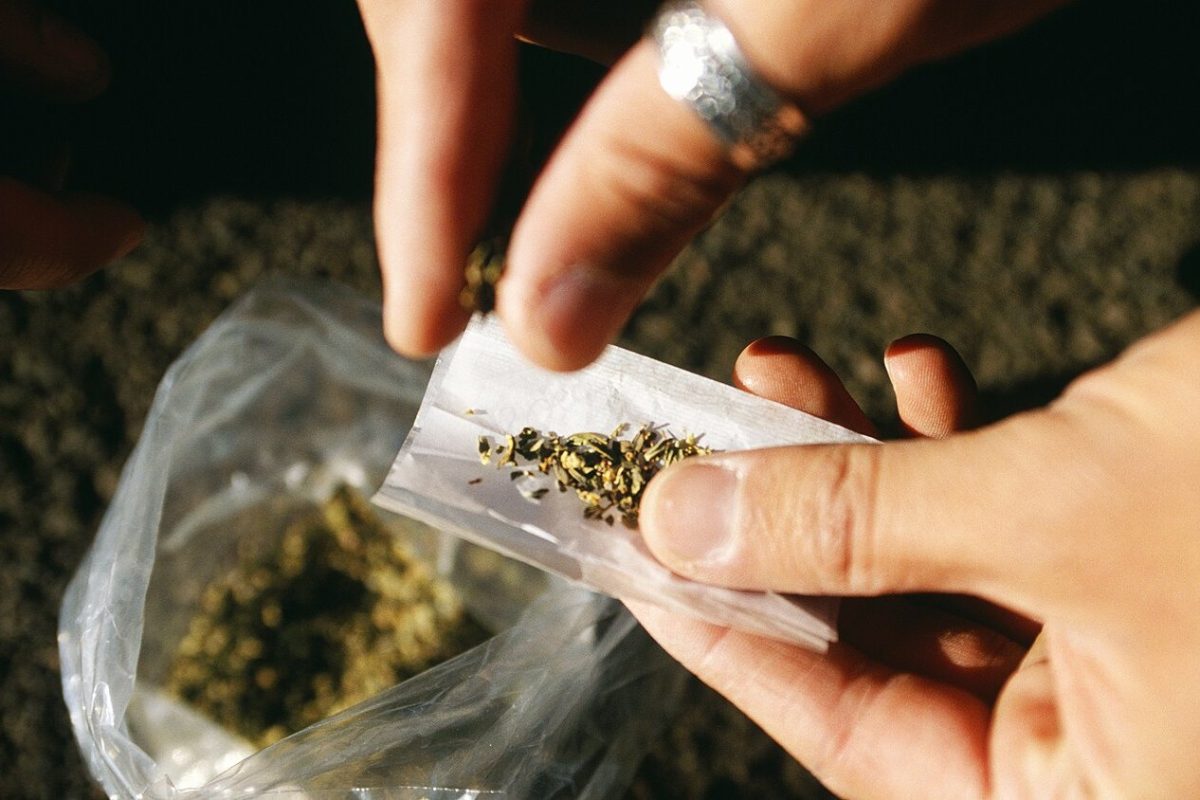
Chronic lower back pain is a condition that affects millions of people, and for many, cannabis has proven to be an effective therapeutic ally. However, given the difficulty of accessing regulated plant-based products, the temptation sometimes arises to seek alternatives on the illegal or gray market: synthetic cannabinoids. It is essential to understand that these compounds are not merely artificial versions of cannabis, but substances with a radically different chemical nature and a risk profile entirely unknown to current medical science.
In brief
- Lack of data: There are no clinical trials in humans regarding synthetic cannabinoids like JWH-018; users unknowingly act as experimental subjects.
- Unknown potency and toxicity: Although theoretically more potent, their binding to brain receptors is different, which generates unpredictable effects and overdose risks higher than those of natural cannabis.
- Risk of adulteration: When purchased online without quality control, the actual product may differ from the one advertised, exponentially increasing the danger.
- Not medications: No health authority authorizes these compounds to treat diseases; their sale is usually disguised under labels like incense or aromas.
- Medical recommendation: Harm reduction requires prioritizing regulated plant-based cannabis and avoiding any substance without scientific validation.
The Research Chemicals Phenomenon
In recent decades, the accessibility of psychoactive substances has undergone a drastic change. While in the past certain exotic psychedelics were acquired by people with specific knowledge of their risks, the current situation has deteriorated significantly. The proliferation of sensationalist news and the lack of public education have turned what was once a niche for researchers into a massive trend of consumption without guarantees.
These substances, known as research chemicals, are often marketed using misleading labels: incense, diffuser aromas, or industrial chemicals. This strategy allows vendors to circumvent legal controls, but it does not eliminate the intrinsic danger of the compound.
The Abysmal Difference Between Plant and Synthetic
Cannabis has been used by humanity for four or five millennia. Throughout this period, its pharmacology has been the subject of thorough study across multiple disciplines: ethnobotany, organic chemistry, and clinical medicine. There is sufficient epidemiological data and clinical trial evidence to establish solid recommendations regarding its benefits and risks.
Conversely, synthetic cannabinoids are molecules designed in laboratories for basic experimental purposes. A paradigmatic example is JWH-018, synthesized in 1995 by John W. Huffman. This compound was created to identify and describe cannabinoid receptors in the body, not for human consumption.
Although they structurally resemble natural cannabinoids by binding to the same CB-1 and CB-2 receptors of the endocannabinoid system, they do so differently. This structural difference is crucial: it implies that the interaction with the brain can trigger physiological and psychological responses totally different from those of natural cannabis.
Unknown Risks and Lack of Validation
The fundamental problem lies in the total absence of safety data. While the use of cannabis carries known risks (such as mild dependence or transient cardiovascular effects), synthetic cannabinoids present an indeterminate toxicity profile.
People who decide to try these substances do so under a false premise: the idea that they are simply “more potent cannabis.” The scientific reality is much more complex and dangerous. Since they have not been tested on experimental animals or humans, adverse effects can be severe, including liver toxicity, irreversible neurological damage, or severe psychotic reactions.
Furthermore, the reported potency (between four and five times higher than natural THC) lacks precise calibration. In the context of chronic pain, where dosing is critical to avoid side effects, this uncertainty represents an unacceptable risk.
The Internet Trap and Product Quality
Acquiring these compounds through online platforms implies accepting a series of additional risks. Since they are not monitored by health agencies, the products can be adulterated with other psychoactive or toxic substances without the consumer’s knowledge.
When a patient seeks relief for their lower back pain and finds an offer for a “synthetic cannabinoid” online, they are exposing their health to uncontrollable variables. The product label might indicate JWH-018, but the actual content could be an unknown mixture or even another dangerous compound.
Conclusion: Prudence and Scientific Evidence
As editor-in-chief of Psiconáutica.org, my commitment is to promote evidence-based health. Medical cannabis has demonstrated its utility for the management of chronic pain when used under medical supervision and with guaranteed quality products.
There is no clinical indication for the use of synthetic cannabinoids as a medical treatment. No disease can be safely treated using substances that act as literal “guinea pigs” in the patient’s actual clinical practice.
The decision to abandon regulated plant-based cannabis for a synthetic substitute is not a valid therapeutic option, but a leap into a scientific void. Harm reduction begins with education: knowing what we are consuming and understanding that the unknown in pharmacology is usually dangerous.
If you suffer from chronic pain or are looking for alternatives for stress management, always rely on official references, consult qualified healthcare professionals, and avoid any substance whose safety profile has not been validated by the international scientific community. Your health is too valuable to risk on unauthorized experiments.


