

One blow after another
The poet Antonio Machado once wrote that “traveler, there is no path, the path is made by walking.” It is a beautiful image, but it is worth remembering that this path is rarely smooth. Everyone’s life is strewn with setbacks: a foreclosure, a betrayal by someone we thought was a friend, infidelity, the death of a loved one, or a professional setback that hurts more than we would care to admit. You don’t have to have lived a “bad” life to collect disappointments; you just have to have lived.
The interesting part is not the blow itself, but what we do with it. Faced with the same situation, two people will respond differently depending on their biography, upbringing, prior learning, and the consequences they anticipate. Psychology sometimes summarizes this with a simple scheme of antecedents, behavior, and consequences. And here a familiar problem arises: when we are tangled in distress, we lose the very composure that would allow us to make good decisions. We think worse precisely when we need to think best.
In that bind, many people reach for something to calm the storm. For some, it is alcohol; for others, anxiolytics; for many, it is cannabis. Consumption surveys in Spain consistently place it as the most widespread illegal substance and the third most common overall among those aged 15 to 64, behind alcohol and tobacco. This is not marginal consumption: it is a highly normalized social habit, and that requires us to look at it with more care, not less.
The emotions we seek and those we dodge
There are emotions we celebrate without reservation: joy, pride, the euphoria of a good day. And there are others that most of us learn to dodge however we can: sadness, dejection, shame, anxiety. This is not a whim. Those “uncomfortable” emotions function like an alarm; the distress they produce is designed to push us to change the situation as soon as possible.
The drawback is that they don’t always leave when we ask them to. The human mind doesn’t just register what happens outside; it constructs internal scenarios, ruminates, anticipates, and reopens wounds. In those “parallel worlds,” one can get trapped for hours or weeks, circling dead ends. Once there, resorting to something that lowers the intensity is understandable, and cannabis is one such resource.
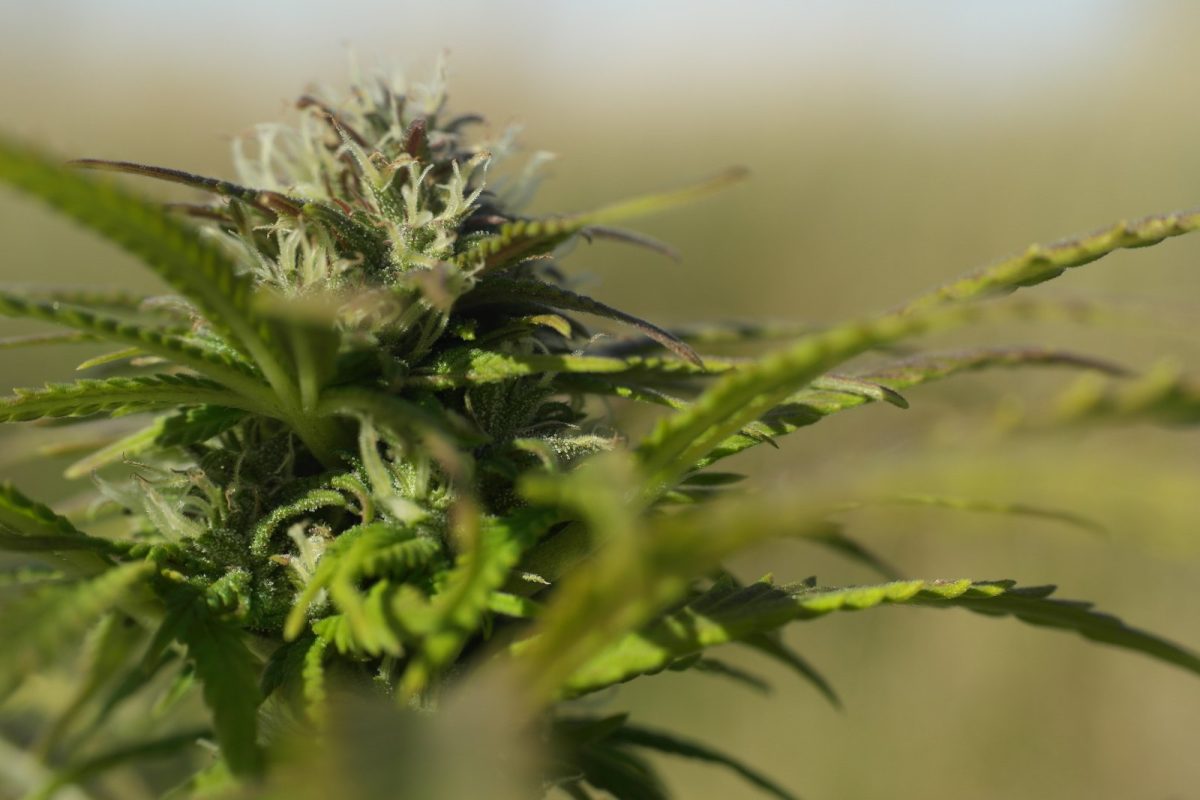
Used this way, cannabis effectively functions as a psychopharmaceutical: it helps regulate distress that has become difficult to sustain. This is no modern invention. Our ancestors were already aware of its effect on tormented minds, in eras when losing a loved one to illness, accident, or violence was much more frequent than it is today. That people seek relief when they suffer is not a moral failing; it is the most human thing in the world.
The relief that masks, and the cost of masking too much
There are even institutional contexts that have explored this use. There has been talk, for example, of programs in the Israeli military to administer cannabis to soldiers after combat situations with the idea of buffering the emotional impact and reducing the risk of post-traumatic stress. Take this as informative data, not a clinical recommendation: the evidence on cannabis and trauma remains debated, and none of this is simply transferable to anyone’s daily life.
The delicate point is elsewhere. Putting distance between yourself and an emotion helps you avoid being overwhelmed by it, and that, occasionally, can be useful. The problem begins when that relief becomes the only tool in the box. It is not the same to smoke a joint on a specific day, after a serious disappointment, as it is to do so every evening because you don’t know how to manage what life brings in any other way. The latter speaks less to the cannabis itself than to a lack of resources, and it is that lack—not the plant—that should be addressed.
Let it be clear: this is not moralizing or the umpteenth prohibitionist sermon. No one has to give up anything by decree. But depending on a single emotional resource is fragile, whether one smokes cannabis or takes up knitting. If your only way to calm down is knitting, sooner or later a situation will arise where knitting won’t work, or might even get in the way. Strength is not in the resource itself, but in having several and being able to choose.
Diversifying coping: the emotional regulation model
Here, it helps to look at how psychology describes emotional regulation. James Gross’s process model distinguishes several moments in which we can intervene, and understanding them helps us avoid getting stuck in the same place:
- Situation selection. Approaching or avoiding certain people, places, or plans based on the emotional impact we anticipate. Avoiding works in the short term, but if you eventually have to enter that situation—work, for example—you will need something else.
- Situation modification. Once inside, changing something in the environment to reduce its burden. And if the external situation cannot be changed, at least consider a change in your own strategy.
- Attentional deployment. Choosing which part of the experience we focus on: distracting ourselves, redirecting attention, not staying fixated on what hurts the most.
- Cognitive change. Revising the meaning we give to what happened. This is the terrain of reappraisal and therapies like cognitive restructuring. The meaning we choose conditions the entire subsequent response.
- Response modulation. Acting on the reaction already triggered, for example by inhibiting or amplifying its expression.
The first four work on the antecedents; the last, on the consequences. And there is an important nuance: reappraisal strategies tend to be more effective than the mere suppression of emotion. Suppressing—swallowing the distress, masking it without further ado—has been associated in various studies with worse long-term outcomes. Cannabis, used as an automatic “off” switch, may be closer to that suppression than to a real reworking of what is happening.
Aaron Beck, one of the fathers of cognitive therapy, summarized it with an apt image: “if you always carry a hammer, everything you see will look like a nail.” The more coping resources we have, the better we read each situation, the more response options we consider, and the more we learn from each blow instead of simply anesthetizing it.
Critical reading
It is advisable to read all of the above with caution. Talking about cannabis as a “psychopharmaceutical” is a useful metaphor for understanding why people use it, not a clinical validation: it is not a treatment, it is not prescribed, and its effects on mood vary enormously depending on the person, the dose, the context, and the stage of life. In vulnerable individuals, frequent use to mask distress can overlap with anxiety, sleep problems, or mood disorders and, in some cases, aggravate them instead of alleviating them.
The consumption data used comes from official population surveys and should be viewed as trends, not exact figures. And the data on military use circulates primarily in the press: take it as context, not as proof of efficacy. The underlying idea is simple and does not need studies to support it: resting all emotional regulation on a single behavior—whatever it may be—is a precarious balance. If you notice that you resort to cannabis automatically whenever distress appears, the problem to work on is not the substance, but the lack of alternatives. And in that regard, talking to a mental health professional is usually one more tool, and not the least important one.